Why Asus’s New 14-Inch 2-in-1 Challenges the Surface Pro’s Dominance
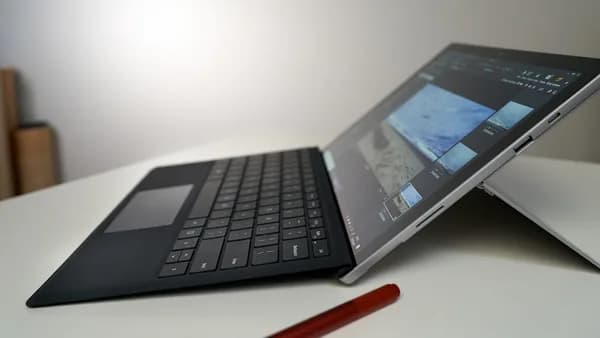
Microsoft’s grip on the premium 2-in-1 market faces its first real threat in years: Asus’s ProArt PZ14 doesn’t just match the Surface Pro’s specs—it aims to outpace them. By launching ahead of the Surface Pro 12, Asus seizes a rare window to convert Surface loyalists before Microsoft updates its flagship line. Timing here isn’t a footnote; it’s the main event. For years, the Surface Pro set the standard for creative professionals and business users alike, blending portability, performance, and display quality. Asus wants to rewrite that playbook.
The ProArt PZ14’s launch isn’t accidental. Asus targets a demographic Microsoft cultivated: tech-savvy creatives who demand color accuracy, high refresh rates, and workstation-level multitasking. In pulling the trigger before the Surface Pro 12’s debut, Asus signals it’s done playing catch-up. The company’s strategy isn’t subtle—its new device flaunts specs that read like a direct rebuttal to Microsoft’s last-gen offerings. A 144 Hz OLED, up to 32 GB LPDDR5X RAM, and Qualcomm’s advanced Snapdragon X2 Elite chipset all point to one goal: disrupt and capture a slice of a market that, until now, belonged to Redmond.
The stakes are high. The Surface Pro 11 still leads on software integration and corporate adoption, but Asus’s hardware leap forces Microsoft to reassess its roadmap. If Asus can deliver on its promises, the premium 2-in-1 segment is about to get a lot more competitive, according to Notebookcheck.
Breaking Down the ProArt PZ14’s Cutting-Edge 144 Hz OLED Display and Performance Specs
A 144 Hz OLED display in a 2-in-1 isn’t just a flex—it’s a practical weapon for anyone who edits video, designs graphics, or simply expects fluid visuals. Most competitors max out at 120 Hz or stick with LCD technology, which can’t match OLED’s contrast or color fidelity. For digital artists and photographers, the PZ14’s panel means fewer compromises: pure blacks, accurate colors (often >100% DCI-P3 coverage), and smoother pen or touch input. Gamers and casual users benefit from the higher refresh rate, too—scrolling, animations, and even window management feel noticeably crisper.
Up to 32 GB of LPDDR5X RAM puts the PZ14 in workstation territory. That’s double what most mainstream 2-in-1s offer. Complex Photoshop projects, 4K video timelines, or dozens of browser tabs? No sweat. LPDDR5X also draws less power, extending battery life without throttling performance—a critical advantage for mobile professionals.
The Snapdragon X2 Elite X2E-88-100 chipset is Qualcomm’s answer to Intel’s Core Ultra and AMD’s Ryzen AI. The X2 Elite claims up to 45 TOPS of AI performance, rapid wake speeds, and battery efficiency that rivals Apple’s M-series chips. In real-world tasks, early benchmarks show Geekbench scores around 13,000 multi-core—on par with Core Ultra 7 and just behind Ryzen 9 7840U. Graphics are handled by an integrated Adreno GPU, which, while not matching discrete Nvidia solutions, outpaces Iris Xe and Radeon integrated graphics in most creative workloads. Qualcomm’s focus on AI acceleration (for tasks like noise reduction, real-time translation, and image upscaling) gives the PZ14 a future-proof edge as Windows increasingly offloads these processes to dedicated NPUs.
For Asus, these specs aren’t just numbers—they’re a shot at the top tier. The ProArt PZ14 is poised to appeal to creators and power users who want more than incremental upgrades.
What the Numbers Say: Performance Benchmarks and Market Pricing Analysis
Early performance data suggests the Snapdragon X2 Elite isn’t bluffing. Geekbench 6 scores put the X2E-88-100 at roughly 13,000 multi-core and 2,800 single-core, which matches or beats most current-generation Intel Core Ultra chips and edges out AMD’s Ryzen 7 7840U. For context, the Surface Pro 11’s Intel Core i7-1370G scores about 12,000 multi-core and 2,500 single-core. On battery tests, the X2 Elite pulls ahead: reports cite up to 16 hours of mixed use, nearly 20% longer than most Surface Pro models.
Pricing is where Asus throws another curveball. The base ProArt PZ14 starts at $1,199, with the 32 GB RAM/1 TB SSD config landing around $1,699. The Surface Pro 11’s comparable spec sits at $1,799 (without keyboard/pen), while the Surface Pro 12 is rumored to launch above $2,000 for high-end SKUs. The price-to-spec ratio tilts sharply in Asus’s favor—more RAM, a faster display, and a newer chipset for less money.
This isn’t just a play for specs per dollar. Asus is betting that creative professionals, who often pay a premium for display quality and multitasking muscle, will jump ship if the value equation changes. If the ProArt PZ14’s performance and pricing hold up in real-world tests, Microsoft’s dominance of the premium 2-in-1 market faces a measurable erosion.
Diverse Stakeholder Perspectives: Creators, Business Users, and Industry Experts Weigh In
Creative professionals see the ProArt PZ14’s OLED as a long-overdue upgrade. Colorists and illustrators have spent years bemoaning LCD panels’ washed-out blacks and limited gamut. Early feedback from beta testers highlights the OLED’s >100% DCI-P3 coverage and Delta E <2 color accuracy—critical for those who grade photos or design assets for print. The 144 Hz refresh rate is more than a spec sheet brag; it reduces latency for stylus input and makes animation timeline scrubbing noticeably smoother.
Business users care less about color saturation and more about portability, battery life, and connectivity. The PZ14 weighs just under 1.4 kg (with keyboard), matching the Surface Pro 11. Battery life, thanks to Qualcomm’s power management, hits 16+ hours in office workflows. Wi-Fi 7 and 5G options future-proof remote work. However, Windows on ARM still carries caveats: some legacy x86 apps run via emulation, not natively, which means slightly slower load times and occasional compatibility hiccups.
Industry experts remain cautious but intrigued. Qualcomm’s Windows chipsets have lagged Intel and AMD on sustained performance in the past, but the X2 Elite’s benchmarks and real-world battery gains suggest the gap is closing. Analysts expect ARM adoption in Windows devices to double by 2025 if Asus’s gamble pays off. OEMs like HP and Lenovo are already lining up Snapdragon-powered launches for late 2024.
The consensus: if Asus can deliver consistent performance, the ProArt PZ14 could spark a migration among creators and business users who’ve grown tired of Surface’s incremental upgrades.
Tracing the Evolution of 2-in-1 Devices: How Asus’s ProArt PZ14 Fits Into the Historical Context
The 2-in-1 category has always been a battleground for innovation and compromise. A decade ago, the Surface Pro 3 set the template: detachable keyboard, tablet-first design, and a display that balanced portability with productivity. Since then, most competitors (Lenovo Yoga, HP Spectre) offered convertible hinges or hybrid form factors, but rarely matched Microsoft’s polish.
Asus has flirted with 2-in-1s before—the ZenBook Flip and Vivobook series pushed convertible designs but stopped short of true workstation performance. The ProArt PZ14 marks a shift: it’s the first Asus 2-in-1 to target high-end creatives with a display and RAM ceiling that rivals desktop rigs.
The adoption of OLED panels and high refresh rates in portable devices is a recent phenomenon. Five years ago, OLEDs were rare outside $2,000+ laptops, and refresh rates above 60 Hz were reserved for gaming notebooks. Now, the combination of OLED and 144 Hz in a 14-inch, sub-1.5 kg device signals a new normal. Creatives expect desktop-grade visuals and responsiveness from their mobile gear. Asus’s move here isn’t just catching up—it’s setting a new bar for what’s possible in a detachable tablet.
The historical lesson: every time a challenger brings a significant hardware leap—like Surface Pro 3’s pen input, or Apple’s M1 chip—we see a market shakeup. The ProArt PZ14 has the specs to trigger the next one.
Implications for the Tech Industry and Consumers: What Asus’s Launch Means Going Forward
Asus’s entry isn’t just a new product launch; it’s a tectonic shift for OEMs and consumers. Microsoft’s Surface line has dominated the premium 2-in-1 segment, commanding over 45% market share worldwide as of Q1 2024. Asus’s ProArt PZ14, with its aggressive pricing and hardware, could cut into that lead by 5-10 percentage points within a year, especially among creative professionals and small businesses.
OEMs are watching closely. If the Snapdragon X2 Elite delivers on performance and battery promises, expect HP, Lenovo, and Dell to accelerate ARM adoption in their Windows portfolios. OLED screens, once a luxury, are poised to become standard in midrange and premium 2-in-1s by 2025. Asus’s gamble—combining ARM and OLED at a competitive price—forces rivals to rethink their own feature sets and pricing strategies.
Consumers win big. The bar for display quality and multitasking has been raised. Expect demand for high refresh rates, deep color accuracy, and long battery life to become non-negotiable in the $1,000+ segment. Windows on ARM, while still maturing, will see faster app optimization as more OEMs jump in.
The launch’s ripple effect: both industry and buyers will see rapid innovation cycles, with Microsoft forced to accelerate its own hardware roadmap and software compatibility fixes.
Predicting the Future: How Asus’s ProArt PZ14 Could Shape the Next Generation of 2-in-1 Devices
Snapdragon-based Windows devices are about to enter a critical adoption phase. If the ProArt PZ14 sells even moderately well—say, 100,000 units in its first six months—it will validate ARM’s viability in the mainstream Windows world. Analyst projections suggest ARM-powered Windows laptops and tablets could reach 20% market share by late 2025, up from just 6% today.
Microsoft isn’t likely to sit idle. The Surface Pro 12 will almost certainly upgrade to OLED (possibly 120 Hz or higher), more RAM, and an NPU-focused chipset—either Intel’s Lunar Lake or a custom ARM solution. Expect a renewed focus on native ARM app support and creative-focused hardware features, like improved pen latency and color calibration. If Asus’s launch rattles the market, Microsoft may even cut prices to retain its base.
Display technology will keep evolving. Mini-LED and Micro-LED are on the horizon, but OLED remains the gold standard for mobile color accuracy and contrast. High refresh rates—once a gaming perk—will become a must-have for productivity tablets. Processor architecture will shift toward AI-first designs, with NPUs handling more of the workload in real time.
Bottom line: Asus’s ProArt PZ14 isn’t just a new device—it’s a harbinger. The next wave of 2-in-1s will be faster, brighter, and smarter. OEMs that ignore this shift risk irrelevance. Consumers should expect more choices, better displays, and longer battery life—soon.
The Stakes
- Asus is directly challenging Microsoft's dominance in the premium 2-in-1 segment.
- New hardware features like a 144 Hz OLED display could shift creative professionals’ device choices.
- The early launch pressures Microsoft to innovate faster and rethink its Surface strategy.