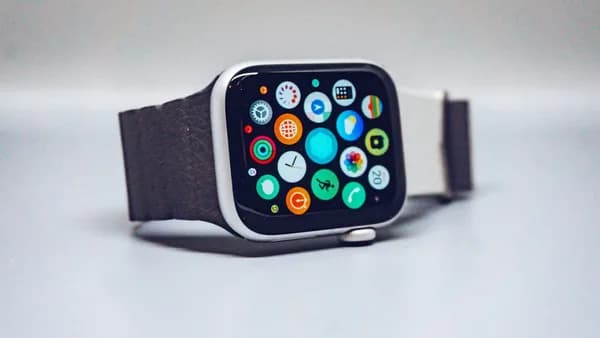
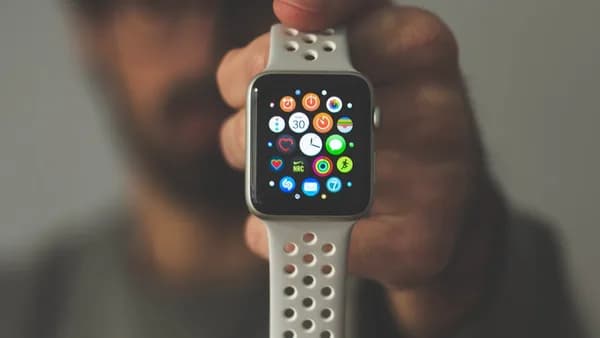
Apple’s noninvasive glucose project was supposed to stay in “many years away” territory — but a leadership handoff inside Apple suggests the work may have moved past pure moonshot research into something closer to product development.
The reported shift, covered by 9to5Mac , comes from Mark Gurman’s latest Bloomberg reporting on the future of Apple Watch. Apple has reportedly moved oversight of the glucose effort from Tim Millet, its platform architecture chief, to Zongjian Chen, the senior engineering leader who oversees the Advanced Technologies Group and hardware such as modems.
“Some view the transition as a sign the work may finally be progressing to a point where Chen, known as someone who delivers, can ramp up development of the technology into an eventual consumer-grade offering.”
That sentence does the work. It does not say launch is near. It does not say Apple has solved noninvasive glucose monitoring. It says people inside or around the project see the management change as meaningful.
Apple Watch glucose monitoring could turn a wellness device into a deeper health platform
The tension is simple: Apple Watch glucose monitoring has been discussed for years, but the product still does not exist. The new report does not erase that history. It reframes it.
Apple’s goal, according to the cited Bloomberg reporting, is to detect elevated blood sugar without finger pricks or blood draws. The project dates back to the Steve Jobs era, which means this is not a late-cycle feature brainstorm. It is one of Apple’s longest-running health bets.
If Apple eventually gets this right, the Apple Watch would move into a more sensitive category of biometric tracking. Heart rate and activity data already shape daily habits, from everyday tracking to Apple Watch 5K challenges. Glucose would go further. Even if Apple starts with broad metabolic signals rather than clinical-grade readings, the feature could make blood sugar awareness more mainstream.
That is also why the caveat matters. A leadership change is not a product announcement. 9to5Mac correctly notes that this does not mean glucose monitoring arrives this year, or even next year. Bloomberg previously described the feature as “many years away” despite more than 15 years of work, according to MacRumors’ summary of Gurman’s March 2025 reporting.
For Apple Watch software context, this update landed alongside discussion of watchOS 27; see MLXIO’s related coverage on how watchOS 27 could turn old Apple Watches into winners.
The hard part is not sensing glucose — it is shrinking the system into a watch
Apple’s reported technical route matters. The company has been working on silicon photonics and optical absorption spectroscopy, according to prior Bloomberg reporting summarized by MacRumors. The idea is to shine laser light under the skin into an area containing interstitial fluid, then read reflected light patterns associated with glucose concentration.
That sounds elegant. The problem is execution.
The available reporting says Apple reached a proof-of-concept stage in 2023 with a functional prototype device. But that prototype was still too large to fit into an Apple Watch. That single detail explains why the project can be both real and far from shipping.
MLXIO analysis: the leadership change may imply Apple believes the next bottleneck is less about whether the science can work in principle and more about whether it can be engineered into a consumer device. Chen’s remit over the Advanced Technologies Group and hardware such as modems fits that kind of transition. But the source does not establish that miniaturization, accuracy, battery draw, or manufacturing have been solved.
A useful way to read the update:
- Before: A long-running research effort with proof-of-concept progress but no watch-sized product.
- After: A project now reportedly overseen by an executive some see as able to push difficult technology toward a consumer-grade offering.
- Still missing: Any launch date, accuracy claim, regulatory path, or confirmed Apple Watch model target.
The numbers that matter are years, not market size
The source material does not provide current diabetes or prediabetes figures, so the safest analysis is not to pad the story with outside market estimates. The numbers we do have are revealing enough.
| Data point | What it signals |
|---|---|
| Steve Jobs era origin | Apple has treated glucose monitoring as a strategic health goal for a long time. |
| More than 15 years of work | Noninvasive monitoring has resisted normal consumer-tech timelines. |
| 2023 proof-of-concept | Apple reportedly built something functional, but not yet watch-sized. |
| 2025 “many years away” framing | Recent progress did not equal near-term launch. |
| 2026 leadership handoff to Zongjian Chen | Some see the project as ready for development ramp-up toward a consumer-grade product. |
That sequence is the real story. Apple has not abandoned the effort. It also has not rushed it into the market.
For investors and product watchers, that distinction matters. A glucose feature would not just be another reason to upgrade an Apple Watch. It could deepen use of the Health app, reinforce Apple’s wearables strategy, and give the company a health feature with far more behavioral significance than step counts or workout rings. But those are implications, not confirmed plans.
Apple’s broader AI and device roadmap is moving on separate tracks too; for contrast, read MLXIO’s analysis of how iOS 27 puts Apple Intelligence’s toy-like AI on trial.
Apple’s health playbook favors caution over spectacle
Apple’s reported glucose effort fits a familiar pattern: long development, careful claims, and gradual movement from internal research toward user-facing health features. The difference here is difficulty.
MacRumors’ summary of earlier Bloomberg reporting says Apple has hundreds of engineers in its Exploratory Design Group working on the project. That scale suggests glucose monitoring is not a side experiment. Yet the same reporting says the 2023 prototype was too large for Apple Watch.
That gap is the whole challenge. Apple does not need a lab demo. It needs something people can wear all day, trust, charge, understand, and use without turning every ambiguous data point into panic.
MLXIO analysis: Apple’s likely first consumer version, if it arrives, may be more cautious than the phrase “glucose monitor” suggests. The source material supports the goal of detecting elevated blood sugar. It does not support assuming Apple will immediately replace finger-prick tests or medical-grade continuous glucose monitors.
Patients, doctors, and regulators would not grade the same product the same way
A wellness user might value broad glucose trends. A person managing diabetes may need accuracy, reliability, and clear clinical meaning. A doctor may care less about novelty and more about whether the data improves decisions or creates noise.
The current reporting does not say which path Apple will take. It also does not say whether Apple will seek medical clearance, avoid diagnostic claims, or start with risk indicators tied to elevated blood sugar.
That uncertainty is not a weakness in the story. It is the point. The leadership shift is encouraging because it suggests movement. It is not definitive because the hardest questions sit between engineering and clinical use.
Three realistic paths after the Chen handoff
The first path is cautious: Apple eventually ships broad metabolic insights, perhaps focused on elevated blood sugar signals rather than exact readings. That would match the long development arc without assuming full clinical replacement.
The second path is more ambitious: Apple turns the technology into a consumer-grade glucose feature integrated deeply into Apple Watch and the Health app. The Bloomberg wording leaves room for that, but does not establish timing.
The third path is delay. Miniaturization already blocked the 2023 prototype from fitting into a watch. The “many years away” caveat from 2025 still matters.
The evidence to watch now is not hype around the next Apple Watch. It is whether future reporting shows the project moving from leadership reshuffling to validated hardware, smaller sensors, and clearer product language. Until then, the best read is narrow but important: Apple’s glucose moonshot appears alive, reorganized, and possibly closer to development — not close enough to count as a launch.
Why It Matters
- A leadership change suggests Apple’s glucose monitoring work may be moving closer to product development.
- Noninvasive glucose tracking could make Apple Watch a more serious health platform beyond fitness and heart metrics.
- The report is encouraging but does not indicate that a launch or solved consumer-ready technology is imminent.