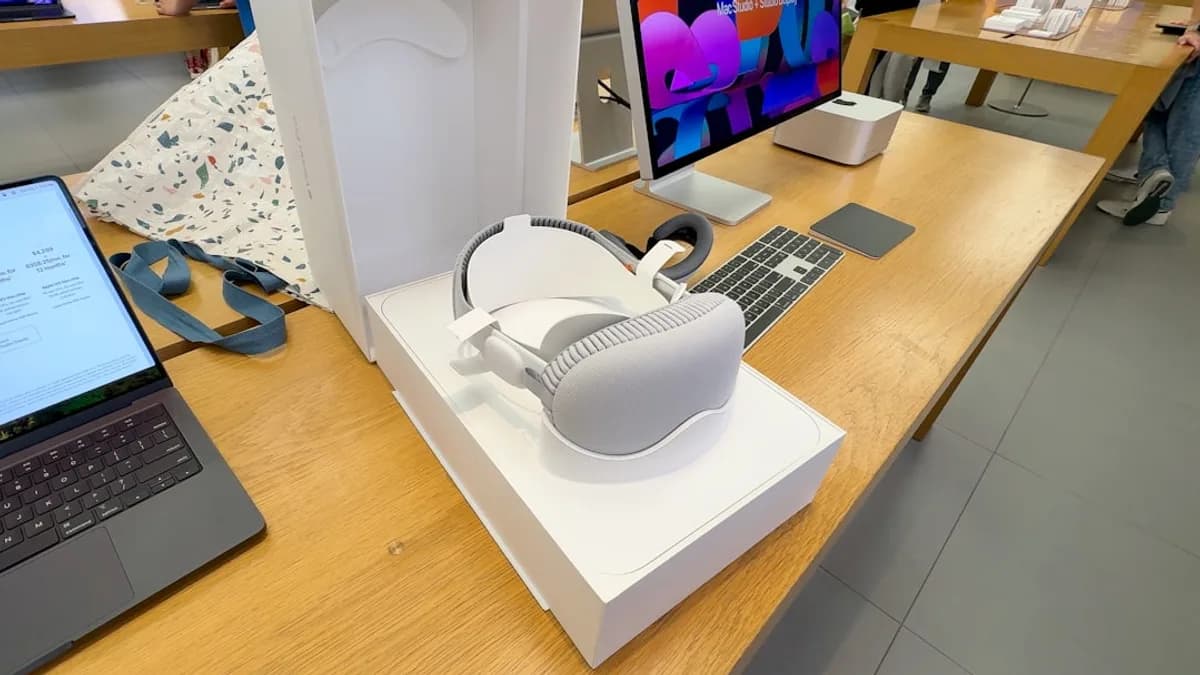
A $3,499 headset can prove a category and still fail to make that category urgent.
That is the tension behind the rumored Apple Vision Air. I still think Apple should build it. A lighter, cheaper headset remains the cleanest next step after Vision Pro. But if Apple is pushing it beyond Q3 2027, or even questioning whether it belongs near the top of the roadmap, that is not cowardice. It may be discipline, according to 9to5Mac .
The better Apple product is not always the next one. Sometimes it is the one Apple waits to ship until normal people have a reason to wear it.
A $3,499 Vision Pro proved the idea, not the market
Vision Pro did what a first-generation Apple headset needed to do: show that mixed reality can feel polished enough to take seriously. Ben Lovejoy’s 9to5Mac piece describes the experience as “phenomenally impressive,” with graphics that “look amazing” and an interface that is “fantastically easy to use.”
That matters. Apple’s first headset was not dismissed in the source as a bad product. The problem is sharper than that: it is an impressive product that still sits in a narrow lane.
Lovejoy’s strongest praise is also revealing. He was sold by “the mix of real and virtual worlds,” especially the ability to see a keyboard and trackpad while working. That is a powerful use case for a certain kind of user. It is not yet proof of a mass-market habit.
The physical experience cuts the other way. Lovejoy says he felt the heat around his upper face and noticed the weight after about 30 minutes. After a little over an hour, he concluded that was “about the limit.”
That is not a small caveat. A device worn on the face has a different burden than a device held in the hand or opened on a desk. If the comfort window feels short, the product becomes something users admire, demo, and discuss — not necessarily something they live in.
A Q3 2027 Vision Air once sounded like the obvious fix
A year ago, analyst Ming-Chi Kuo reportedly pointed to a Vision Air product in Q3 2027, alongside first-generation Apple Glasses in the same year. That schedule made intuitive sense.
Vision Pro’s two obvious blockers are price and comfort. An Air-branded headset would be expected to attack both.
| Product direction | Problem it addresses | Risk it still carries |
|---|---|---|
| Vision Air | Lower price, lighter body, better comfort | Still a headset people must choose to wear |
| Apple Glasses | More natural form factor for daily use | Harder product challenge, less clear from current reports |
| Vision Pro | Premium mixed-reality showcase | $3,499 price and comfort limits keep it niche |
For users like Lovejoy, the Vision Air pitch is obvious. He uses a 49-inch ultra-wide screen monitor and wants a virtual version of that setup while traveling. That is exactly the kind of job a lighter headset could do well: portable workspace, immersive media, and mixed-reality computing without the full weight and price of Vision Pro.
This is also where Apple’s naming matters. “Air” implies reduction without retreat. It suggests Apple would not be abandoning spatial computing, just translating it into something less punishing.
But the source material now points in a different direction.
Late 2028 or 2029 turns Vision Air from product plan into patience test
Two recent reports cited by 9to5Mac suggest Vision Air may not arrive on the earlier schedule. Bloomberg’s Mark Gurman is quoted as saying Apple has been working on a slimmer and lighter successor to Vision Pro, but not for next year.
“Apple has also been working on a slimmer and lighter headset to succeed to the $3,499 Vision Pro, but I don’t anticipate that to launch before late 2028 or 2029.”
That is a major shift from Q3 2027. Kuo’s newer view appears even colder on the headset path, at least in visible supply-chain terms.
“For now, only two smart glasses products remain visible in the roadmap.”
Kuo also says the roadmap he put together about a year ago is “no longer a useful reference,” and 9to5Mac reports his claim that Apple is shifting resources toward smart glasses with greater mass-market potential.
That last phrase is the crux. If Apple believes glasses have the better chance to become a daily product, then Vision Air becomes less urgent. Not less desirable. Less central.
MLXIO has been tracking the same fork in Apple’s wearables story, including the broader smart-glasses question in 2027 Leak Puts Apple Smart Glasses on Ordinary Faces. The point is not that glasses are guaranteed to win. The point is that the form factor starts closer to daily life than a headset does.
Apple Glasses may be the better bet if only one product gets priority
The case for Apple Glasses is brutally simple: people already wear glasses.
Lovejoy makes that argument directly. Anyone in Apple’s device base who currently wears eyeglasses is “very likely to consider switching,” he writes, while others may wear glasses at least some of the time if the applications are compelling enough.
That is a different adoption curve from Vision Air. A headset asks users to put on a device for a session. Glasses, if Apple can make them viable, could become part of the day.
This is why I would not fault John Ternus, if the reported shift in resources is accurate, for favoring glasses over a cheaper headset. Apple does not need to satisfy the rumor calendar. It needs to put engineering time behind the product most likely to escape the demo room.
There is a familiar Apple tension here: ship sooner to prove commitment, or wait longer to avoid turning a half-ready category into a permanent niche. We saw another version of that patience problem in 6-Year HomePod Mini Wait Exposes Apple TV Siri Gamble, where the issue was not whether Apple could make hardware, but whether the broader product logic was ready.
Vision Air sits in that same uncomfortable zone.
The strongest objection: delay makes Apple look unsure about its own headset
The counterargument is fair. If Apple slows Vision Air, it risks making Vision Pro look like an isolated luxury device rather than the first step in a serious product family.
Early adopters and developers need confidence. A headset platform without a visible path below $3,499 asks too much faith from everyone outside Apple. If the only concrete product users can buy remains heavy, expensive, and niche, then the idea of spatial computing stays theoretical for too many people.
That perception matters because Vision Pro was not introduced as a curiosity. It was Apple’s argument that computing can move beyond the flat screen. A long gap before a more accessible model weakens that argument.
Still, the answer is not to rush out a compromised Vision Air just to prove the roadmap exists. A cheaper headset that remains uncomfortable, unclear in daily purpose, or too close to Vision Pro’s niche would not solve the problem. It would simply make the niche slightly larger.
Vision Air should arrive only when it can change habits, not win demos
Apple should keep Vision Air alive. It should not ship it merely because a previous roadmap pointed to Q3 2027.
The right version has to clear a higher bar than “cheaper than Vision Pro.” It needs to be lighter enough that comfort stops dominating the conversation. It needs a price that makes the product easier to justify. It needs a strong reason to choose a virtual workspace or media experience over the screens people already own. And it needs to feel less like a face computer session and more like a normal part of getting things done.
That is why a delay to late 2028 or 2029, if Gurman’s timing proves right, would be disappointing but defensible. Cancellation would be harder to accept. Vision Air is still the product that could make Apple’s headset idea feel attainable.
But Apple’s priority should be the future people will actually wear, not the headset people want to try once.
Keep the Vision Air dream alive. Just do not confuse urgency with readiness.
The Bottom Line
- Apple may prioritize waiting for a stronger use case over rushing a cheaper headset to market.
- Vision Pro impressed technically but still has comfort and pricing barriers that limit mass adoption.
- A delayed Vision Air would signal that mixed reality remains promising but not yet urgent for mainstream users.