Why Apple’s Mac Studio RAM Upgrade Disappearance Signals a Shift in Hardware Strategy
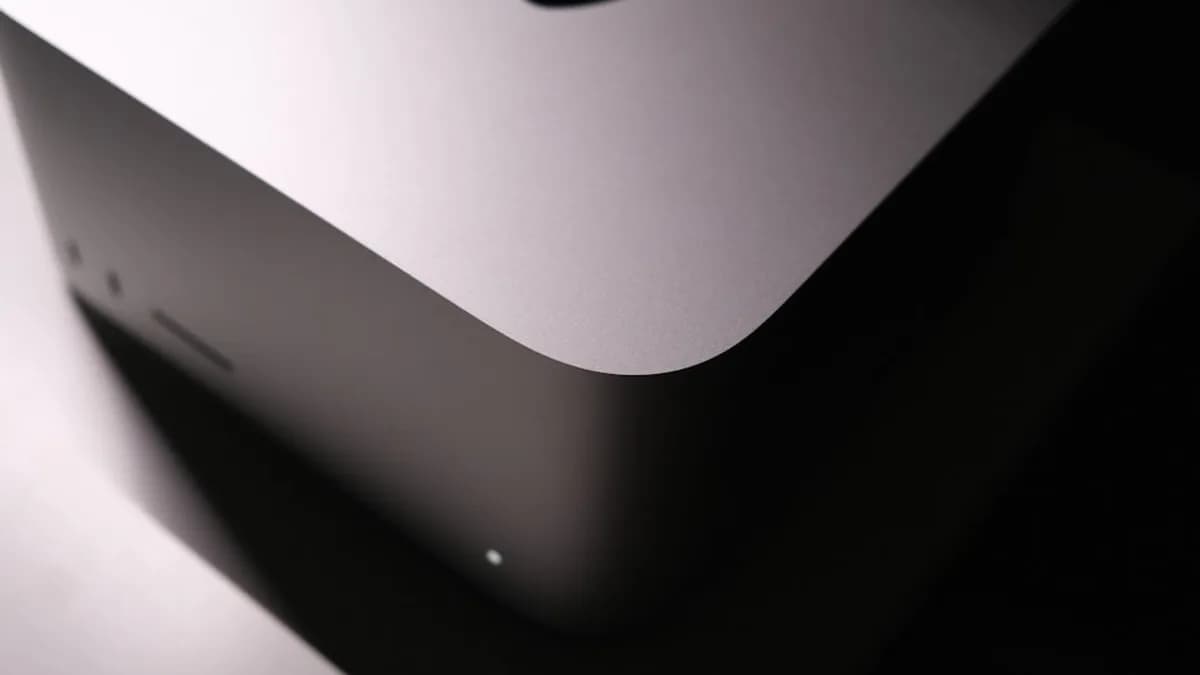
Apple quietly killed off the last remaining RAM upgrade option for its most powerful Mac Studio, leaving high-end buyers with no flexibility to boost memory post-purchase. This isn’t just about inventory running dry—it’s a deliberate move that marks a new chapter in Apple’s hardware strategy. Until recently, users could configure the Mac Studio with up to 192GB of unified memory, with the 128GB and 192GB options reserved for the M2 Ultra chip. Now, as reported by 9to5Mac, these high-capacity choices have vanished from Apple’s online store, and there’s no sign they’ll return.
Apple’s motivation goes beyond mere supply chain hiccups. The company has long signaled its preference for tightly integrated, non-user-upgradable hardware—think soldered RAM, proprietary connectors, and sealed chassis. By eliminating RAM upgrades on its flagship desktop, Apple is tightening control over its hardware lifecycle and user experience. This shift is not simply a cost-saving measure; it’s a calculated bet that users will pay upfront for maxed-out configurations, and that Apple benefits from reducing complexity in manufacturing, inventory, and support.
This move also signals a broader change in Apple’s design philosophy: the company is prioritizing predictable performance and reliability over user customization. That’s a sharp break from the past, when the Mac Pro and earlier Mac desktops were prized for their modularity. Apple is betting that its most lucrative customers—creative professionals and enterprise users—will accept a world where hardware choices are locked in at purchase, and upgrade paths are mostly closed.
Quantifying the Impact: How RAM Limitations Affect Mac Studio Performance and User Experience
Before the recent change, the Mac Studio’s RAM options were a major selling point for power users. The M2 Ultra model supported up to 192GB of unified memory, with price bumps at each step: $400 for 128GB, $800 for 192GB, on top of the base $3,999 for the machine itself. For creative professionals running heavy-duty workflows—4K/8K video editing, large-scale 3D rendering, AI model training—those extra gigabytes weren’t just nice-to-have; they were essential.
RAM limitations hit hardest in multitasking and “memory-bound” tasks. Video editors using DaVinci Resolve, for instance, report that large projects can easily consume 100GB+ of memory, especially when working with uncompressed footage and real-time effects. Developers running multiple virtual machines or training large language models often require well above 64GB, and the difference between 64GB and 192GB can translate to hours saved in processing time and fewer crashes.
Inventory data tells another story. Over the past six months, Apple’s highest RAM configurations for Mac Studio have been consistently listed as “unavailable” or “delayed” in both online and retail channels. Third-party resellers like B&H and MacMall saw wait times stretching past eight weeks, and some orders were outright cancelled. This suggests that Apple wasn’t simply responding to a lack of demand, but was facing real supply chain constraints—possibly related to shortages in high-density memory modules or manufacturing bottlenecks.
For users, the impact is immediate: those needing more than 64GB must now either settle for less, pay a premium for the Mac Pro (which still offers up to 192GB), or revisit their workflow to avoid bottlenecks. Apple’s move also eliminates the possibility of incremental upgrades—buyers must now predict their future needs and front-load their investment, or risk obsolescence.
Diverse Reactions: Industry Experts, Developers, and Power Users Weigh In on RAM Upgrade Removal
Hardware analysts are blunt: Apple’s removal of high-memory options narrows the Mac Studio’s appeal to professionals who value flexibility. Tech consultant Patrick Moorhead argues this shift “makes sense for Apple’s bottom line but risks alienating its most demanding users.” In the creative sector, reactions are sharper. Video editors, animators, and 3D artists who rely on high RAM capacities see this as a step backward. On Reddit and professional forums, users describe the change as “a forced downgrade” and “an unnecessary limitation for pro workflows.”
Developers working with AI and ML models are especially vocal. Many say the lack of RAM upgrade paths forces them to reconsider Mac Studio as their main workstation, pushing them toward the Mac Pro or even non-Apple solutions. “For serious ML training, 64GB just isn’t enough,” says one machine learning engineer. These users often need to process datasets that dwarf available RAM, and swapping to disk is a costly performance penalty.
Apple, for its part, has been mostly silent. The official support pages and store listings simply reflect the new limits without explanation. No public statement has clarified whether this is a permanent change, a pause due to supply constraints, or a prelude to new models. That silence has only fueled speculation—and frustration—among Apple’s professional base.
Tracing the Evolution: How Apple’s Approach to RAM Upgrades Has Changed Over Time
Apple’s relationship with RAM upgrades has been a study in gradual restriction. In the 2000s, even entry-level MacBooks allowed for user-swappable memory. The original Mac Pro (2006-2012) was a benchmark for modularity: multiple RAM slots, easy access, and a clear path for future upgrades. That era ended with the 2013 Mac Pro “trashcan” design, which took away RAM and GPU expansion, and the 2018 Mac mini, which moved to soldered RAM.
The 2022 Mac Studio seemed like a partial return to form, offering high memory configurations—but only at the time of purchase, and not through user upgrades. The Mac Pro still stands as the last bastion for expandability, but at a steep price premium ($6,999 base, $12,999 fully loaded), and sales volumes are tiny compared to the Mac Studio.
Industry-wide, Apple’s move mirrors a broader trend: major PC and laptop makers, including Dell and HP, are shifting toward soldered memory and non-upgradable storage, citing performance and reliability gains. But Apple is more aggressive than most, locking memory and other components from the factory, and often refusing to provide repair parts or upgrade kits.
The takeaway: Apple’s shift is part of a long-term strategy to control the entire hardware stack, reduce support costs, and drive higher margins per device. User customization is an afterthought, and the company is betting that its premium pricing and vertical integration will outweigh the loss of upgradability.
What Apple’s RAM Upgrade Removal Means for Creative Professionals and Enterprise Users
Creative professionals are the hardest hit. For high-end video, audio, and graphics work, RAM isn’t just a luxury—it’s the backbone of productivity. DaVinci Resolve, Adobe Premiere Pro, Autodesk Maya, and similar tools routinely chew through 100GB+ in complex projects. With the Mac Studio now capped at 64GB, users face a choice: scale down their workflows, switch to the Mac Pro, or migrate to Windows workstations.
The cost implications are stark. To keep pace, users must now pay upfront for the highest RAM option—if they can even find it. The Mac Pro’s jump from 64GB to 192GB memory is a $2,400 premium, compared to $800 in the Mac Studio. That’s a real squeeze for freelancers and small studios. For larger enterprises, procurement cycles become more complicated, as IT teams must forecast future needs and can’t upgrade machines as workloads grow.
Some users are looking for workarounds: remote desktop setups, cloud-based rendering, and external SSDs for swap files. But these solutions rarely match the speed and reliability of local RAM, especially for data-heavy creative tasks. Others are turning to Windows PCs, which still offer modularity—but at the cost of losing Apple’s software integration and hardware stability.
Ultimately, Apple’s decision forces professionals to rethink their upgrade strategies and workflow planning. It’s a shift from “buy now, upgrade later” to “predict everything up front,” with the risk of overpaying or under-provisioning.
Predicting the Future: How Apple’s Hardware Strategy Could Evolve in Response to Market Demands
Apple’s hardware strategy is unlikely to reverse course. The company has consistently moved toward tighter integration, and the removal of RAM upgrades in the Mac Studio is just another step. Unless supply chain constraints ease dramatically—or Apple faces sustained pushback from its pro user base—future Macs will probably stay locked down, with fewer upgrade paths and more “take it or leave it” configurations.
Supply chain realities play a role. High-density memory chips are in short supply, and Apple’s just-in-time manufacturing model favors predictable, fixed configurations over variable builds. The company can reduce costs and complexity by limiting SKUs, and it gains leverage over pricing and inventory management.
But Apple risks losing at least some professional customers to more modular alternatives. If high-end users migrate in significant numbers, Apple may be forced to reconsider—possibly by introducing new Mac Studio models with higher base RAM, or by making the Mac Pro more affordable. There’s also the possibility of a new modular desktop, echoing the original Mac Pro ethos.
Long-term, Apple could innovate with memory stacking, unified architecture improvements, or even cloud-based “RAM as a service” for remote workflows. But in the near term, the tight hardware lockdown looks set to continue.
Smart buyers should treat Apple’s RAM limits as permanent and plan accordingly. If you need more than 64GB for your workflow, the Mac Pro is your only (Apple) option—for now. If Apple sees enough demand, the next Mac Studio refresh could bring higher base configurations, but don’t count on user upgrades returning. The trend is clear: Apple wants to own the entire hardware stack, and user customization is fading fast.
Impact Analysis
- Apple’s removal of RAM upgrades locks users into fixed configurations, reducing flexibility for creative and enterprise professionals.
- The shift signals Apple’s move towards more tightly integrated and non-user-upgradable hardware across its product lines.
- Customers must now pay upfront for maximum specs, impacting budgeting and long-term hardware planning.