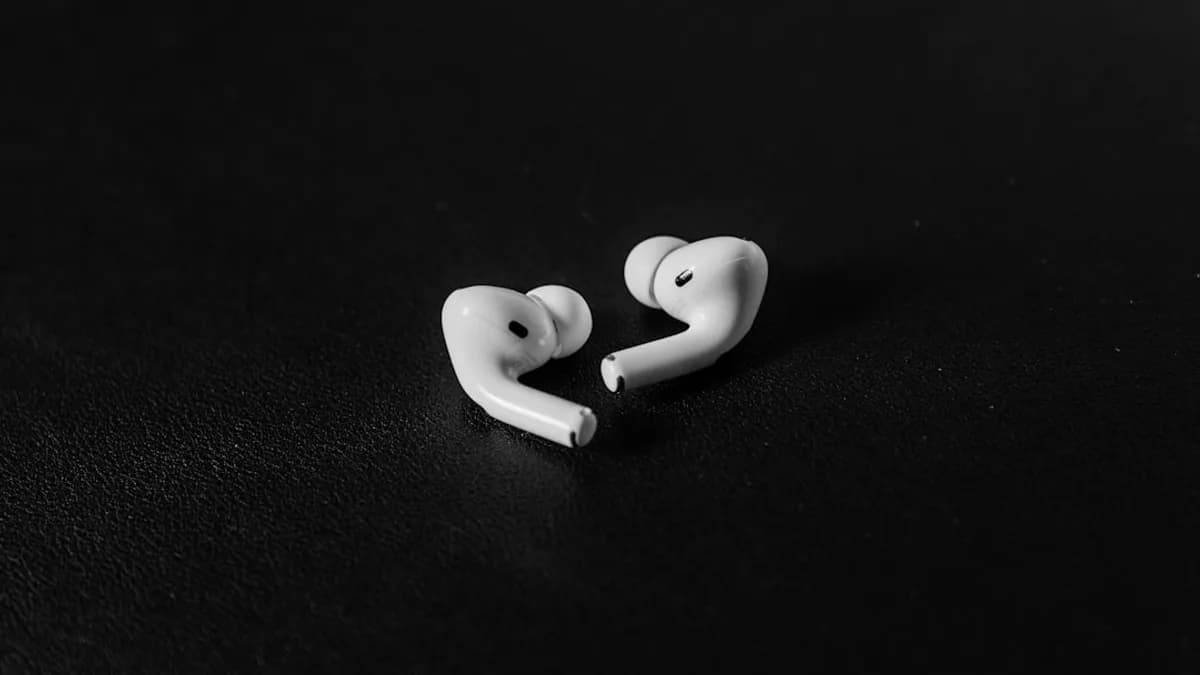
Why Apple’s Next AirPods Pro Could Redefine Wireless Audio Experience
Apple isn’t just prepping another incremental upgrade. Leaks point to a feature set for the upcoming AirPods Pro that could force competitors back to the drawing board. The company is finalizing design work, and according to Notebookcheck, Bloomberg’s reporting suggests Apple’s next wireless earbuds will introduce capabilities that shift both expectations and industry standards.
The significance is bigger than a spec bump. Apple dominates the premium wireless earbud market, with recent data showing it controls about 36% of global market share — far ahead of second-place Samsung at 13%. When Apple moves, the entire segment pivots. The AirPods Pro refresh isn’t just about better sound or battery life; it’s about redefining what users demand from their daily audio device. The rumored features signal Apple’s intent to blur the lines between headphones, health tech, and smart assistants. If the leaks are accurate, Apple isn’t chasing competitors — it’s setting a new bar.
This matters for consumers, who increasingly expect each new generation of tech to solve more problems and integrate more tightly into their lives. For the industry, Apple’s aggressive innovation could spark a new wave of R&D spending, partnerships, and feature races. Existing standards for audio quality and device intelligence may feel outdated within months.
Breaking Down the Leaked Features: What Makes the New AirPods Pro Stand Out
The leak, sourced from Bloomberg’s Mark Gurman and summarized by Notebookcheck, points to a headline feature: integrated hearing health monitoring. Apple is reportedly adding sensors capable of measuring hearing ability, potentially alerting users to changes or risks in real time. This isn’t a gimmick. It’s a pivot toward medical-grade functionality, echoing Apple’s move with the Apple Watch’s ECG and blood oxygen sensors.
Technically, this means the AirPods Pro will house miniaturized microphones and algorithms that analyze environmental sounds and the user’s responses. The device may run hearing tests directly, with results available in the Health app. Current AirPods Pro models already offer Adaptive Transparency and Conversation Boost, but they stop short of medical diagnostics. Sony and Bose, dominant in noise cancellation, don’t offer anything close to integrated hearing health.
Another rumored addition: a new H-series chip for faster pairing, lower latency, and improved battery management. Apple’s current H2 chip powers the flagship features, but the next-gen chip could add simultaneous multi-device connections and further reduce audio lag, especially for gaming and video calls. Competitors like Samsung’s Galaxy Buds and Google’s Pixel Buds struggle to match Apple’s seamless switching and spatial audio — any further improvement widens the gap.
Other upgrades include improved active noise cancellation, longer battery life (up to 8 hours per charge, according to the leak), and possibly new gesture controls. There’s talk of a redesigned case with Find My integration — not just for locating the buds, but for tracking the case itself if misplaced.
Stack these features against the current AirPods Pro: health monitoring, smarter connectivity, longer endurance, and tighter integration with the Apple ecosystem. Against the market, the leak suggests Apple is pushing wireless earbuds beyond entertainment, toward wellness and productivity.
Market Data and Trends Highlighting the Timing of Apple’s AirPods Pro Update
Wireless earbuds are now a $15 billion global market, projected to hit $23 billion by 2027. Apple’s share has held steady, but competitors are closing in — Samsung’s shipments grew 13% year-over-year in Q1 2024, and Chinese brands like Xiaomi are expanding in Europe and Southeast Asia. Consumer Reports surveys show buyers prioritize battery life, comfort, and smart features over pure audio fidelity, a shift from just two years ago.
Apple’s last major AirPods Pro update dropped in late 2022. Since then, rivals have rolled out features like real-time language translation (Google), advanced fitness tracking (Jabra), and multipoint Bluetooth (Sony). The timing of Apple’s refresh coincides with a surge in consumer interest in health tech. Global wearable sales spiked 18% in 2023, and health monitoring is the fastest-growing segment.
That puts Apple’s rumored hearing health feature in context: it’s not just a novelty, but a response to rising demand. The company’s cadence — roughly every two years for major AirPods Pro updates — matches broader market cycles. By launching now, Apple positions itself ahead of rivals prepping their own health-focused earbuds.
Diverse Stakeholder Perspectives on Apple’s New AirPods Pro Innovations
Industry analysts are bullish. Wedbush’s Dan Ives called Apple’s rumored health monitoring “a logical extension” of the company’s health strategy, predicting it could drive another 10% bump in AirPods Pro sales. For audiologists and healthcare professionals, the move is intriguing but raises questions about accuracy and regulatory compliance. If Apple markets the feature as a medical device, it will face FDA scrutiny — something the company has navigated before with the Apple Watch.
Consumers, especially those already invested in Apple’s ecosystem, are likely to embrace the new features. Early social media chatter focuses on the convenience of in-ear health checks and improved battery life. There’s skepticism about privacy: will Apple store hearing data securely, and will users have full control? Past controversies over biometric data suggest the company will need to be aggressive in messaging.
Competitors are watching closely. Samsung has added basic health sensors to its Galaxy Buds, but nothing approaching hearing diagnostics. Bose, still the leader in sound engineering, is rumored to be working on fitness tracking but lacks Apple’s integration muscle. If Apple succeeds, expect rivals to fast-track similar sensors — but regulatory hurdles and R&D challenges could delay meaningful responses.
Tracing Apple’s Evolution in Audio Technology Leading to the Latest AirPods Pro
Apple’s audio journey is marked by steady escalation. The original AirPods (2016) sparked the true wireless revolution, with nearly 20 million units sold in their first year. AirPods Pro (2019) brought noise cancellation and Adaptive EQ, setting new standards for comfort and sound quality. The 2022 refresh added the H2 chip, improved ANC, and spatial audio tuned for Dolby Atmos.
Each generation has layered new tech: from simple Bluetooth pairing and touch controls to computational audio and personalized spatial sound. Apple’s integration of the AirPods line with the Health app (for noise exposure tracking) hinted at the next step. Now, with rumored hearing health features, the company is making the jump from passive monitoring to active diagnostics.
Comparing iterations, the progression is clear: Apple moves from entertainment to wellness, from basic functionality to multi-layered intelligence. The upcoming model, if leaks hold true, is less an incremental update and more a statement of intent — wireless earbuds as health tools.
What Apple’s New AirPods Pro Mean for Consumers and the Audio Industry
For consumers, the AirPods Pro refresh could change the calculus of buying wireless earbuds. Health monitoring isn’t just attractive for older users or those with hearing concerns; it’s a differentiator that nudges tech-savvy buyers toward Apple. If the hearing health feature proves accurate, it could drive adoption among millions who might otherwise opt for cheaper or more audio-focused brands.
The move also pressures competitors. Samsung and Google must decide whether to invest in similar health tech, risking regulatory headaches and R&D costs. Bose and Sony face a tougher road: their strengths lie in sound, not software or integration, and catching up may require partnerships or acquisitions.
Industry standards will shift. If Apple’s hearing health tool becomes widely adopted, expect new benchmarks for sensor accuracy, privacy, and interoperability. Regulators may push for clearer guidelines on medical claims in consumer audio devices. The ripple effect: a new round of innovation not just around sound, but device intelligence and health.
Predicting the Future: How Apple’s AirPods Pro Could Shape Audio Tech in 2024 and Beyond
Apple’s bet on hearing health will likely spark a race among rivals to match or exceed the feature. Expect new entrants — startups specializing in audiology tech, legacy players seeking partnerships, and perhaps even health insurers offering incentives for using diagnostic earbuds.
Apple’s next strategic move could be deeper integration with the Health app, rolling out features like remote hearing consultations or AI-driven sound environment adjustments. The company may expand partnerships with healthcare providers, positioning AirPods Pro as a preventative tool in hearing care.
But challenges loom. Regulatory scrutiny will intensify if Apple markets the device as a medical diagnostic. Accuracy and privacy protections will define consumer trust. Rivals may undercut Apple on price or specialize in niche health features.
The most probable scenario: Apple’s AirPods Pro become the default choice for consumers seeking both premium audio and health monitoring, while competitors scramble to differentiate on price, sound quality, or specialized wellness features. By 2025, expect hearing health to be a standard feature in high-end wireless earbuds, with Apple’s design and integration leading the pack. For investors and industry watchers, the AirPods Pro refresh isn’t just another launch — it’s a signal for where wearable audio tech is headed next.
Why It Matters
- Apple's rumored hearing health monitoring feature sets a new standard for wireless earbuds.
- With Apple controlling 36% of the market, its innovations can rapidly shift industry expectations.
- Consumers stand to benefit from more integrated health and smart assistant features in everyday tech.