MLXIO
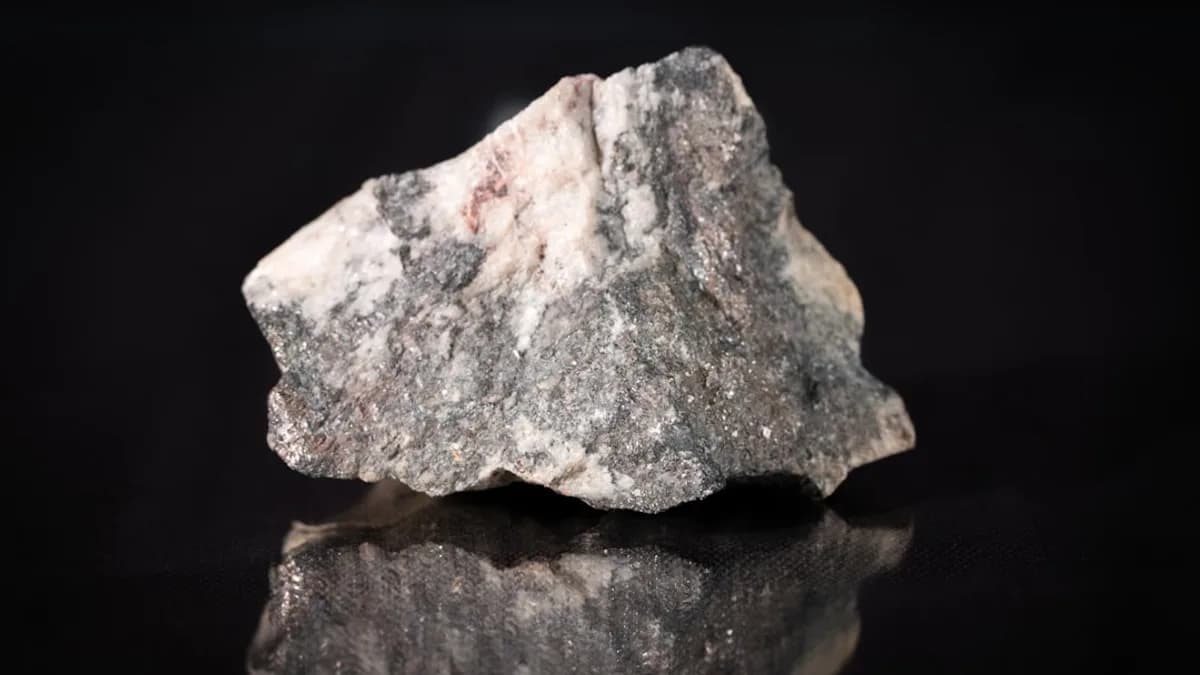
brown and gray stone fragment
ScienceMay 16, 2026· 5 min read· By Tanisha Roy

New Rock Formula Sparks Hope to Slash Cement Emissions

Share

MLXIO Intelligence

Analysis Snapshot

69
High
Confidence: MediumTrend: 10Freshness: 96Source Trust: 90Factual Grounding: 95Signal Cluster: 20

High MLXIO Impact based on trend velocity, freshness, source trust, and factual grounding.

Thesis

Medium Confidence

Replacing limestone with silicate rocks in cement production could eliminate most direct process CO₂ emissions, offering a promising path to decarbonize the industry.

Evidence

  • Cement production accounts for about 8% of global CO₂ emissions, with direct process emissions from limestone decomposition being slightly larger than fuel-related emissions.
  • Recent research suggests using calcium-rich, carbon-free silicate rocks as an alternative to limestone, potentially sidestepping most direct emissions.
  • Thermodynamic analysis indicates that certain silicate rocks have favorable ingredient ratios for cement and other industries.
  • Industrial processes to convert silicate minerals into cement have been demonstrated in other sectors, though large-scale real-world cement trials are limited.

Uncertainty

  • Performance and durability of silicate-based cement at commercial scale remain unproven.
  • Economic and logistical feasibility of sourcing and processing alternative rocks is unclear.
  • The environmental impact of alternative supply chains has not been fully assessed.

What To Watch

  • Results from pilot projects using silicate-based cement formulas.
  • Industry and regulatory responses to alternative cement materials.
  • Lifecycle and emissions analysis of new cement supply chains.

Verified Claims

Cement production accounts for about 8% of global CO₂ emissions.
📎 The article states that cement’s carbon footprint is about 8% of global CO₂ emissions.High
Direct process emissions from breaking down limestone are slightly larger than emissions from burning fuel in cement production.
📎 The article notes that direct process emissions are actually slightly larger than emissions from burning fuel to heat the kilns.High
Recent research suggests that using silicate rocks instead of limestone could eliminate most direct process emissions in cement manufacturing.
📎 The article describes new research proposing silicate rocks as a carbon-free substitute for limestone, potentially sidestepping most direct emissions.Medium
Switching to renewable energy alone cannot eliminate most cement emissions because they are inherent to the material chemistry.
📎 The article explains that even if all cement plants used renewable energy, most emissions would persist due to the chemical process of breaking down limestone.High
Pilot projects are beginning to test the feasibility of cement made from alternative rocks, but large-scale data is limited.
📎 The article mentions that concrete data on large-scale alternative rock cement is scarce, but some pilot projects are starting.Medium

Frequently Asked

Why does cement production generate so much CO₂?

Cement production generates significant CO₂ because breaking down limestone chemically releases CO₂ as a direct byproduct, in addition to emissions from burning fuel.

Can switching to renewable energy eliminate cement’s carbon emissions?

No, switching to renewable energy cannot eliminate most cement emissions because the main source is the chemical process of converting limestone to lime, which releases CO₂.

What alternative materials are being considered to reduce cement emissions?

Researchers are exploring silicate rocks, which do not contain carbon, as substitutes for limestone to potentially eliminate direct process emissions.

How feasible is cement made from alternative rocks?

While pilot projects are underway and industrial steps exist, large-scale feasibility and performance data for alternative rock cement are still limited.

What are the main ingredients in Portland cement and why is limestone used?

Portland cement is made by heating limestone (calcium carbonate) and mixing it with clay or ash; limestone is used because it is abundant and its chemistry is suitable for producing lime.

Updated on May 16, 2026

Why Rethinking Cement Materials Is Crucial for Reducing Global Emissions

Cement’s carbon footprint is staggering: about 8% of global CO₂ emissions come from making it, a number that dwarfs many entire industries. The reason is simple and stubborn—most cement relies on breaking down limestone, a process that’s chemically hardwired to release CO₂. Even if every cement plant switched to renewable energy tomorrow, most emissions would persist because they’re baked into the material itself, not just the fuel. That direct reality is what makes cement such a hard nut to crack for climate targets.

The world’s cities, roads, and infrastructure are built on this high-emissions foundation. As climate deadlines approach, the pressure to find something cleaner is mounting. The construction industry is desperate for a formula that can support global demand without torching the planet. According to Ars Technica, recent research has started to challenge the most basic assumption in cement chemistry: maybe limestone isn’t the only way.

What Makes Limestone the Standard Rock for Portland Cement and Its Limitations

Limestone’s dominance in cement is no accident. It’s abundant, easy to quarry, and its chemistry—mainly calcium carbonate—makes it ideal for transforming into “lime” (calcium oxide), the main ingredient in Portland cement. The production recipe hasn’t changed much since the 1800s: heat limestone, mix with clay or ash, and you get the binder that holds concrete together.

The catch is the chemistry itself. Removing carbon from calcium carbonate releases CO₂ as a direct byproduct—a process emission that’s inseparable from the material. Even aggressive energy efficiency and fuel switching can’t touch these emissions. In fact, the direct process emissions from breaking down limestone are slightly larger than those from burning fuel to heat the kilns, according to the cited research. The upshot: as long as cement depends on limestone, a significant chunk of emissions is unavoidable.

How Alternative Rock Sources Could Transform Cement Manufacturing

A new line of research suggests a fundamental shift—replace the limestone. Scientists are investigating whether other calcium-rich rocks could do the job, particularly those that don’t carry carbon in their structure. The implication is huge: if the rock doesn’t release CO₂ when heated, the process could sidestep most direct emissions.

The paper highlighted by Ars Technica looks at the viability of using silicate rocks, which are common and carbon-free, as a substitute. If these materials can deliver the same performance as limestone-based cement, the industry could cut out the main source of process emissions entirely. The research also points out that the ratios of key ingredients like calcium, iron, and aluminum in certain rocks are favorable for not just cement, but potentially for steel and aluminum supply chains as well.

But the path isn’t simple. Swapping in a different rock means redesigning parts of the production process, from crushing to heating to mixing, to ensure the chemistry works out. The research so far is mostly theoretical and based on thermodynamic analysis—real-world demonstrations are still needed. Still, the tantalizing prospect is cement with zero process emissions, and possibly lower energy requirements.

What a Real-World Example of Cement Made from Alternative Rock Reveals About Its Feasibility

Concrete data on large-scale alternative rock cement is scarce, but some pilot projects are beginning to test the waters. According to the Communications Sustainability paper, a series of proven industrial steps can convert silicate minerals into cement and supplementary materials. These processes are already used in other industries, which could help with scaling and cost.

What’s clear from the research is that the chemistry checks out on paper. The production steps involve extracting calcium from silicate minerals without releasing CO₂, then assembling it into the standard cement clinker. Theoretically, this could eliminate process emissions. The authors also suggest that energy demand could be reduced—though the actual percentage isn’t specified in the publicly available summary.

Performance and cost are the big unknowns. The paper implies that the end product can meet ordinary Portland cement standards, but real-world durability and long-term costs are unproven at scale. The key lesson: the science is plausible, but the engineering and economics need to catch up.

How Switching to Alternative Rocks Could Impact the Future of Sustainable Construction

If alternative rocks can replace limestone at industrial scale, it would be a tectonic shift for both climate targets and the construction industry’s supply chains. The environmental upside is clear—eliminate process emissions, and cement’s climate impact shrinks dramatically. This could bring the sector closer to carbon neutrality, especially if paired with cleaner kiln energy.

The economic and policy implications are less certain. Industry adoption depends on whether these alternative processes can compete on cost and reliability. Proven “unit processes” already exist, but integrating them into massive cement plants will take investment, regulatory approval, and time. There’s also a supply chain question: can these rocks be sourced at the necessary scale without creating new environmental problems?

For now, the main bottleneck is real-world validation. The research lays out a credible path, but the leap from lab to market is always the hardest part. What’s clear is that sticking with limestone will keep cement emissions stubbornly high, no matter how efficient the rest of the process gets.

What Remains Unclear and What to Watch Next

Several questions hang over this potential transition. Can alternative rock cement meet performance standards for safety and durability in the field? Will the economics work out for large producers and construction firms? And will policymakers recognize and support the switch if it means retooling a global industry?

The next milestones to watch are pilot-scale projects and published real-world results. If a major producer manages to deliver cement from silicate rocks or other carbon-free sources at competitive cost and quality, the field could move quickly. Until then, the promise is real but unproven. The cement industry’s emissions problem is uniquely stubborn—but for the first time in decades, there’s a plausible way to chip away at its bedrock assumption.

Why It Matters

  • Cement production is responsible for about 8% of global CO₂ emissions, making it a major climate challenge.
  • Traditional cement relies on limestone, whose breakdown chemically releases CO₂, so alternative materials could dramatically reduce emissions.
  • Innovating new cement formulas is critical to building sustainable infrastructure as global demand for construction continues to grow.

TR

Written by

Tanisha Roy

Science & Emerging Technology Writer

Tanisha covers scientific research, biotech, quantum computing, space technology, and climate science. She translates peer-reviewed findings and technical breakthroughs into accessible analysis.

BiotechQuantum ComputingSpace TechClimate ScienceResearch Analysis

Related Articles

gray spacecraft taking off during daytime
ScienceMay 16, 2026

Russia Sparks Tension with Secretive New ICBM Test

Russia's claimed success with a new ICBM test escalates nuclear tensions, but key details remain undisclosed, fueling global uncertainty.

4 min read

star wars storm trooper action figure
TechnologyMay 15, 2026

Citizen Sparks Fandom with Mandalorian Eco-Drive Watch

Citizen’s Mandalorian Eco-Drive watch blends Star Wars fandom with innovative, battery-free timekeeping for a bold collectible you can wear daily.

5 min read

black flat screen computer monitor
CryptoMay 16, 2026

$500M Crypto Longs Liquidate as Bitcoin Plunges to $78K

Crypto longs lost $500M as Bitcoin plunged to $78K, sparking a liquidation cascade that dragged SOL and XRP down 5%.

4 min read

woman in black jacket sitting on green grass field near body of water during daytime
AI / MLMay 16, 2026

Asexuals Use AI Companions to Script Intimacy Without Sex

Asexual people turn to AI companions to craft emotional intimacy on their terms, avoiding sexual pressure and redefining connection.

5 min read

black remote control beside black computer keyboard
CybersecurityMay 16, 2026

Cybercriminal Twins Caught by Forgotten Microsoft Teams Recording

Cybercriminal twins were caught after forgetting to turn off a Microsoft Teams recording, which captured their criminal actions in detail.

5 min read

Person typing on laptop with ai gateway logo.
AI / MLMay 16, 2026

Osaurus Locks AI Data on Your Mac, Ditches Cloud Risks

Osaurus combines local and cloud AI on Mac, keeping sensitive data on-device while offering cloud power when needed.

6 min read

black corded headphones on blue background
TechnologyMay 16, 2026

Sony Leaks Luxury 1000X Headphones with 12-Mic ANC, 34H Battery

Sony's leaked 1000X 'The ColleXion' headphones boast 12-mic ANC, metal hinges, and 34-hour battery life, targeting audiophiles and luxury buyers.

3 min read

Hand holding a modern smartphone with large camera lens.
TechnologyMay 16, 2026

Moto Edge 70 Slashes Price 50% with Flagship Features

Moto Edge 70 hits half price with flagship display and rugged build, shaking up the midrange smartphone market.

6 min read

black GoPro HERO 5 with gimbal
BusinessMay 16, 2026

GoPro Ditches Action Cams, Bets Big on Defense Tech Pivot

GoPro shifts from consumer cameras to defense tech amid sale talks, aiming to transform its brand and revenue with military applications.

4 min read

a watch sitting on top of a book on a table
BusinessMay 16, 2026

Gen Z Sparks Casio’s Profit Surge with Retro Watch Craze

Gen Z’s obsession with Casio’s vintage digital watches doubled the company’s profits, reshaping its business with nostalgia-fueled demand.

5 min read

Stay ahead of the curve

Get a weekly digest of the most important tech, AI, and finance news — curated by AI, reviewed by humans.

No spam. Unsubscribe anytime.