How Anil Menon’s Unique Career Bridges NASA, SpaceX, and Russian Spaceflight Cultures
Few astronauts launch with a resume spanning NASA, SpaceX, Roscosmos, and the Air Force Reserve. Anil Menon has spent years at the intersection of medical science and operational spaceflight, shaping protocols that now underpin missions from Houston to Hawthorne. This July, Menon will finally leave Earth himself, joining two cosmonauts aboard a Russian Soyuz for an eight-month stint on the International Space Station. That’s not just a personal milestone—it’s a rare chance to synthesize the hardwired habits of legacy space agencies with the restless engineering ethos of new entrants like SpaceX.
Menon’s tenure as a NASA flight surgeon and later SpaceX medical director gave him a front-row seat to both the bureaucratic caution of government spaceflight and the risk-tolerance of private industry. He authored research on microgravity’s impact on the human body, then watched his wife, Anna Menon, fly on a private mission in 2024—another first for a NASA astronaut family. As Fast Company Tech reports, Menon’s upcoming launch in Kazakhstan isn’t just a diplomatic gesture. It’s a stress test for NASA’s role as international mediator, bridging American, Russian, and commercial cultures as the world eyes lunar ambitions.
The Soyuz mission comes at a moment when US-Russia collaboration is under scrutiny, yet the ISS remains a rare zone of pragmatic cooperation. For NASA, embedding astronauts on Soyuz—despite geopolitical friction—keeps the station staffed, the science flowing, and the channels open. Menon’s background makes him unusually equipped to read the room: he knows the granular realities of medical emergencies in orbit, the engineering limits of both legacy and new spacecraft, and the institutional mindsets that shape global space policy.
Comparing Soyuz and Crew Dragon: Contrasting Engineering Philosophies and Astronaut Experiences
The Soyuz spacecraft has survived more than half a century of launches, failures, and redesigns, yet its core systems remain stubbornly analog. The Russian approach: if it works, don’t fix it. Push-buttons, mechanical seals, and rigid ergonomics are the price of reliability. Soyuz seats were designed for cosmonauts of the 1960s—shorter, slimmer, and less fussed about comfort. At 6’1”, Menon barely fits, but the system has proven its worth: Soyuz boasts over 140 crewed missions since its debut, with only two fatal accidents, both in the 1970s.
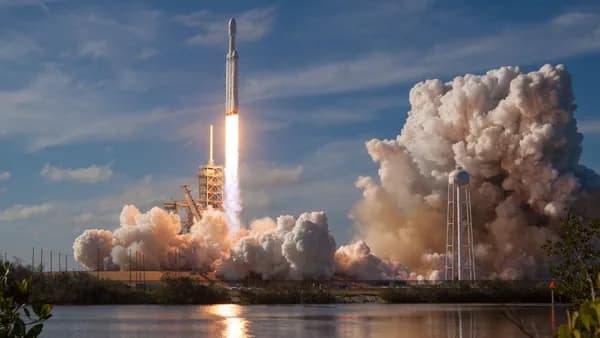
Contrast this with SpaceX’s Crew Dragon. Every flight is awash in digital displays and automated procedures, a deliberate attempt to minimize human error and maximize flexibility. Touchscreens replace switches, procedures pop up with a tap, and the suit zips instead of twisting bands. Crew Dragon’s design choices aren’t just aesthetic—they reflect a Silicon Valley bias toward usability, modularity, and iterative upgrades. The rocket’s ability to land and reuse isn’t just a technical feat; it’s an economic one.
These differences go beyond hardware. Russian space culture prizes proven systems and discipline, while the American model—especially SpaceX’s—values speed, adaptability, and engineering bravado. Menon’s experience with both platforms gives him a unique vantage point: he sees the Soyuz as a lesson in legacy reliability, Crew Dragon as a template for the future. For astronauts, the transition isn’t just about learning new buttons—it’s about adapting to fundamentally different philosophies of risk and progress.
Unraveling the Medical Mysteries of Space: Clotting Risks and New Health Challenges in Microgravity
Space medicine is racing to catch up with the realities of long-duration missions. One emerging threat: unexpected blood clotting. Microgravity disrupts the body’s circulatory system, creating pockets of stasis where blood pools and clots—a risk factor for deep vein thrombosis, pulmonary embolism, and even strokes. NASA’s 2020 study revealed that nearly 30% of astronauts on six-month ISS missions showed evidence of jugular vein thrombosis, a rate far higher than on Earth.
Menon’s research flagged these issues early, linking them to the three classic clotting triggers: injury, stasis, and hypercoagulability. Space amplifies the second—blood doesn’t flow the same way without gravity. As commercial flights expand access to space, astronauts with pre-existing conditions, like cancer survivor Hayley Arceneaux on Inspiration4, are venturing beyond low Earth orbit. This diversity brings unknowns: how will immune-compromised or chronically ill bodies respond to microgravity? Traditional medical screening may not be enough.
The implications are stark. For Moon or Mars missions—where emergency evacuation is impossible—microgravity-induced health risks could become mission-ending. NASA, SpaceX, and international partners are scrambling to develop in-orbit diagnostics and treatments, but the learning curve is steep. Every new astronaut, every new mission, is an experiment with real stakes.
Potential Health Benefits and New Frontiers: How Spaceflight Could Enhance Human Abilities
Microgravity isn’t just a threat—it may be a liberator. Disabilities tied to gravity, like lower-limb paralysis or chronic pain, could be less limiting in orbit. Anecdotal reports from ISS crew hint at increased mobility for those with joint issues, and theoretical models suggest that bone density loss—usually a risk—might offset certain growth disorders. Menon jokes about “mutant genes,” but the reality is that spaceflight could catalyze adaptations we haven’t seen on Earth.
The scientific literature remains thin. A 2021 review found that astronauts’ muscle mass drops by up to 20% after six months, yet cardiovascular function often stabilizes. Some vision problems, like Spaceflight Associated Neuro-ocular Syndrome (SANS), are unique to space, but others—like certain vestibular disorders—actually improve. As astronaut demographics widen, space medicine could discover therapies relevant to Earth-bound patients, from stroke rehab to autoimmune diseases.
This opens the door to new selection criteria. Instead of excluding those with disabilities, future missions might actively recruit them, testing how microgravity mitigates physical challenges and reshapes the boundaries of human ability.
Data-Driven Insights: Quantifying Spaceflight’s Impact on Human Physiology and Mission Success
Numbers tell a more sobering story. Over 600 astronauts have flown since Yuri Gagarin’s 1961 launch. Of those, roughly 80% report some form of space-induced health issue, from vision changes to loss of bone density. On ISS, each six-month expedition generates hundreds of medical data points—NASA logs more than 2,000 experiments per year, with 21% focused on human health and performance.
Blood clotting incidents are rare but rising. Between 2019 and 2023, NASA documented four cases of suspected venous thrombosis on the ISS, all detected by ultrasound. Mission durations are trending longer: the average stay in 2000 was 96 days; in 2024, it exceeded 180 days, with some astronauts clocking over 300 days. Longer missions amplify risks but also improve scientific throughput. ISS delivers roughly 25 peer-reviewed human health papers annually, with commercial stations expected to double that output by 2030.
Data isn’t just diagnostic—it’s predictive. Machine learning models now analyze astronaut biometrics in real time, flagging anomalies before symptoms emerge. This feedback loop will shape the design and operation of future stations, from crew selection to emergency protocols.
Diverse Stakeholder Perspectives on the Future of Space Medicine and Commercial Stations
NASA’s approach centers on risk mitigation and incremental progress. The agency views medical research as a prerequisite for lunar and Martian missions, prioritizing studies on bone loss, radiation exposure, and immune dysfunction. Roscosmos, in contrast, values proven protocols and legacy hardware, investing in routine health monitoring but rarely pioneering new treatments. SpaceX and private firms see opportunity: commercial stations could host clinical trials, biotech startups, and even pharma manufacturing in microgravity.
Astronauts and cosmonauts voice mixed feelings. They welcome medical innovation but worry about privacy and autonomy. Many prefer robust, simple systems—like Soyuz’s—over untested automation. Policymakers are split: some push for rapid commercialization, others warn that profit motives could undermine safety.
Public-private collaboration is uneven. NASA’s Commercial Crew Program has brought SpaceX and Boeing into the fold, but international standards lag. The next decade will require new treaties, cross-agency protocols, and a willingness to share sensitive health data across borders.
Preparing for the Next Leap: How Commercial Space Stations Could Revolutionize Space Science and Economy
Menon envisions commercial stations as turbocharged science labs. Real-time experiment feedback, automated data collection, and modular habitats could triple research throughput. ISS’s bottlenecks—limited crew time, cumbersome experiment scheduling—are ripe for disruption. Commercial platforms like Axiom Space’s planned station promise flexible modules and dedicated research crews, targeting pharma, materials, and chip manufacturing in orbit.
Orbital manufacturing isn’t science fiction. In 2022, ISS hosted the first 3D-printed human tissue experiment; by 2025, commercial stations aim to produce semiconductors with fewer defects than Earth-based fabs. This isn’t just academic—Morgan Stanley projects a $1 trillion space economy by 2040, with biotech and industrial production driving growth.
These stations will shape lunar and Martian missions. Modular designs allow rapid reconfiguration for new science or emergencies, while improved medical infrastructure means longer, safer stays. NASA’s Artemis program already contracts commercial partners for support modules, signaling a shift from government-only platforms to mixed fleets.
The transition won’t be seamless. ISS is scheduled for retirement by 2030, and commercial stations must prove they can match its reliability and safety. Menon’s mission will test not just new science, but new economics and international cooperation. For more on the complexities of maintaining international partnerships in space, see The Next Alzheimer’s Breakthrough Will Take More Than Just Science.
Projecting the Future: What Anil Menon’s Mission Signals for Long-Duration Spaceflight and Human Exploration
Menon isn’t just an astronaut—he’s a prototype for the next phase of space exploration. His blend of medical, operational, and cross-cultural expertise sets a new bar for astronaut training, where crews must handle both legacy systems and digital automation, navigate medical unknowns, and mediate across national lines. Expect future NASA classes to recruit more physicians, engineers, and commercial veterans.
His mission will accelerate research into microgravity health risks, inform protocols for lunar and Martian flights, and pressure agencies to rethink astronaut selection. If US-Russia collaboration survives current tensions, it will remain a template for pragmatic international partnerships, even as commercial stations fragment the old order.
The next decade will see more diverse astronauts, more private missions, and more orbital manufacturing. Menon’s Soyuz flight signals not just a personal milestone, but a pivot point: space exploration is no longer the province of governments or engineers alone. It’s a multidisciplinary, multinational, commercially entwined endeavor—and the stakes, scientific and economic, have never been higher.
For more on how traditional methods still hold value in extreme conditions compared to AI, see Traditional forecasting still beats AI for the most extreme weather.
Why It Matters
- Anil Menon's mission highlights the importance of international cooperation in space during times of geopolitical tension.
- His unique experience across NASA, SpaceX, and Roscosmos could help bridge cultural and operational gaps in global spaceflight.
- The story underscores the evolving relationship between government agencies and private companies in shaping the next era of human space exploration.