Introduction: Rising Tensions in the Strait of Hormuz
The Strait of Hormuz, a narrow waterway between the Persian Gulf and the Gulf of Oman, is one of the world’s most vital maritime chokepoints. Roughly a fifth of global oil consumption—about 21 million barrels per day—passes through this corridor, making it a strategic lifeline for energy markets in Asia, Europe, and beyond. In recent weeks, the region has seen a rapid escalation in tensions as the United States signaled its intent to impose a naval blockade on Iran’s ports, citing concerns over Iranian activities and regional security threats [Source: Source].
The U.S. announcement has triggered a swift and forceful response from Tehran. Iranian officials have warned that any attempt to restrict its maritime access would be met with retaliation, potentially threatening not only the free flow of oil but also the stability of the entire region. As both sides harden their positions, the prospect of a military confrontation in one of the world’s most critical sea lanes has sent shockwaves through diplomatic circles and global markets.
The U.S. Navy’s Blockade Strategy
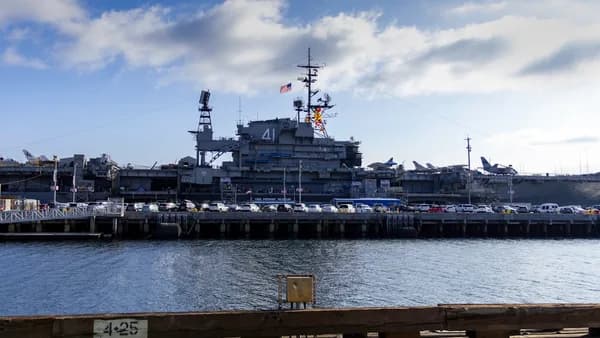
Implementing a blockade of Iran’s ports and ensuring the safety of transit through the Strait of Hormuz is a complex military operation—one that plays to the strengths of the U.S. Navy but is not without significant risks. The main components of such a blockade would likely involve the deployment of U.S. carrier strike groups, surface combatants, and submarines to key positions in the Persian Gulf and along the approaches to Iranian ports [Source: Source].
The U.S. Navy could enforce the blockade by intercepting and inspecting vessels suspected of carrying prohibited cargo to or from Iran. This would require a constant naval presence, with destroyers, cruisers, and potentially allied vessels conducting patrols, hailing ships, and deploying boarding teams. The U.S. could also use maritime surveillance aircraft and drones to monitor movements and provide targeting data. The goal would be to exert maximum pressure on Iran’s economy while minimizing the risk of direct confrontation.
Mine warfare is another critical dimension. Iran has a history of deploying naval mines in the Strait of Hormuz, as seen during the “Tanker War” of the 1980s. To keep the passage open for commercial shipping, the U.S. Navy would likely deploy specialized mine countermeasures ships, helicopters equipped with mine-detection gear, and unmanned underwater vehicles to sweep for and neutralize mines [Source: Source]. These operations would be painstaking and potentially hazardous, especially if Iran actively seeks to disrupt them.
While the U.S. enjoys technological and numerical superiority, a blockade and mine-clearing mission would require extensive coordination with regional allies, such as the United Kingdom, France, and Gulf Cooperation Council states, who could provide additional naval assets and logistical support. The complexity of these operations underscores the high stakes and potential for miscalculation.
Iran’s Response and Regional Implications
Iran has responded to the U.S. blockade threat with defiance. Senior Iranian officials have declared that any attempt to cut off its maritime access would be considered an act of war. The Iranian military has raised its alert status, with the Islamic Revolutionary Guard Corps (IRGC) reportedly preparing a range of countermeasures, including the possibility of closing the Strait of Hormuz to all traffic—a move that would disrupt not only U.S. interests but also those of major oil-importing nations [Source: Source].
In addition to its mine-laying capabilities, Iran possesses a diverse arsenal of anti-ship missiles, fast attack craft, and submarines designed to operate in the shallow, confined waters of the Persian Gulf. These assets could be used to harass or attack commercial and military vessels, raising the risk of escalation. Iran’s leaders have also threatened to target U.S. bases and allied infrastructure in the region if hostilities break out.
The blockade threat and potential Iranian retaliation have heightened security concerns for neighboring countries, particularly those in the Gulf Cooperation Council. Many of these states rely on the Strait of Hormuz for their own oil exports and are wary of being drawn into a broader conflict. The specter of a naval confrontation, combined with the risk of spillover attacks, has prompted regional governments to bolster their defensive measures and engage in back-channel diplomacy to prevent further escalation [Source: Source].
Economic and Market Reactions
News of the U.S. blockade plans sent immediate shockwaves through global oil markets. Oil futures spiked in the hours following the announcement, with traders pricing in the risk of supply disruptions from one of the world’s principal energy corridors. Dow Jones futures, which initially fell on broader geopolitical concerns, pared losses as investors digested the potential economic implications of a prolonged standoff in the region [Source: Source].
Market analysts note that the mere threat of a blockade or military engagement in the Strait of Hormuz is enough to induce volatility in energy prices. The uncertainty has led to increased hedging activity and a rally in safe-haven assets, such as gold and U.S. Treasuries. For oil-importing economies, sustained high prices could translate into higher inflation and slower growth, while exporters in the region face the risk of their shipments being delayed or halted by conflict.
If the blockade persists or escalates into open hostilities, the economic fallout could be severe. Shipping insurance rates would likely soar, rerouting of tankers could strain logistics, and energy-dependent industries worldwide would feel the pinch. Both the International Energy Agency and OPEC have issued statements urging restraint and highlighting the need for uninterrupted energy flows [Source: Source]. The situation has underscored the vulnerability of the global economy to localized geopolitical shocks in critical supply chains.
Expert Perspectives and Strategic Logic
Defense analysts are divided on the feasibility and wisdom of a full-scale U.S. naval blockade of Iran’s ports. Proponents argue that a blockade could exert significant economic pressure on Tehran, potentially forcing it to reconsider its regional policies without resorting to direct military action. However, critics warn that Iran’s asymmetric capabilities—such as mine warfare, missile attacks, and proxy operations—could make the mission costly and unpredictable [Source: Source].
The strategic rationale for the blockade, according to U.S. officials, is to deter further Iranian aggression and to protect vital shipping lanes. By demonstrating its ability to control access to the Strait, the U.S. hopes to signal resolve not only to Iran but also to international partners concerned about regional stability. Yet, as some experts point out, blockades are historically fraught with risks. They can escalate quickly, invite retaliatory measures, and are difficult to enforce over extended periods.
Diplomatic alternatives remain on the table, but prospects for near-term de-escalation appear slim. Previous negotiations between Washington and Tehran have faltered over issues ranging from nuclear activities to regional influence. Regional stakeholders, including European and Asian allies, have called for restraint and urged both parties to pursue dialogue rather than confrontation [Source: Source].
The broader geopolitical context also shapes the calculus. The Strait of Hormuz has long been a flashpoint, and any direct clash between the U.S. and Iran could have cascading effects across the Middle East, from Iraq and Syria to Yemen and Lebanon. As Axios notes, the logic behind the blockade reflects both immediate security concerns and the enduring challenge of managing adversarial relations in a region where missteps can have global consequences [Source: Source].
Conclusion: Navigating a Risky Showdown
The unfolding naval confrontation between the United States and Iran in the Strait of Hormuz represents one of the gravest security challenges in recent years. With so much of the world’s oil supply at stake, the potential for miscalculation or unintended escalation is high. Both sides appear determined to defend their interests, raising the risk of a military clash that could draw in regional and global powers.
As diplomatic efforts struggle to gain traction, the situation demands close monitoring by policymakers, market participants, and the international community. Whether the standoff results in a negotiated compromise, a prolonged standoff, or open conflict will have profound implications not just for the Middle East, but for global economic and security stability. The coming weeks will be critical in determining which path prevails [Source: Source].