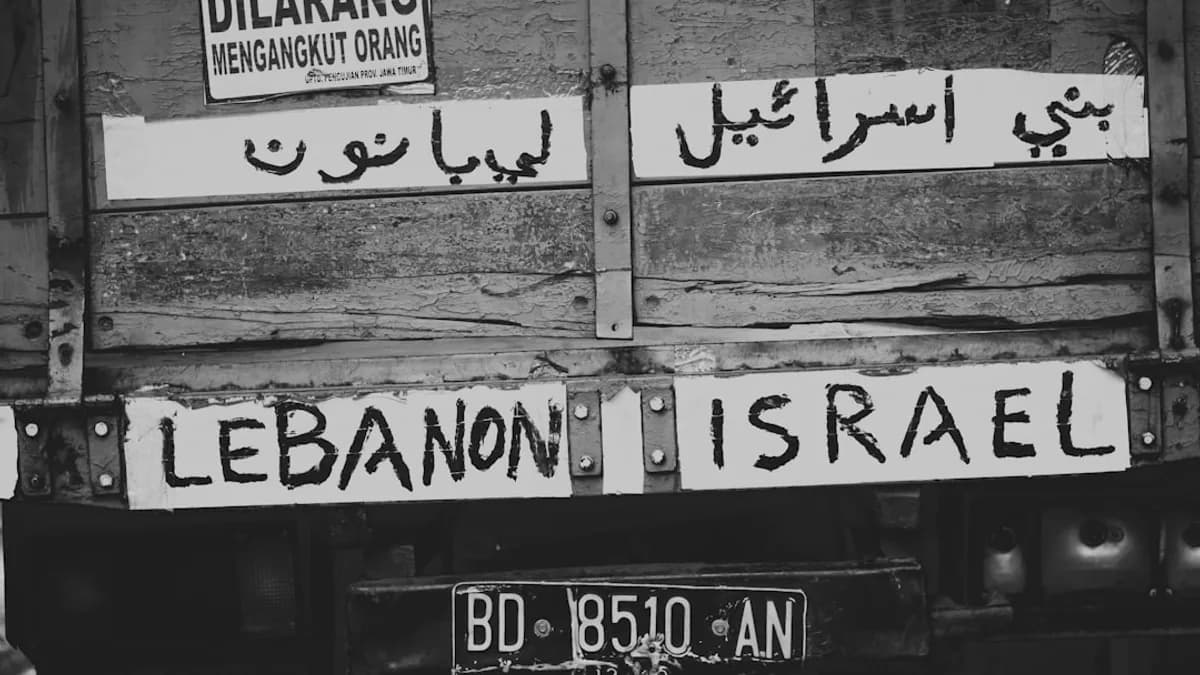
Introduction: Overview of the US-mediated Lebanon-Israel Talks
The latest round of US-hosted talks between Lebanon and Israel has concluded, marking a significant event in the long and complex history of relations between the two neighboring states. These discussions, held in Washington, brought together senior Lebanese and Israeli envoys for direct negotiations—a rare occurrence considering decades of hostility and intermittent armed conflict. The talks were mediated by American officials and took place against a backdrop of heightened geopolitical tensions, including the ongoing standoff between the United States and Iran, as well as regional anxieties over the influence of militant groups such as Hezbollah. This summit is seen as historic, not only for its direct engagement between Israel and Lebanon but also for its potential to impact the broader Middle East peace process [Source: Source].
Historical Background: Lebanon-Israel Relations and Conflicts
Lebanon and Israel share a troubled history, marked by wars, border disputes, and a persistent lack of diplomatic relations. Since the creation of Israel in 1948, the two countries have been officially at war, with Lebanon refusing to recognize the Israeli state and both sides experiencing repeated border clashes. The 1982 Israeli invasion of Lebanon, which aimed to expel the Palestine Liberation Organization (PLO), entrenched hostilities and set the stage for the rise of Hezbollah, an Iran-backed Shiite militant group that has since become a dominant force in Lebanese politics and a key adversary of Israel.
Hezbollah’s presence in southern Lebanon has led to frequent flare-ups, most notably the 2006 Israel-Hezbollah war, which caused widespread destruction and resulted in a UN-brokered ceasefire but failed to resolve core disputes. The group’s vast arsenal and its ties to Iran have been central concerns for Israel, which views Hezbollah as a direct security threat. Attempts at peace or formal negotiations have faltered repeatedly, often due to deep mistrust, disputes over the Shebaa Farms area, and the unresolved status of Lebanese prisoners in Israel.
International actors, particularly the United States and France, have intermittently sought to mediate between the two sides. However, efforts have been stymied by regional power struggles, internal Lebanese divisions, and the complex web of alliances that define Middle Eastern geopolitics. The US, in particular, has long played a balancing role, supporting Israel’s security while encouraging dialogue with Lebanon to stabilize the volatile border region [Source: Source].
The 2024 US-Hosted Talks: Key Participants and Objectives
The 2024 summit in Washington was notable for its high-profile participants and ambitious agenda. Hosted by US officials, including Senator Marco Rubio, the talks brought together official envoys from both Lebanon and Israel—a diplomatic breakthrough in itself given the absence of formal relations. The US aimed to facilitate dialogue on several contentious issues: demarcating the land and maritime borders, addressing cross-border security threats, and exploring the possibility of a broader peace agreement.
Israeli and Lebanese delegations arrived with limited mandates but clear objectives. For Israel, the focus was on reducing security risks along its northern border and curbing Hezbollah’s military capabilities. Lebanon, on the other hand, sought to assert sovereignty, secure its territorial claims, and address economic concerns related to offshore energy resources in the eastern Mediterranean.
These talks were closely tied to the broader US foreign policy strategy in the region, particularly as Washington seeks to contain Iran’s influence and foster stability among its allies. By convening the two sides directly, the US signaled its commitment to diplomatic engagement, even as the region remained tense due to ongoing hostilities involving Iran and its proxies [Source: Source].
Challenges and Controversies Surrounding the Talks
Despite the historic nature of the negotiations, a range of challenges and controversies shadowed the summit. Chief among these is Iran’s deep influence in Lebanon through Hezbollah, which many see as an obstacle to genuine peace. Hezbollah’s military power and its alignment with Tehran make it difficult for the Lebanese government to negotiate independently, complicating the prospects for any lasting agreement.
French President Emmanuel Macron also faced criticism for his approach to Iran and Hezbollah, with some international observers and regional actors questioning France’s willingness to confront these groups directly. This criticism intensified as the US took a more active role in convening the summit, highlighting differences in Western strategies toward the region [Source: Source].
Additionally, the talks were held amid ongoing US-Iran tensions, including the American blockade of Iranian-linked ports—a development that affected regional economies and heightened security anxieties. Domestic politics also played a significant role: Lebanese leaders grappled with internal divisions and public skepticism about engaging with Israel, while Israeli officials were under pressure from political factions wary of making concessions. These overlapping challenges underscored the fragility and complexity of the negotiation process [Source: Source].
Potential Outcomes and Implications of the Talks
The Washington summit offered a rare opportunity for potential breakthroughs, though expectations remained cautious. Possible outcomes included agreements on border demarcation, which could unlock joint economic opportunities such as offshore energy exploration, and mechanisms for managing cross-border security incidents. Even limited progress would represent a step toward de-escalating one of the Middle East’s most persistent flashpoints.
A more comprehensive peace deal, while unlikely in the immediate term, could have far-reaching implications. Regional stability would be enhanced, reducing the risk of another major Israel-Hezbollah conflict and fostering economic cooperation. For the US, a successful mediation would bolster its standing as a diplomatic leader in the region and demonstrate the value of sustained engagement, especially as it competes with other powers for influence in the Middle East.
Conversely, a failure or stalemate could entrench divisions and embolden hardline factions on both sides. For Lebanon, ongoing instability would perpetuate economic hardship and political paralysis. For Israel, unresolved security threats would necessitate continued military vigilance. The international community, meanwhile, would be forced to reconsider its strategies for promoting peace and addressing Iran’s regional ambitions [Source: Source].
Conclusion: The Road Ahead for Lebanon-Israel Relations
While the US-mediated talks between Lebanon and Israel have concluded without a dramatic breakthrough, their significance should not be underestimated. The willingness of both sides to engage directly—however limited the scope—represents a tentative step toward dialogue in a region often defined by entrenched hostilities. Continued international mediation, particularly by the US, will be crucial in sustaining momentum and encouraging further negotiations.
The road ahead is uncertain, but the talks have highlighted the importance of persistent diplomacy and the potential for incremental progress. As regional and global powers remain invested in Middle East stability, the hope is that renewed dialogue will eventually yield tangible benefits for both Lebanon and Israel, paving the way for a more peaceful future [Source: Source].