Introduction: Overview of the U.S. Attack on Iranian Cargo Ship in the Arabian Sea
A flashpoint in the Arabian Sea has reignited fears of a wider confrontation between the United States and Iran. On [recent date], U.S. naval forces fired on an Iranian cargo ship, claiming it was engaged in activities that threatened regional security. The incident, which unfolded in the tense waters near the Strait of Hormuz, immediately drew condemnation from Tehran—who labeled the action as “piracy”—and sparked urgent debate among global powers already anxious over the region’s fragile stability [Source: Source]. With the world’s attention fixed on the Middle East ceasefire talks and global energy markets on edge, this maritime clash underscores how a single event can ripple far beyond the waves, affecting diplomacy, economics, and security in unpredictable ways.
Background: Historical Context of U.S.-Iran Maritime Confrontations
To understand the gravity of this latest clash, it’s crucial to revisit the history of U.S.-Iran encounters at sea—especially in the Strait of Hormuz, the world’s most vital oil chokepoint. The narrow waterway, funnelling roughly a fifth of global oil shipments, has long been a theater for geopolitical brinkmanship. Tensions famously flared in the 1980s during the “Tanker War,” when both nations targeted each other’s commercial vessels amid the Iran-Iraq War. More recently, 2019 saw a series of tanker seizures, drone shoot-downs, and near-miss confrontations, with both sides flexing naval muscle and leveraging the strait’s strategic importance [Source: Source].
Every incident has reinforced a cycle of escalation: U.S. sanctions and military patrols provoke Iranian countermeasures, which in turn justify further Western deployments. The result is a constant undercurrent of suspicion and brinkmanship, with commercial shipping often caught in the crossfire. Each confrontation not only heightens the risk of accidental conflict but also sends shockwaves through global oil markets, insurance rates, and diplomatic efforts to reduce tensions.
Details of the Incident: What Happened During the U.S. Interception of the Iranian Cargo Ship
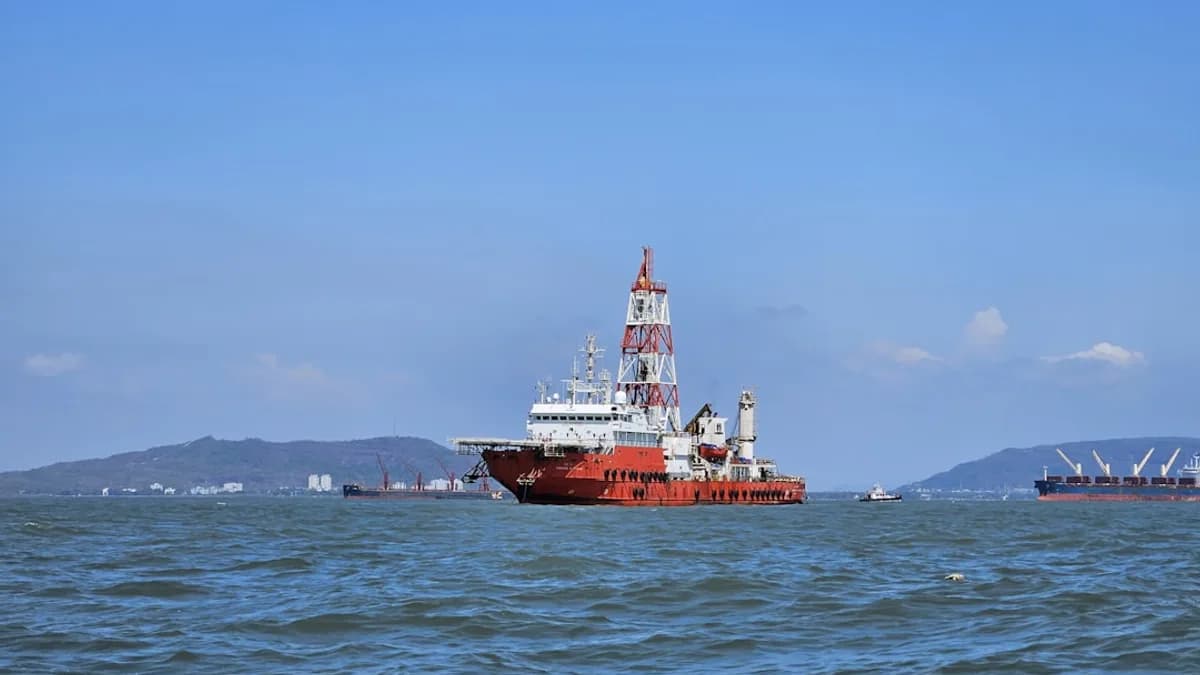
According to official reports, the incident occurred in international waters of the Arabian Sea, near the entrance to the Strait of Hormuz. U.S. military sources state that naval assets intercepted and fired on the Iranian cargo vessel after it allegedly ignored repeated warnings to halt. The Pentagon claims the ship was suspected of transporting sanctioned materials, possibly weapons or military equipment intended for allied groups in the region—a charge Iran vehemently denies [Source: Source].
Iranian authorities, for their part, have condemned the interception as an act of “piracy” and vowed to respond. The cargo ship’s manifest and ultimate destination remain under scrutiny, as does the precise nature of its cargo. While the U.S. asserts it acted within the bounds of international law to prevent destabilizing arms transfers, Iran insists the vessel was engaged in legitimate commercial activity. The incident was reportedly captured on video, with U.S. communications warning: “Prepared to disable you,” highlighting the seriousness of the confrontation [Source: Source].
Geopolitical Implications: Impact on Middle East Stability and International Relations
This maritime clash could not have come at a more delicate moment. Ceasefire efforts across the Middle East—spanning the Israel-Gaza conflict and broader U.S.-Iran negotiations—are already teetering. The incident risks undermining diplomatic progress by hardening positions on both sides and fueling mutual distrust [Source: Source].
International response has been swift: the UN and EU have called for restraint, while regional powers like Saudi Arabia and the UAE monitor developments closely. For Washington, the interception demonstrates resolve to enforce sanctions and maritime security. For Tehran, it’s a rallying cry against perceived Western aggression. The broader risk is that tit-for-tat actions could spiral into direct conflict, derailing talks on nuclear issues and regional security frameworks. For Europe and Asia—heavily reliant on Gulf oil flows—any escalation threatens economic and energy security, reinforcing calls for de-escalation and rules-based order at sea.
Economic Consequences: Effects on Oil Prices and Global Energy Markets
The immediate fallout was clear: oil prices surged as news of the attack broke, with traders factoring in the specter of disrupted tanker traffic through the Strait of Hormuz [Source: Source]. Historically, even the threat of military action in these waters has spiked crude prices, given the region supplies nearly 20% of daily global oil consumption.
Energy analysts warn that repeated maritime incidents destabilize market confidence, driving up insurance premiums for shipping and creating volatility in fuel costs worldwide. For major importers like China, Japan, and India, the risk of sustained tension could prompt strategic stockpiling or a renewed push for alternative energy sources. The incident underscores how maritime security is not just a regional issue—it’s a linchpin of global economic stability.
Legal and Security Perspectives: Assessing Maritime Law and Rules of Engagement
Legally, the interception sits at a contentious intersection of international maritime law and military necessity. Under the United Nations Convention on the Law of the Sea (UNCLOS), ships are generally free to navigate international waters unless engaged in unlawful acts such as weapons smuggling or piracy. The U.S. claims its action was justified by intelligence and ongoing sanctions enforcement, while Iran accuses Washington of violating the freedom of navigation and committing piracy [Source: Source].
Security experts note that such confrontations test the limits of naval rules of engagement. U.S. warships typically operate under strict protocols, escalating force only after warnings are ignored and perceived threats persist. However, the ambiguity around the cargo ship’s activities and the lack of an independent investigation make it difficult to assess the legality unequivocally. The episode highlights the urgent need for clear, enforceable norms governing naval interactions, especially in contested waters.
Conclusion: What This Incident Means for Future U.S.-Iran Relations and Regional Security
The U.S. firing on an Iranian cargo ship is more than a single maritime incident—it’s a symptom of deep-rooted mistrust and unresolved disputes that continue to destabilize the Middle East. As both sides trade accusations and vow further action, the risk of miscalculation looms large, threatening not only ongoing diplomatic efforts but also the security of global energy supplies and maritime trade routes [Source: Source].
Looking ahead, much will depend on whether cooler heads prevail—whether through backchannel dialogue, third-party mediation, or a renewed push for maritime security agreements. For industry leaders, energy planners, and policymakers, the lesson is clear: in an era of geopolitical uncertainty, even a distant flash of gunfire can trigger global repercussions. Vigilance, diplomatic engagement, and investment in maritime security will be essential to prevent the next crisis from spiraling out of control.