Introduction: Understanding the Clash Between Trump and Pope Leo XIV
When politics and faith collide, the aftershocks ripple far beyond the campaign trail or the pulpit. The recent, high-profile feud between former President Donald Trump and Pope Leo XIV has put American Catholics in the crosshairs of a cultural and spiritual tug-of-war. As Trump’s rhetoric grows ever more entwined with religious symbolism—culminating in the much-debated concept of a ‘MAGA Jesus’—the Vatican has responded with forceful rebukes, warning against political co-option of core Christian values. For millions of Catholics, this isn’t just political theater; it’s a struggle over the soul of their faith and what it means to be “Catholic first” in an age of polarized allegiances [Source: Source].
The Roots of the Feud: Examining the ‘MAGA Jesus’ Controversy
Pope Leo XIV’s recent statements have struck a nerve by directly criticizing the “MAGA Jesus” phenomenon, a shorthand for the way Trump and his supporters have invoked religious imagery to sanctify their political cause. The Pope’s message—delivered with characteristic candor—warned that conflating Christianity with any political movement risks distorting the message of Christ and undermining the Church’s moral authority [Source: Source].
Central to the Pope’s critique is his concern that the faith is being wielded as a partisan weapon, rather than a universal call to compassion, humility, and justice. The “MAGA Jesus” label emerged in response to rallies and campaign materials where Trump or his surrogates depicted him as a divinely chosen leader, sometimes even echoing biblical language or imagery. For example, campaign banners at rallies have carried slogans like “Jesus is my Savior, Trump is my President,” a conflation that blurs the line between spiritual devotion and political loyalty.
Trump, never one to shy from confrontation, has fired back, accusing the Vatican of meddling in American politics and dismissing the Pope’s warnings as out-of-touch with the needs and beliefs of “real” Christians. The feud escalated as both leaders leaned into their respective bases, with Trump’s camp portraying the Pope as an elitist foreigner trying to dictate American values, and the Vatican doubling down on calls to safeguard the Church’s independence from temporal power [Source: Source].
This tension is not without precedent. Throughout history, political leaders—from Napoleon to John F. Kennedy—have clashed with the papacy over the boundaries between faith and governance. But the current dispute stands out for its fusion of social media spectacle, mass mobilization, and the deployment of religious symbolism in the service of political identity.
Voices from the Pew: How Sunday Mass Attendees View the Trump-Pope Conflict
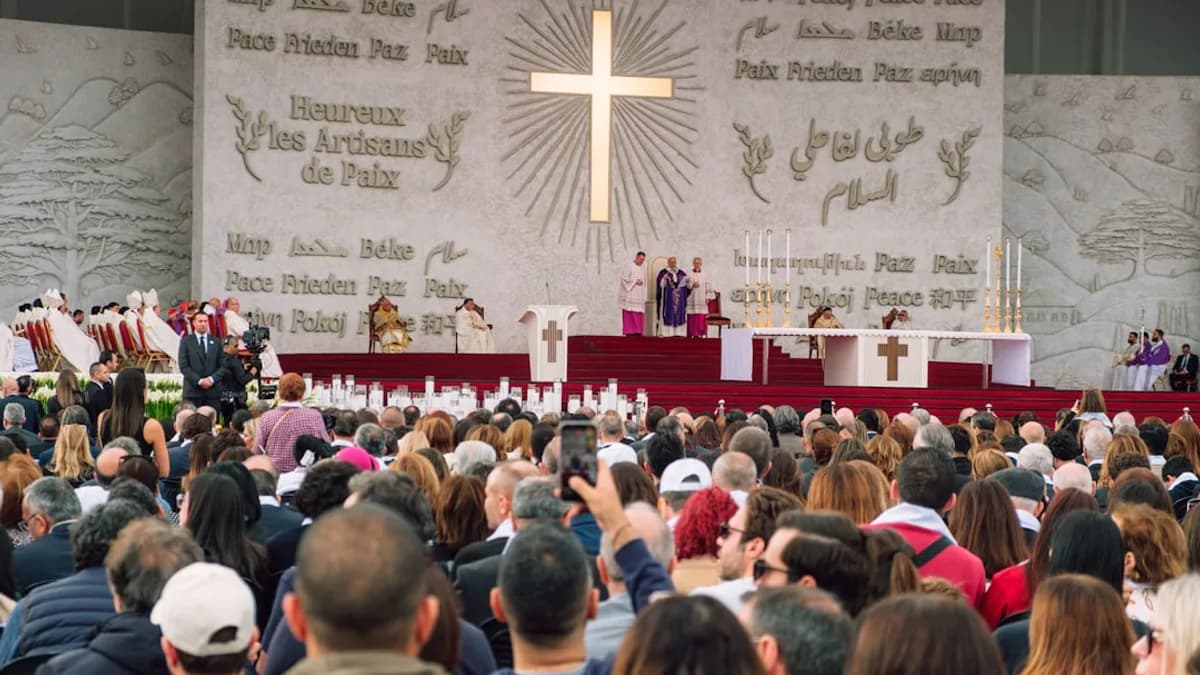
Step outside a cathedral on Sunday morning, and you’ll hear a chorus of opinions—many of them more nuanced than the headlines suggest. For some parishioners, the Pope’s intervention is a welcome reaffirmation of what it means to be Catholic. “We’re Catholic first,” one attendee told The Guardian, echoing a sentiment shared by many who see their faith as transcending any political figure or movement. These Catholics argue that Trump’s rhetoric, while resonant with some, often runs counter to the Church’s teachings on humility, care for the poor, and the dangers of pride [Source: Source].
Others, however, view the Vatican’s criticism as an overreach. “The Pope shouldn’t be telling us how to vote,” said another mass-goer, expressing frustration at what they perceive as the Church’s drift into political advocacy. Among Trump supporters, there’s a strong sense that the Pope’s critique is misdirected—or even politically motivated—especially when they feel that mainstream institutions are already aligned against them.
Still, there are voices who see value in both perspectives. “It’s uncomfortable, but maybe it’s good we’re having these conversations,” said a parishioner outside San Fernando Cathedral in San Antonio, referencing recent discussions about the intersection of faith and public life [Source: Source]. For them, the Trump-Pope feud is less a battle for supremacy and more an opportunity to clarify what Catholic social teaching demands in a complicated world.
A generational divide is also evident. Older Catholics, shaped by memories of JFK’s campaign and Vatican II’s sweeping reforms, tend to emphasize the separation of church and state. Younger Catholics, meanwhile, are more likely to see faith as a lens for activism, whether that means advocating for immigrants or defending traditional values. Across the board, what emerges is a shared desire to reconcile deep-seated beliefs with the messy realities of American democracy.
Broader Implications: What the Feud Reveals About Religion and Politics in America
The Trump-Pope feud is a microcosm of a broader trend: the deepening polarization within American religious communities over political figures and issues. Once, the Catholic Church in the U.S. was a unifying force for immigrants and their descendants, providing a common identity that transcended political differences. Today, that unity is increasingly challenged as partisan divides seep into the pews.
This polarization is not unique to Catholicism. Evangelical churches, for example, have experienced similar rifts over Trump-era politics, with some congregations splitting over questions of race, immigration, and the proper relationship between faith and government. But the Catholic context is distinctive: the Church’s global reach, hierarchical structure, and moral authority make its interventions especially potent—and potentially divisive.
For the Vatican, the challenge is to speak prophetically without alienating large segments of the faithful. Pope Leo XIV’s rebuke of “MAGA Jesus” signals a willingness to confront political idolatry, but it also risks reinforcing perceptions among American conservatives that the Church is drifting leftward. Meanwhile, Trump’s embrace of religious language appeals to those who feel besieged by secularism but may inadvertently foster a kind of “Christian nationalism” that the Church has historically warned against.
The impact on Catholic unity is already visible. According to recent surveys, U.S. Catholics are now as likely to sort themselves by political party as by religious observance, with sharp divides over issues like immigration, social justice, and the role of women in the Church [Source: Source]. Public perception of the Church, too, is shaped by these conflicts: headlines about papal rebukes and presidential pushback risk overshadowing the Church’s broader mission of service and reconciliation.
Navigating these divisions requires both courage and humility from religious leaders. The path forward is neither withdrawal from public life nor uncritical endorsement of any political movement. Instead, the Church must chart a course that speaks truth to power while listening carefully to the lived experiences of its members.
Conclusion: Prioritizing Faith Over Politics in a Divided Catholic Community
The Trump-Pope feud reminds us that Catholics—indeed, all people of faith—are called to place their spiritual identity above partisan loyalties. In an era where political tribes often demand total allegiance, the Church’s role as a sanctuary of conscience and community is more important than ever. Dialogue, not dogmatism, is the path to healing: Catholics must engage one another with humility, remembering that the heart of their faith is not found in any politician or policy, but in the Gospel’s call to love and serve.
As America’s Catholic community grapples with these tensions, there is hope for renewal. The current conflict, painful as it may be, could serve as a catalyst for deeper reflection and unity. By prioritizing faith over factionalism, Catholics have the opportunity to model a more generous and inclusive vision of public life—one that honors both their tradition and the pluralism of the society in which they live.