Introduction: Understanding the Current U.S. Blockade on Iran
President Donald Trump has announced that the U.S. blockade on Iran is "in full force" and will remain so until a new deal is reached between the two nations [Source: Source]. This statement comes amid ongoing tensions in the Persian Gulf, a region that has seen repeated confrontations and heightened security concerns over the past several years. The blockade focuses on restricting Iran's maritime activities, particularly through the strategic Strait of Hormuz—a vital artery for global oil shipments.
The U.S. stance aims to exert maximum pressure on Iran to negotiate terms related to its nuclear program and regional influence. With American naval patrols actively enforcing restrictions, the situation has significant implications for international trade, energy markets, and geopolitical stability. Understanding the nature of this blockade and its broader context is crucial for grasping the complexities of current U.S.-Iran relations and their impact on the world.
What is a Naval Blockade? Key Concepts and Legal Framework
A naval blockade is a military tactic wherein one nation uses its naval forces to restrict the movement of goods, vessels, or people to and from an adversary's ports. The primary purpose of a blockade is to apply economic and strategic pressure, often during times of conflict or heightened tension, without resorting to direct warfare. Unlike other maritime security measures such as embargoes or sanctions, a blockade involves the physical presence of military assets to enforce restrictions on access and movement.
International law provides a framework for the use and legitimacy of blockades. The United Nations Convention on the Law of the Sea (UNCLOS) outlines rules concerning freedom of navigation and the protection of neutral shipping. Under UNCLOS, blockades are generally only permissible during declared armed conflicts and must be conducted in accordance with humanitarian principles. They cannot indiscriminately target civilian shipping or interfere with neutral nations’ trade unless those vessels are reasonably suspected of supporting the enemy.
Legal controversies often arise when blockades are implemented in international waters or during ambiguous conflict situations. Questions about proportionality, necessity, and the protection of civilian interests frequently surface, especially when the blockade impacts global commerce. For example, blockades in the Strait of Hormuz, a busy international waterway, raise concerns about whether such actions violate the rights of other nations or disrupt legitimate free passage [Source: WVTF].
Enforcement is also complicated by the challenge of distinguishing between military and civilian vessels, and by the risk of escalation if blockades are perceived as acts of aggression or unlawful interference. As such, the legitimacy and effectiveness of naval blockades are often debated in both political and legal arenas.
The Strategic Importance of the Strait of Hormuz
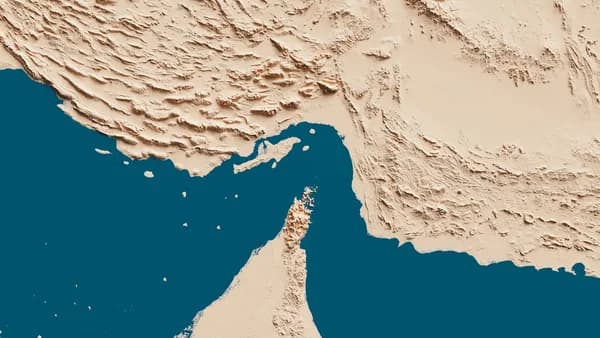
The Strait of Hormuz is one of the world’s most critical maritime chokepoints. Located between Iran and Oman, it connects the Persian Gulf to the Arabian Sea and is the primary passageway for oil exports from countries such as Saudi Arabia, Iraq, the United Arab Emirates, and Kuwait. On average, about 20% of global oil trade flows through the narrow strait each day, amounting to nearly 21 million barrels [Source: Source].
Its geographic significance stems from its narrow width—just 21 miles at its most constricted point—making it particularly vulnerable to disruption. Any attempt to block or control the strait can have considerable effects on global energy prices, supply chains, and economic stability. The value of goods transported is immense, including not only oil but also liquefied natural gas and other essential commodities.
Disruptions in the Strait of Hormuz tend to ripple through international markets, triggering spikes in oil prices and uncertainty among investors. For global security, the strait’s openness is essential, and any blockade or restriction raises concerns about the potential for escalation, including broader regional conflict or even direct military engagement. Thus, the U.S. blockade on Iranian shipping in this area is not just a bilateral issue—it holds considerable global importance.
Details of the U.S. Blockade on Iran: Implementation and Enforcement
The U.S. blockade on Iran is primarily enforced through robust naval patrols in and around the Strait of Hormuz. American warships and allied vessels maintain a visible presence, conducting inspections and intercepting ships suspected of carrying prohibited goods or supporting Iranian interests. The blockade aims to prevent Iran from exporting oil or receiving shipments that might bolster its economy or military capabilities, thereby increasing leverage in ongoing negotiations [Source: Source].
Despite these efforts, there have been reports and data suggesting that some Iran-linked vessels have managed to cross the U.S. blockade, either by evading detection or exploiting legal ambiguities [Source: Yahoo News Canada]. This highlights the challenges faced by the U.S. in maintaining a watertight blockade, especially given the high volume of commercial traffic and the complexity of maritime operations in the region.
The blockade’s objectives are clear: to pressure Iran into agreeing to terms on its nuclear program and regional activities, and to signal U.S. resolve to both Iranian authorities and international observers. Enforcement measures include boarding ships, monitoring cargo manifests, and leveraging intelligence assets to track suspicious movements.
However, the effectiveness of the blockade is under constant scrutiny. Iran has repeatedly challenged the restrictions, sometimes threatening to close the strait or retaliate against U.S. interests. Maintaining the blockade requires significant resources and diplomatic coordination, and the risk of miscalculation or unintended escalation remains high. The presence of international shipping complicates operations further, as neutral vessels must be treated with caution to avoid violating international norms.
International Reactions and the Role of International Law
The international community, including the United Nations, has emphasized the importance of adhering to established legal frameworks during periods of heightened tension [Source: Iosco County News Herald]. UN Secretary-General António Guterres recently remarked that "international law matters more than ever" in a chaotic global environment, underscoring the need for all parties to respect the rules governing maritime conduct.
Iran and its regional allies view the blockade as an act of aggression and a violation of their sovereign rights. Iranian officials have condemned U.S. actions, warning of potential retaliation and calling for international support to protect their interests. Other regional actors, such as Oman and the United Arab Emirates, have expressed concerns about the stability of the strait and the potential impact on their own economies.
Diplomatic and legal ramifications are significant. The blockade tests international law’s ability to balance security concerns with the principle of freedom of navigation—a core tenet of UNCLOS. While the U.S. argues the necessity of the blockade for national and allied security, critics point to the risk of escalation and the potential harm to global commerce.
International law aims to prevent the misuse of blockades, protect neutral shipping, and encourage diplomatic solutions over military measures. As tensions persist, global actors are watching closely to ensure that actions in the Strait of Hormuz do not undermine broader international norms and stability.
Conclusion: Implications of the Blockade and What to Watch Next
The U.S. blockade on Iran embodies both strategic and legal complexities, with implications that extend far beyond the Persian Gulf. As President Trump asserts that the blockade will stay "in full force" until a deal is reached, the situation remains fluid and fraught with risk [Source: Source]. If the blockade continues or escalates, it could disrupt global energy markets, provoke regional instability, and challenge the norms of international law.
Diplomatic efforts are essential alongside military measures. While naval patrols enforce restrictions, negotiation remains the only sustainable path to resolving underlying disputes. Stakeholders—including governments, energy companies, and shipping operators—must closely monitor developments in the strait, paying attention to shifts in policy, enforcement, and legal interpretations.
Ultimately, the outcome will depend on both the effectiveness of the blockade and the willingness of parties to engage in meaningful dialogue. The global community is watching, aware that the stakes are high and the consequences of miscalculation could be profound.