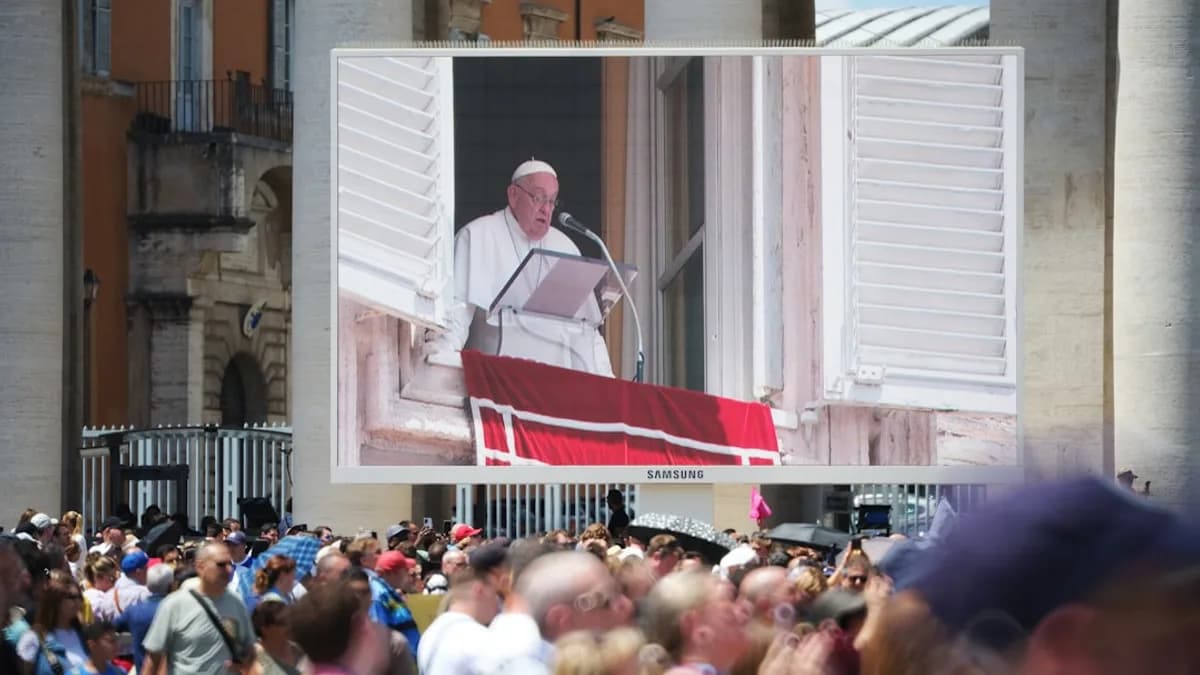
Introduction: Contextualizing the Trump-Pope Feud
In a highly publicized series of exchanges, former U.S. President Donald Trump and Pope Leo XIV have become embroiled in a war of words that has captivated global audiences. The feud began when Trump criticized Pope Leo XIV on social media, describing the pontiff as "weak" and "terrible" in his response to the escalating Iran conflict. The tension escalated further when, shortly after, Trump posted an image of himself depicted in a Jesus-like pose, a move that has sparked widespread debate over its symbolic significance and appropriateness.
This clash between one of the world's most prominent political figures and the spiritual leader of the Catholic Church is more than a personal spat—it reflects deep-seated tensions at the intersection of political authority and religious influence. The unfolding drama offers a lens through which to examine the ways in which leaders use rhetoric, imagery, and social media to assert their positions and shape public narratives [Source: Source].
Background: The Origins and Escalation of the Conflict
The conflict’s roots trace back to diverging views on the Iran war. Pope Leo XIV, known for his vocal advocacy for peace and humanitarian values, publicly criticized the prospect of military escalation in Iran. He called for restraint and a renewed focus on dialogue, emphasizing that the teachings of the Gospel prioritize compassion and the sanctity of life over violence [Source: Fortune]. This message was widely interpreted as a rebuke to President Trump’s administration, which had been signaling a harder line on Iran.
Trump responded swiftly and forcefully via social media, labeling the Pope as "weak" and "terrible"—characterizations that implied a lack of resolve and leadership in the face of international crisis. The Pope, however, remained undeterred. In an address to reporters, Pope Leo XIV stated, “I have no fear of the Trump administration,” reaffirming his commitment to the principles of the Gospel and his spiritual mission [Source: Mother Jones; NBC News]. He further suggested that Trump failed to grasp the core message of Christianity, framing the U.S. president’s rhetoric as out of step with the Church’s values.
These public exchanges quickly gained traction, fueling debate across traditional and social media. Commentators noted that while disputes between political and religious leaders are not new—historical precedents range from clashes between American presidents and the Vatican to earlier conflicts involving European monarchs—the speed and visibility of the current feud have been dramatically amplified by digital platforms.
As both Trump and the Pope continued to articulate their positions, their words resonated far beyond their immediate audiences, shaping public discourse around the complex relationship between political power and spiritual authority [Source: Source].
Analyzing Trump's Use of Religious Imagery
Perhaps the most controversial moment in this saga came when Trump posted an image of himself in a pose reminiscent of traditional depictions of Jesus Christ. The image, widely circulated on social media, showed Trump with a halo-like effect and a serene expression, immediately evoking centuries-old Christian iconography [Source: Source]. The decision to present himself in such a manner was met with a mix of outrage, satire, and bewilderment among commentators and the public alike.
From an analytical standpoint, the use of religious imagery by political figures is not unprecedented, but Trump’s choice was unusually explicit and provocative. By aligning himself with the figure of Jesus—a symbol of sacrifice, leadership, and divine authority—Trump appeared to be casting himself as a misunderstood martyr or savior within the context of his feud with the Pope. This move could serve several potential purposes: rallying his religious base, reframing the narrative to portray himself as a victim of unjust criticism, and positioning himself as a moral leader in his own right.
The implications of this self-representation are significant. In the United States, where the separation of church and state is enshrined in the Constitution but religious identity remains a powerful force in politics, such imagery can be both galvanizing and divisive. Supporters may see Trump’s post as an assertion of faith and moral strength, while critics argue it borders on blasphemy and undermines the dignity of both religious symbolism and political office.
Media reactions reflected this divide. Some outlets condemned the post as disrespectful to Christian beliefs, while others interpreted it as a calculated political maneuver designed to energize Trump’s base and distract from policy critiques [Source: The New York Times]. Social media users, meanwhile, responded with a mixture of memes, parodies, and earnest debate, underscoring the volatile mix of reverence and irreverence that characterizes contemporary online discourse.
Ultimately, Trump’s use of Jesus-like imagery underscores the increasingly blurred lines between political messaging and religious symbolism—a trend that raises important questions about the boundaries of leadership, faith, and public persuasion.
The Pope's Position and Its Significance
While Trump’s approach was confrontational and theatrical, Pope Leo XIV maintained a posture of calm and moral clarity. In his public statements, the Pope reiterated his commitment to the teachings of the Gospel, emphasizing that true leadership is defined not by displays of force but by courage, humility, and compassion [Source: Fortune]. His declaration that he has "no fear" of the Trump administration was both a personal reassurance and a broader message to his followers that faith should not be swayed by political intimidation.
This response is consistent with the Pope’s broader role as a moral and spiritual authority. By refusing to engage in personal attacks and instead focusing on the message of the Gospel, Pope Leo XIV positioned himself as a stabilizing force amid political turbulence. His stance on the Iran conflict—emphasizing diplomacy over aggression—reinforced the Vatican’s longstanding advocacy for peace and human rights.
The significance of the Pope’s approach extends beyond his immediate audience. For Catholics and non-Catholics alike, his calm defiance in the face of political criticism serves as a reminder of the enduring power of spiritual conviction. It also highlights the potential for religious leaders to influence public debate not through confrontation, but by modeling values-based leadership.
Moreover, the Pope’s handling of the feud may have a unifying effect within the Church and among his global followers, reaffirming the Vatican’s commitment to peace and justice even when faced with criticism from powerful leaders [Source: Source].
Broader Implications for Politics and Religion
The Trump-Pope feud illuminates the complex and often fraught relationship between political authority and religious influence. In an era where social media amplifies every statement and image, the boundaries between the sacred and the political are more porous than ever before.
For U.S.-Vatican relations, the conflict represents both a challenge and an opportunity. On one hand, sharp public disagreements can strain diplomatic ties, especially when they play out in such a visible and personal manner. On the other, open debate between world leaders—rooted in deeply held beliefs—can foster important conversations about the role of ethics, faith, and morality in global affairs [Source: NBC News].
Political leaders’ engagement with religious symbolism carries both risks and rewards. While invoking faith can mobilize supporters and create powerful narratives, it also runs the risk of alienating religious communities or trivializing sacred traditions. Trump’s Jesus-like image is a case in point: for some, it may reinforce his appeal as a champion of Christian values; for others, it crosses a line and undermines the seriousness of religious faith.
This episode also sheds light on contemporary political communication strategies. In the age of viral media, leaders increasingly rely on provocative statements and imagery to dominate the news cycle. The Trump-Pope feud, with its mix of personal attacks, symbolic gestures, and theological debate, is emblematic of a broader trend: the merging of spectacle and substance in public discourse.
As political and religious leaders navigate these challenges, the broader public is left to grapple with questions about the appropriate roles of faith and power in society—and the responsibilities that come with such influence [Source: Source].
Conclusion: Lessons and Future Outlook
The ongoing conflict between Donald Trump and Pope Leo XIV offers a revealing case study in the interplay of political ambition, religious authority, and public communication. Their exchanges—ranging from harsh criticism to symbolic self-representation—highlight the challenges and opportunities that arise when leaders wield the language and imagery of faith in the political arena.
At its core, the feud underscores the need for respectful dialogue and mutual understanding between political and religious authorities. As the world watches to see how this saga develops, it remains clear that the manner in which leaders communicate—both in words and images—can have far-reaching consequences for public perception, diplomacy, and the health of democratic discourse.
Looking ahead, this episode may serve as a cautionary tale about the power of symbolism and the importance of grounding political debate in shared values rather than personal attacks. How the Trump-Pope feud ultimately resolves will shape not only their legacies, but also the evolving relationship between politics and religion in the 21st century [Source: Source].