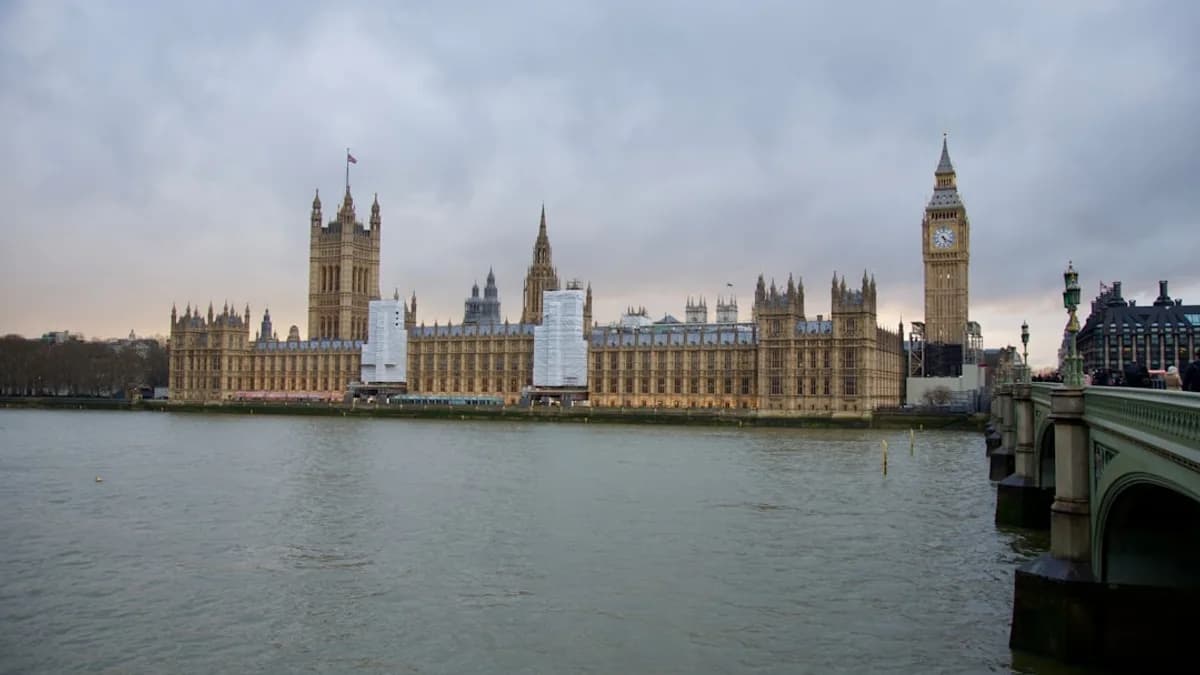
Introduction: The Growing Controversy Surrounding Starmer’s Ambassadorial Appointment
A political storm is gathering around newly minted UK Prime Minister Keir Starmer, threatening to overshadow his agenda just as his government finds its footing. At the center of the tempest: Starmer’s controversial decision to appoint Peter Mandelson as the UK’s ambassador to the United States—a move now mired in scandal due to Mandelson’s past ties with Jeffrey Epstein. The appointment, intended to signal diplomatic ambition and statesmanship, has instead unleashed a wave of public outrage and parliamentary dissent. Lawmakers across the aisle are demanding answers and accountability, as the issue refuses to fade from headlines, becoming a litmus test for Starmer’s leadership, integrity, and crisis management skills [Source: Source]. The situation now raises urgent questions about transparency, political judgment, and the government’s commitment to ethical standards at the highest level.
Background: Understanding the Epstein Link and Mandelson’s Vetting Failure
Peter Mandelson’s name is no stranger to controversy. A pivotal figure in the Labour Party’s modern history, Mandelson has long been regarded as both a shrewd strategist and a magnet for intrigue. However, his association with the late financier and convicted sex offender Jeffrey Epstein is what has made his latest appointment especially fraught.
Mandelson’s documented encounters with Epstein, including reported meetings at Epstein’s residences, have raised red flags not just in the UK but internationally. The connection is particularly toxic in the post-#MeToo era, where public tolerance for association with figures embroiled in sexual abuse scandals is vanishingly thin. For an ambassador—whose core function is to represent British values abroad—such baggage is not just embarrassing, but potentially damaging to the UK’s moral standing on the world stage.
What has ignited the current scandal, however, is not merely Mandelson’s past. It’s the perception that the government’s vetting process failed to adequately address or disclose these risks. According to reports, a Downing Street briefing paper suggests Starmer may have been informed of Mandelson’s vetting issues, but pressed ahead regardless [Source: Source]. This revelation has intensified scrutiny on both Mandelson and the Prime Minister, raising uncomfortable questions about who knew what—and when.
This is not the first time Britain’s vetting procedures have come under fire. Past appointments, from knighthoods to government advisory roles, have been derailed by undisclosed conflicts of interest or questionable associations. But the stakes are higher here: the US ambassadorship is arguably the UK’s most strategically significant diplomatic posting. Any perception of laxity, or worse, willful blindness, in the vetting process could have serious repercussions for national security and international trust.
Political Fallout: Starmer’s Leadership Tested Amid Parliamentary Backlash
The fallout in Westminster has been swift and unforgiving. Starmer now faces a chorus of angry lawmakers, with some calling for resignations and others demanding a full public inquiry. Opposition MPs have seized the moment to question Starmer’s judgment, asking whether his decision to stand by Mandelson signals a disregard for ethical standards or a miscalculation of public sentiment [Source: Source].
This episode is rapidly evolving into a defining test of Starmer’s political capital. The Prime Minister, who ran on a platform of transparency and “cleaning up politics,” now finds himself accused of the very cronyism and obfuscation he pledged to eradicate. The fact that the scandal is dominating parliamentary debate illustrates its gravity: it’s not just an internal Labour controversy, but a national issue with cross-party implications.
Adding complexity is the response from Starmer’s own ministers. Some have publicly defended the Prime Minister, insisting he can “absolutely” survive the Mandelson vetting row [Source: Source]. Their message: mistakes may have been made, but they are not disqualifying. Yet, history offers a cautionary tale. Previous leaders—from Tony Blair during the “cash for honours” affair to Boris Johnson’s handling of partygate—have found that public patience for ethical lapses is finite, and that internal party loyalty can quickly evaporate under sustained pressure.
The longer the controversy drags on, the more it threatens to sap Starmer’s authority. Already, the opposition is framing the episode as emblematic of a broader culture of unaccountability within the government. Labour MPs are privately expressing concern about the optics, wary that the issue could erode the party’s polling advantage and stall its legislative agenda.
For Starmer, the challenge is twofold: to manage the immediate crisis and to reassure both Parliament and the public that his administration is serious about upholding the highest standards. Failure to do so could embolden his critics and weaken his hand not just in the UK, but in crucial international negotiations.
Implications for UK-US Relations and Diplomatic Integrity
Ambassadors are more than envoys; they are the face of their nation’s values and a conduit for bilateral trust. Appointing someone as polarizing as Mandelson to the Washington post risks undermining both the credibility of UK diplomacy and the special relationship with the United States.
The US, still grappling with its own reckoning over elite connections to Epstein, is unlikely to view the situation with indifference. American officials, lawmakers, and media outlets are known for their scrutiny of diplomatic appointees—especially those tied, however indirectly, to scandals of sexual abuse or financial malfeasance. For UK interests in Washington, any hint of impropriety could complicate everything from trade negotiations to security cooperation.
More broadly, the episode spotlights the critical importance of robust ambassadorial vetting. In the era of digital transparency, even minor indiscretions are magnified; major ones can be career-ending and diplomatically disastrous. The UK’s diplomatic reputation—painstakingly rebuilt after Brexit—depends on the perception that its representatives are unimpeachable.
Leaving this controversy unresolved would set a dangerous precedent. It could signal to both allies and adversaries that Britain is willing to overlook ethical lapses for the sake of political expediency, eroding trust in UK institutions abroad. In a field where perception is often as important as reality, the damage to diplomatic integrity could be long-lasting, complicating not just US-UK relations but Britain’s standing on the global stage.
Opinion Analysis: What This Scandal Reveals About Political Accountability in the UK
At its core, the Mandelson affair is a referendum on political accountability and transparency in the UK. For years, the British public has demanded—and been promised—a cleaner, more open government. Yet, scandals like this one reveal persistent gaps in oversight, vetting, and ultimately, responsibility.
The controversy exposes a troubling pattern: elite figures too often skate through vetting processes, protected by networks of influence and institutional inertia. The fact that a Downing Street briefing paper may have flagged concerns about Mandelson’s suitability, only for those warnings to be ignored or downplayed, suggests a failure not just of process, but of political will [Source: Source].
This episode should be a wake-up call for all parties. The UK’s system of government appointments, while robust on paper, is clearly vulnerable to lapses in execution and judgment. There is a pressing need for reforms that would introduce greater transparency into the selection and vetting of key public officials—perhaps through independent oversight, public disclosure of potential conflicts, or mandatory parliamentary scrutiny for senior diplomatic posts.
Moreover, the scandal underscores the necessity of elevating ethical standards in public life. In an era when public trust in institutions is at a historic low, the perception that “one rule for the powerful, another for the rest” can be toxic to democracy itself. Starmer’s government—and indeed, all future governments—must recognize that accountability is not a slogan, but a practice that must be embedded at every level.
In the end, the Mandelson controversy is less about one individual and more about the system that enabled his appointment. If the UK is to restore faith in its democratic institutions, it must use this moment not to circle the wagons, but to institute real, lasting change.
Conclusion: Navigating Crisis and Restoring Trust in UK Leadership
The Mandelson scandal has quickly become a crucible for Prime Minister Starmer and his administration. With public and parliamentary confidence on the line, the government faces a stark choice: confront the failures head-on or risk prolonged reputational damage. Decisive action—whether through a transparent inquiry, reforms to the vetting process, or even a reconsideration of the appointment itself—will be essential in rebuilding trust.
Ultimately, the episode serves as a powerful reminder that effective governance depends on integrity and accountability, not just competence. If Starmer can learn from this crisis and demonstrate a genuine commitment to reform, he may yet turn a political liability into an opportunity for renewal. In a world where public faith is hard-won and easily lost, leadership must be measured not just by what is accomplished, but by how challenges are met. The UK—and its democracy—will be watching.