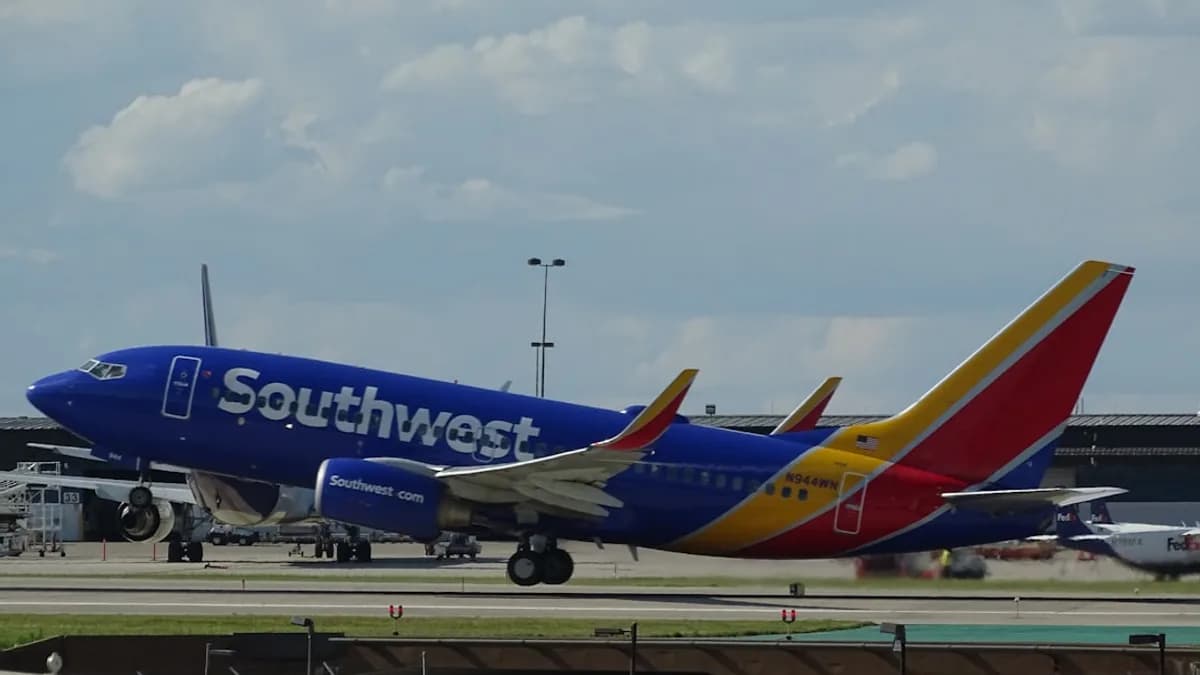
Introduction: Near-Miss Incident Involving Southwest Airlines Jets at Nashville Airport
In a chilling reminder of the razor-thin margins that separate routine air travel from disaster, two Southwest Airlines jets came dangerously close to colliding near Nashville International Airport (BNA) earlier this week. Cockpit alarms blared as the aircraft, both operating scheduled flights, approached each other at a proximity that triggered emergency protocols. Multiple news outlets swiftly confirmed the near-miss, bringing national attention to the event and prompting immediate action from federal authorities. The Federal Aviation Administration (FAA) has since launched a formal investigation to determine what went wrong—and, crucially, how such a close call can be prevented in the future [Source: Source].
Detailed Account of the Southwest Airlines Close Call Near Nashville International Airport
The incident unfolded in the busy airspace above BNA, a major hub for both domestic and connecting flights in the southern United States. According to initial reports, the two Southwest Airlines jets were following separate flight paths—one inbound for landing, the other preparing for departure or maneuvering nearby. The exact sequence of events is still under investigation, but what is clear is that both aircraft found themselves on converging courses at an altitude and distance that left little room for error [Source: Source].
Cockpit collision-avoidance systems, designed as the last line of defense, detected the escalating risk and automatically sounded alarms for both flight crews. Pilots, trained for precisely such emergencies, initiated evasive maneuvers. These split-second decisions—possibly involving abrupt changes in altitude or heading—successfully averted disaster, but not without significant stress for those in command.
Southwest Airlines responded with a statement expressing gratitude for the professionalism of its crews and affirming the airline’s commitment to safety. Airport authorities at Nashville International briefly halted some operations to assess the situation and ensure no further risks remained, resulting in minor delays but no injuries or damage.
This incident underscores how quickly circumstances can escalate in crowded terminal airspace, especially at airports like BNA, which has seen a surge in flight activity post-pandemic. The close call is now being dissected by both the airline and federal authorities, who are reviewing radar data, cockpit voice recordings, and air traffic control communications to piece together a complete picture of the near collision [Source: Source].
FAA Investigation and Safety Protocols Following the Near Collision
The FAA’s investigation is likely to be thorough and multifaceted, focusing on both human and technological factors. Early questions revolve around potential miscommunication between pilots and air traffic controllers, possible lapses in standard operating procedures, or even equipment malfunctions. Investigators will scrutinize air traffic transcripts, flight data recorders, and radar logs to identify any systemic vulnerabilities.
Standard aviation safety protocols are designed to create multiple layers of redundancy. These include established separation minima for aircraft in controlled airspace, continuous oversight by air traffic controllers, and onboard collision-avoidance systems (such as TCAS—Traffic Collision Avoidance System). When all safeguards function correctly, incidents like the one at Nashville are exceedingly rare. However, the system relies on flawless execution from both human operators and automated systems.
Depending on the findings, the FAA could recommend a range of corrective actions—from additional pilot and controller training to updates in airport procedures or even changes to automated alert thresholds. Southwest Airlines, as well as Nashville International Airport, may also face heightened scrutiny in upcoming regulatory audits. Historically, near-misses of this nature have led to industry-wide reviews, not just at the airline or airport involved but across the broader sector [Source: Source].
Analysis: Implications of the Southwest Jets Near-Miss for Aviation Safety
This near-collision comes at a pivotal moment for U.S. aviation. While the industry boasts an impressive safety record—fatal accidents involving major U.S. airlines remain extraordinarily rare—recent years have seen a spike in runway incursions and close calls nationwide. According to FAA data, serious near-misses increased in 2023, prompting Congressional hearings and calls for renewed investment in aviation infrastructure and training.
The Nashville incident highlights the critical importance of cockpit technology and rigorous pilot training. Collision-avoidance systems like TCAS have a proven track record of saving lives, but they are only effective when paired with highly skilled crews capable of rapid, decisive action. The professionalism displayed by the Southwest pilots in this case is a testament to the value of recurrent training and standardized emergency procedures.
However, each near-miss chips away at public confidence and puts airline reputations on the line. Passengers increasingly demand transparency and accountability, and both regulators and the flying public expect airlines to proactively address emergent risks. For Southwest Airlines, which has long marketed itself on reliability and customer trust, the stakes are particularly high.
From a regulatory perspective, such incidents often catalyze sector-wide reforms. The FAA may use the Nashville episode to justify further investments in air traffic control modernization, such as NextGen satellite-based navigation systems, which offer more precise tracking and separation capabilities. More broadly, the incident could accelerate efforts to enhance communication protocols between pilots and ground controllers, especially at airports experiencing rapid growth or increased traffic density.
Conclusion: Lessons Learned and Future Safety Measures at Nashville Airport
The close call over Nashville serves as a sobering reminder that the margin for error in aviation remains vanishingly small. While robust safety systems and well-trained crews averted tragedy this time, the incident underscores the need for constant vigilance, ongoing investment in technology, and transparent reporting of near-misses [Source: Source]. Both Southwest Airlines and the FAA have reiterated their commitment to thorough investigation and continuous improvement.
Looking ahead, Nashville International Airport can expect renewed focus on airspace management and operational protocols, with the possibility of updated procedures or infrastructure enhancements to reduce the risk of future incidents. For travelers, the takeaway is clear: while air travel remains one of the safest modes of transportation, it is the relentless pursuit of safety—by airlines, regulators, and airport authorities alike—that keeps it that way. Continued transparency, investment, and adaptability will be essential to ensure that close calls remain just that—and never become something worse.