Introduction: The Political Stakes of a Potential Supreme Court Vacancy
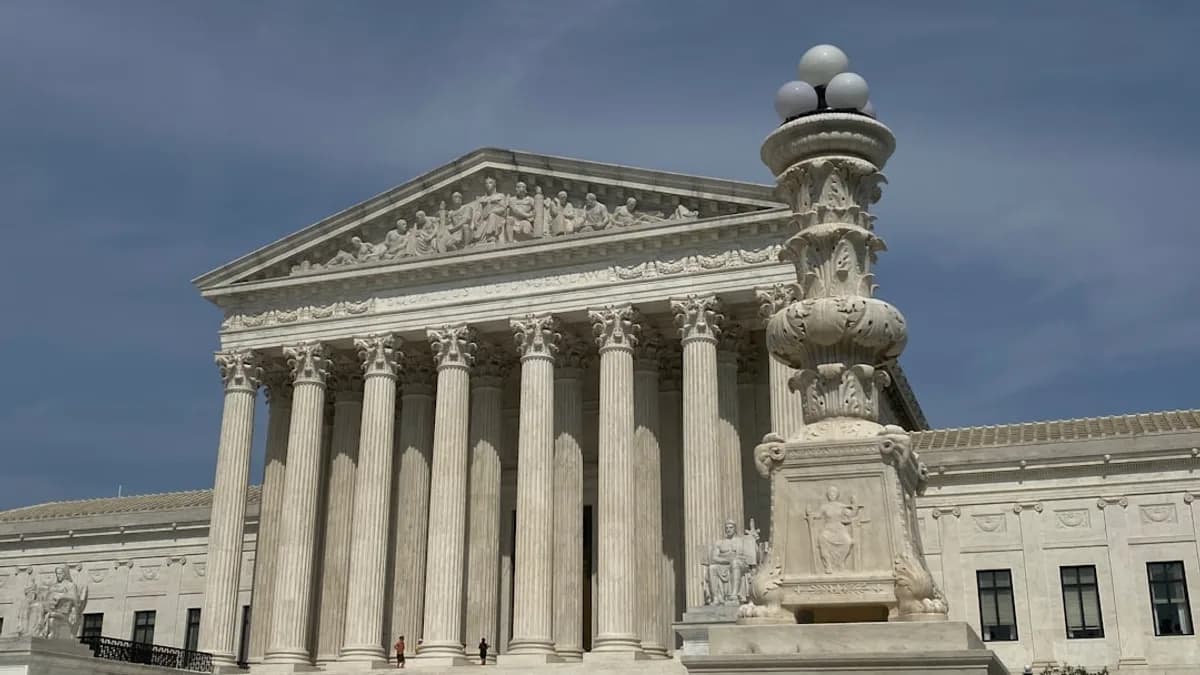
The United States Supreme Court stands as one of the most consequential institutions in American governance, often serving as the final arbiter on matters ranging from civil rights to the limits of executive power. As the 2024 midterm elections approach, speculation is mounting over a potential vacancy, particularly surrounding Justice Samuel Alito, one of the Court’s conservative stalwarts. In a political climate already charged with partisanship, the possibility of a Supreme Court seat opening has raised the stakes for both parties.
Senate Republicans, led by Minority Whip John Thune, have signaled their readiness to move swiftly should a vacancy arise, asserting that they are "prepared" to fill the seat, even with the election looming [Source: Source]. This posture underscores not only the high political value attached to Supreme Court appointments but also the heightened tensions that define this election cycle. The outcome of a confirmation battle could have profound consequences—not just for the balance of the Court, but also for the tenor of the midterm campaigns.
Senate GOP’s Strategy and Preparedness
Senate Republican leaders have wasted little time making clear their intentions. In recent statements, Senator John Thune emphasized the caucus's preparedness to confirm a replacement expeditiously if Justice Alito or another conservative justice were to retire [Source: Source]. This aligns with the GOP's broader approach in recent years to prioritize judicial nominations, viewing them as a legacy-defining issue for their party.
The political calculus for moving forward before the midterms is straightforward. With Republicans narrowly trailing Democrats in the Senate majority, the window to confirm a conservative justice could close after the elections, depending on the outcome. By acting quickly, the GOP could cement a right-leaning majority on the court for a generation, energizing their base and delivering on a central campaign promise.
However, this strategy is not without risk. History shows that Supreme Court confirmation battles can galvanize opposition as much as supporters. The 2020 confirmation of Justice Amy Coney Barrett, which took place just weeks before the presidential election, remains a point of contention and could serve as a rallying cry for Democrats. The compressed timeline could also intensify scrutiny of the nominee and the process, potentially leading to missteps or backlash.
At the same time, Senate Republicans hold a procedural advantage. With the filibuster for Supreme Court nominees eliminated, a simple majority is sufficient for confirmation. If the GOP moves decisively and maintains party unity, the path to confirmation is clear—assuming no unexpected defections or public backlash.
Potential Nominees and Their Political Implications
A central question in any Supreme Court vacancy is: who will be nominated? Senator Chuck Grassley, a senior Republican and influential voice on judicial matters, has publicly advocated for sitting senators such as Mike Lee (R-UT) or Ted Cruz (R-TX) as potential nominees [Source: Source]. Both are highly regarded by conservative activists and possess established records on constitutional and social issues.
Senator Lee, a former Supreme Court clerk, is known for his originalist legal philosophy and has been a leading voice in debates over federalism and religious liberty. Senator Cruz, a Harvard Law graduate and former Solicitor General of Texas, has built his profile on high-profile legal cases and a combative style that appeals to the GOP base.
Nominating a sitting senator carries unique political implications. First, it would reinforce the Court’s conservative tilt, especially on contentious issues such as abortion, gun rights, and executive authority. Second, it would highlight the increasingly political nature of judicial appointments, potentially deepening partisan divisions in both the Senate and the electorate.
There are practical considerations as well. Confirming a senator would temporarily reduce the GOP’s Senate ranks, potentially complicating votes on other critical legislation. Moreover, the nomination of such high-profile political figures could spark especially intense opposition from Democrats, who are likely to frame the move as an effort to politicize the Court further.
The Broader Political Context: Trump’s Influence and Retirement Politics
Former President Donald Trump’s shadow looms large over the entire process. Trump made Supreme Court appointments a centerpiece of his presidency, successfully nominating three justices and reshaping the Court’s ideological makeup for years to come. His influence within the GOP remains strong, and his preferences could shape the nominee selection, either directly or by pressuring Senate leaders to choose candidates who align with his base [Source: Source].
The politics of Supreme Court retirements add another layer of complexity. As justices age, the question of when to step down becomes entangled with political considerations. A justice may time their retirement to ensure a like-minded successor or to avoid giving the opposing party an opportunity to tip the balance of the Court. Justice Alito, at 74, fits the profile of a justice who might consider retirement, particularly if political conditions are favorable [Source: Source].
These dynamics have significant implications for the balance of power on the Court. Should a conservative justice retire and be replaced by another conservative, the Court’s current ideological alignment would remain intact. However, an unexpected vacancy or a shift in Senate control could open the door to a more dramatic realignment. The prospect of such change heightens the stakes for both parties and for voters heading into the midterm elections.
Potential Impact on the Midterm Elections and Beyond
A Supreme Court nomination fight in the lead-up to the midterms could transform the political landscape. For Republicans, pushing a nominee through could energize their base, reinforcing the message that control of the Senate is crucial for shaping the federal judiciary. The issue could also serve as a rallying point for evangelicals and other conservative-leaning voters, who view the Supreme Court as vital to advancing their policy goals [Source: Source].
For Democrats, the prospect of another conservative appointment could galvanize turnout and fundraising, particularly among progressives concerned about the erosion of abortion rights, voting rights, and other key issues. The bitter confirmation battles of recent years have left many Democratic voters wary of further rightward shifts on the Court, and a new vacancy would likely become a central theme in campaign messaging.
There are risks for Senate Republicans, however. Ramming through a nominee in a compressed timeline could be seen as hypocritical, especially given their opposition to confirming a Supreme Court nominee in an election year during President Obama’s final term. Such a move could alienate moderate voters or intensify calls for institutional reforms, such as expanding the Court or imposing term limits.
The long-term consequences are equally profound. Every new justice has the potential to shape legal precedent for decades. A successful confirmation would further entrench conservative influence on the judiciary, potentially affecting landmark cases on health care, environmental regulation, and civil liberties. Conversely, a failed or controversial nomination could deepen public cynicism about the impartiality of the Court and the legitimacy of the confirmation process.
Conclusion: Navigating a High-Stakes Political Moment
As the prospect of a Supreme Court vacancy hangs over Washington, Senate Republicans are positioning themselves for swift action. Their preparedness reflects not only the high stakes involved but also the increasingly strategic nature of judicial nominations in American politics [Source: Source]. The outcome of any confirmation battle will reverberate far beyond the current election cycle, shaping the Court, the law, and the nation’s political climate for years to come.
In this polarized era, the Supreme Court has become a focal point for partisan conflict, with each vacancy representing a potential shift in the balance of power. How the Senate GOP navigates this moment—balancing speed, political risk, and institutional norms—will be a key test of its leadership and its vision for the judiciary. As the midterms approach, all eyes will remain fixed on the Court, where the next chapter in America’s political drama may soon unfold.