Introduction: Understanding the Mandarin Oriental Miami Implosion
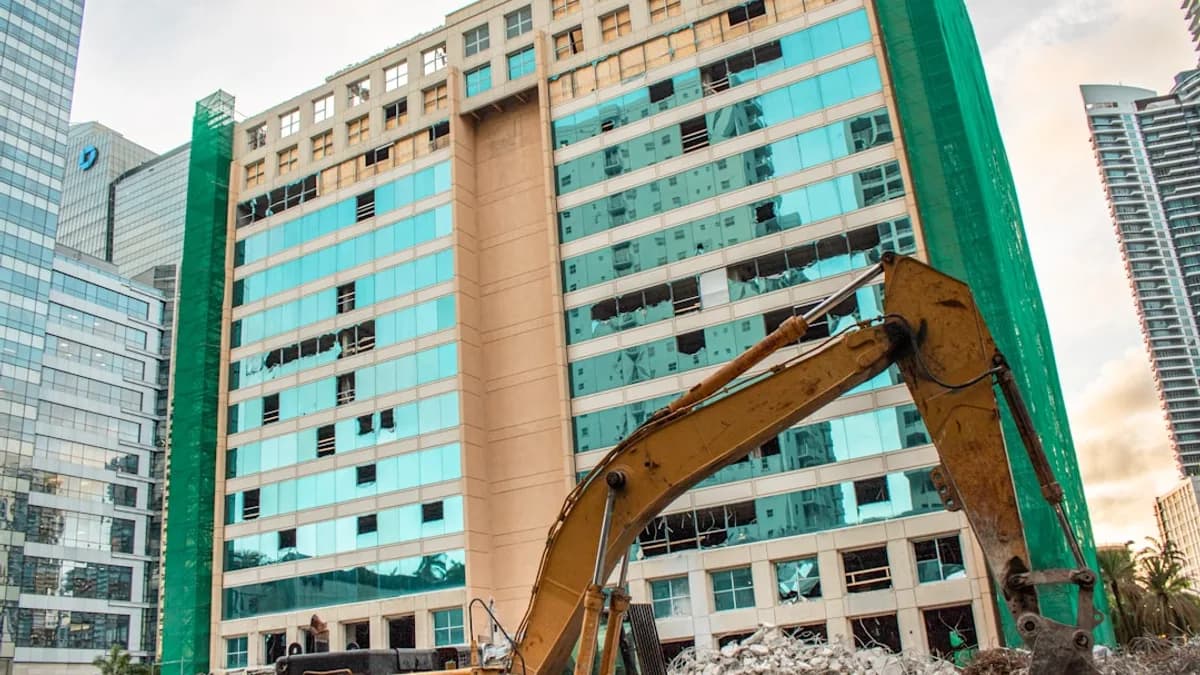
After nearly three decades as a fixture of Miami’s skyline, the 23-story Mandarin Oriental Miami hotel on Brickell Key was brought down in a dramatic implosion, vanishing in seconds and marking the end of an era for the exclusive waterfront property [Source: Source]. The decision to demolish the hotel wasn’t taken lightly; it was driven by the need to clear space for a new luxury development, reflecting Miami’s ever-evolving urban landscape. The demolition took place on Brickell Key, a human-made island just off the coast of downtown Miami, known for its high-profile residences and stunning views of Biscayne Bay.
This article provides a step-by-step guide to the complex process of imploding a high-rise structure like the Mandarin Oriental Miami. From the earliest stages of planning and safety protocols to the technical execution and post-implosion cleanup, we’ll explore how professionals safely carry out such a high-profile demolition, the lessons learned from this event, and best practices for future projects.
Step 1: Planning and Preparing for a High-Rise Implosion
The implosion of a major hotel on a densely built, human-made island requires months of meticulous preparation. The process begins with a comprehensive assessment of the building’s structural blueprints, load-bearing elements, and its proximity to other properties. Engineers and demolition experts survey the hotel to understand how it was constructed, identifying critical points that will guide the placement of explosives for a controlled collapse.
With the assessment complete, the next step involves navigating the regulatory landscape. Demolition contractors must secure permits from city authorities, environmental agencies, and sometimes the U.S. Army Corps of Engineers, given the unique location on a man-made island. This process includes submitting detailed demolition plans, environmental impact assessments, and engineering studies to ensure compliance with all local, state, and federal regulations [Source: Source].
Coordination is crucial. Project leaders work closely with city officials, Miami Fire Rescue, police, and Brickell Key’s private security teams to ensure public safety. Meetings are held with emergency services to map out contingency plans for medical emergencies, fire, or unexpected structural issues during demolition. Environmental agencies are also brought in early to address concerns about dust, debris, and potential impacts on Biscayne Bay—especially important considering the hotel’s waterfront location.
A comprehensive implosion plan is the final output of this preparation phase. It details the sequence of activities, the types and amounts of explosives to be used, safety protocols for workers and the public, and a communications strategy for keeping local residents and businesses informed. Only after these steps are completed can the demolition move forward.
Step 2: Safety Measures and Evacuation Procedures
Safety is paramount in any controlled demolition, especially on an island so close to urban Miami. The first step is establishing exclusion zones around the demolition site. These are carefully calculated perimeters—often extending several hundred feet—within which no unauthorized personnel are allowed during the implosion. Barricades, fencing, and law enforcement patrols are put in place to enforce these boundaries.
Effective communication with the Brickell Key community and nearby downtown Miami is essential. Residents and businesses receive advance notice of the implosion date, expected times, and specific safety instructions, such as when to evacuate or shelter in place [Source: Source]. Public notices are distributed via local news, city websites, and direct outreach to building managers.
Evacuation procedures are tailored to the unique geography of Brickell Key. Residents in high-rise condos and nearby offices are advised on when to leave and where to go, while special attention is given to vulnerable populations, such as the elderly and those with mobility challenges. Emergency responders are stationed on-site and on standby at key locations, prepared to handle any incidents swiftly.
Environmental safety is also a priority. Air quality monitors are deployed to track dust and particulate levels, while water barriers and silt curtains may be set up to prevent debris from contaminating Biscayne Bay. Contractors implement debris containment strategies, such as wetting down the structure before detonation, to minimize airborne dust and protect the surrounding community and environment.
Step 3: Technical Execution of the Implosion
The heart of a high-rise implosion lies in the precise placement and sequencing of explosives. For the Mandarin Oriental Miami, a specialized demolition crew drilled hundreds of small holes into strategic columns and beams throughout the building. These cavities were loaded with carefully measured charges of high-grade explosives, designed to weaken the structure at key points and ensure that the building collapses inward, rather than outward onto adjacent properties [Source: Source].
The demolition team developed a detailed detonation sequence, typically triggered by a computerized system. The sequence is critical: explosives are detonated in a carefully timed series, milliseconds apart, so lower floors give way first, followed by upper sections. This ensures that the structure folds in on itself, minimizing the debris field and risk to neighboring buildings.
Modern implosions