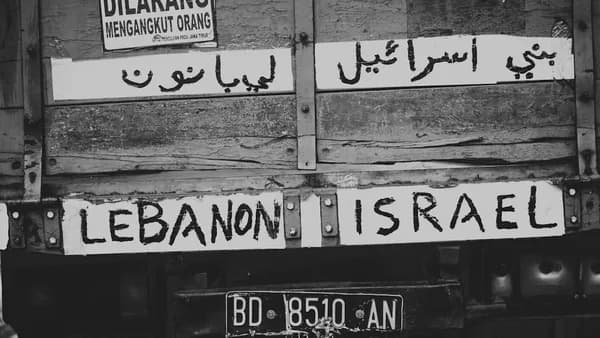
Introduction: Historic Resumption of Israel-Lebanon Direct Talks
For the first time in more than three decades, Israel and Lebanon are poised to hold direct talks, marking a potentially transformative moment in Middle Eastern diplomacy. The discussions, scheduled amid heightened regional tension, signal a rare opening between two neighboring states long locked in conflict. The talks come as international actors, including the United States and key figures like Senator Marco Rubio, seek to help mediate and stabilize the situation [Source: Source].
The renewed dialogue unfolds against the backdrop of recent clashes, a precarious ceasefire, and broader struggles involving influential groups such as Hezbollah and the strategic interests of Iran. As world leaders and regional powers watch closely, the outcome of these talks could have far-reaching implications for the future of both nations—and the wider region.
Background: Decades of Hostility and the Road to Dialogue
Relations between Israel and Lebanon have been defined by a protracted state of war and intermittent hostilities since the early 1990s. The two countries have technically remained at war since Israel’s creation in 1948, with their shared border witnessing repeated conflict, notably during Israel’s invasion of Lebanon in 1982 and the 2006 war with Hezbollah, the powerful Iran-backed militant group operating in southern Lebanon [Source: Source].
Hezbollah’s growing influence in Lebanon and its close alignment with Iran have complicated any prospects for bilateral engagement. The group’s refusal to recognize Israel and its periodic rocket attacks have sustained a climate of tension, while Iran’s strategic rivalry with Israel has fueled proxy conflicts across the region. These dynamics have made direct Israel-Lebanon dialogue nearly impossible for decades.
Previous efforts at communication have largely been limited to indirect talks, typically brokered by third parties like the United States or the United Nations. These focused on specific issues such as border demarcations and prisoner exchanges but failed to generate lasting breakthroughs due to entrenched mistrust, domestic political pressures, and the shifting allegiances of regional actors. The new round of direct talks, therefore, represents a significant departure from past patterns of engagement.
Details of the Current Talks and Key Stakeholders
The first round of direct talks is set to take place in a neutral setting, with both delegations convening under international auspices. The format underscores the cautious optimism surrounding the process: officials from Israel and Lebanon will sit face-to-face, joined by American mediators and observers from the United Nations, to address long-standing disputes and seek areas of mutual agreement [Source: Source].
The Trump administration has played a pivotal role in facilitating these discussions, hoping to replicate the momentum generated by recent normalization agreements between Israel and several Arab states. Senator Marco Rubio is also set to host Israeli and Lebanese ambassadors in parallel diplomatic efforts, aiming to support the fragile ceasefire and encourage confidence-building measures [Source: Source].
Lebanon’s President Michel Aoun has publicly framed the talks as a potential turning point for his country, stating that dialogue with Israel could mark “the beginning of the end of Lebanon’s suffering.” Aoun’s remarks signal both the urgency of Lebanon’s domestic crises—economic collapse, political paralysis, and widespread public discontent—and the hope that diplomatic engagement could unlock new opportunities for recovery and reform [Source: Source].
Regional Reactions and Challenges Ahead
Not all actors in the region welcome the resumption of direct Israel-Lebanon talks. Hezbollah, which wields significant influence over Lebanese politics and security, has signaled its strong opposition to the negotiations. The group, backed by Iran, accuses the Lebanese government of compromising national sovereignty and has warned that any deal falling short of its red lines could provoke renewed hostilities [Source: Source].
Iran’s leadership has echoed these sentiments, casting the talks as a Western-backed effort to undermine the “axis of resistance” in the region. These positions highlight the internal divisions within Lebanon and the broader contest between pro-Western and Iran-aligned forces over the country’s future orientation.
French President Emmanuel Macron, who has sought to play a mediating role in Lebanon’s political crisis, now faces criticism over his approach to Iran and Hezbollah. While Macron has pushed for reforms and broader international engagement with Lebanon, some Western and regional officials accuse him of being too conciliatory toward Iran-backed groups, potentially complicating the negotiation process [Source: Source].
Meanwhile, ongoing conflicts—particularly the risk of renewed fighting on the Israel-Lebanon border—underscore the fragility of the current ceasefire. The success of the talks will depend not only on diplomatic maneuvering but also on the ability of local and international actors to maintain stability on the ground.
Potential Implications for Middle East Stability
Should the talks yield tangible progress, the impact could extend well beyond the immediate relationship between Israel and Lebanon. A breakthrough would bolster hopes for de-escalation along one of the region’s most volatile frontiers, reducing the risk of another devastating war and opening the door to broader security cooperation [Source: Source].
From a U.S. perspective, the successful mediation of Israel-Lebanon talks would represent a diplomatic win, reinforcing recent achievements like the Abraham Accords and strengthening Washington’s influence in the post-Arab Spring Middle East. For European actors, particularly France, progress could validate ongoing efforts to stabilize Lebanon and counteract the influence of non-state actors like Hezbollah.
Perhaps most significantly, positive developments could deliver much-needed economic and humanitarian relief for Lebanon. With its economy in freefall, rampant inflation, and widespread shortages, Lebanon desperately needs foreign investment and reconstruction aid—support that may be more forthcoming if security conditions improve and international confidence is restored. A robust diplomatic process could also address critical issues such as border demarcation, maritime resource sharing, and the return of displaced persons—steps that would tangibly benefit both societies [Source: Source].
Conclusion: A Tentative Step Toward Peace Amid Uncertainty
The decision by Israel and Lebanon to engage in direct talks for the first time in over 30 years is a historic and cautiously hopeful development. While profound challenges remain—including internal divisions, regional rivalries, and the enduring shadow of Hezbollah and Iran—the talks represent a critical opportunity to break the cycle of conflict and pursue a more stable future [Source: Source].
Continued international support and vigilant monitoring will be essential to sustaining momentum and preventing spoilers from derailing progress. For now, the world watches as two long-adversarial neighbors test the waters of dialogue—a tentative but meaningful step on the long road toward peace.