

Introduction: Context of the Controversy
Former President Donald Trump recently made headlines with a contentious statement involving the Vatican, claiming that “Pope Leo said Iran can have a nuclear weapon.” The claim, which quickly spread on social media and was amplified in various news cycles, draws attention not only for its diplomatic implications but also for its use of religious authority in a high-stakes geopolitical debate. As tensions continue to simmer between the United States, Iran, and other global actors over nuclear proliferation, statements referencing prominent religious leaders carry extra weight. This episode underscores the critical need for fact-checking, especially when political figures invoke religious authorities to bolster their arguments or policy positions. In an era of increasing political and religious polarization, the accuracy of such claims becomes more important than ever for both informed public debate and international relations.
Who is Pope Leo? Clarifying the Identity
To address the controversy, it is vital to clarify exactly who “Pope Leo” is—or, more accurately, who he isn’t. There is currently no sitting Pope named Leo. The historical record does include several Popes named Leo, the most well-known being Pope Leo I (“Leo the Great”), who served in the 5th century, and Pope Leo XIII, who led the Catholic Church from 1878 to 1903. However, neither of these figures is relevant to contemporary discussions about Iran’s nuclear capabilities.
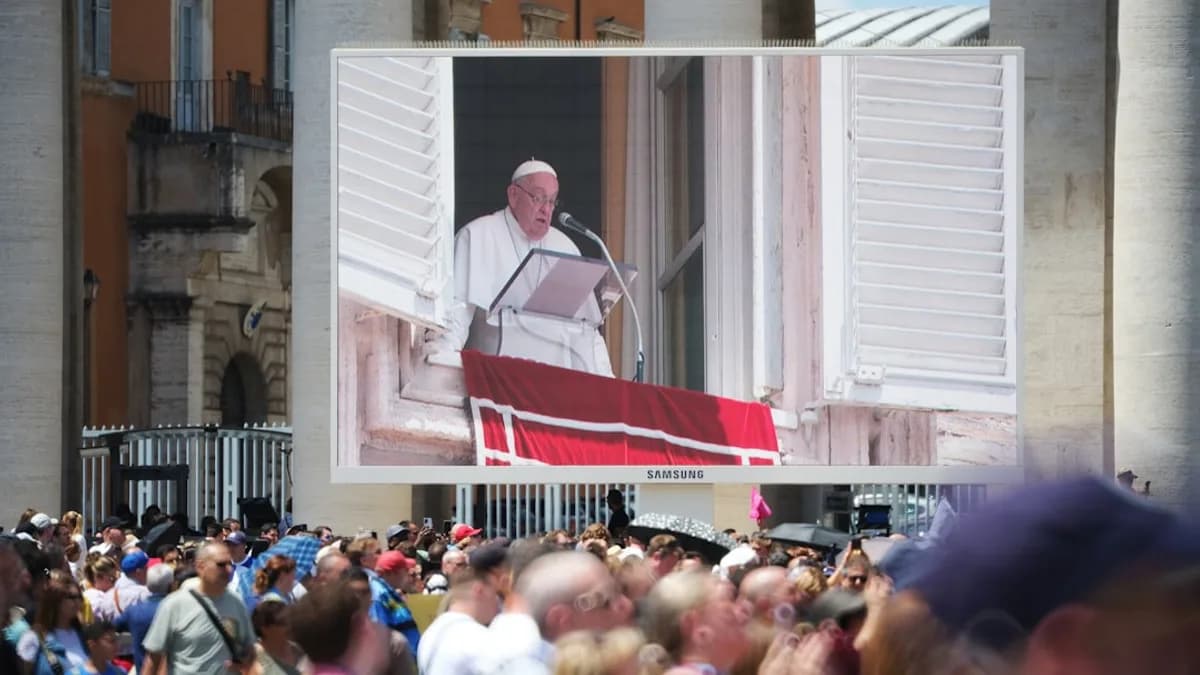
The current head of the Catholic Church is Pope Francis, who became the first pope from the Americas when he ascended to the papacy in 2013. There has not been a Pope Leo in over a century, and certainly not in the modern era of international nuclear diplomacy. The confusion may stem from misinformation, typographical errors, or intentional misdirection in political discourse. Such confusion is not uncommon, especially when political figures reference religious leaders to add moral weight to their statements. It is crucial for public figures and the media to accurately identify religious leaders, as misattributions can lead to the spread of false narratives and misunderstandings among the public [Source: Source].
Examining Trump’s Claim: What Was Said and Why It’s False
During a recent public appearance, former President Trump asserted that “Pope Leo said Iran can have a nuclear weapon.” This statement was quickly scrutinized by journalists and fact-checkers. The claim suggests that the Vatican, through a papal figure, has explicitly endorsed Iran’s right to possess nuclear arms—a highly sensitive and consequential assertion given the ongoing debates over Iran’s nuclear program and the global push for non-proliferation.
Multiple reputable news outlets, including CNN, have fact-checked this claim and found it to be categorically false. There is no record of any Pope—Leo or otherwise—making a statement supporting Iran’s right to possess or develop nuclear weapons. In fact, neither the current pope (Pope Francis) nor any official Vatican representative has ever endorsed such a position. The Vatican’s actual stance, as will be discussed in the following section, is one of consistent advocacy for nuclear disarmament and non-proliferation [Source: Source].
The error in Trump’s statement likely arises from a mix of confusion and misrepresentation. Not only is there no contemporary Pope named Leo, but the Vatican has also never expressed support for any country’s acquisition of nuclear weapons. Instead, the Holy See has consistently used its diplomatic influence to call for peace, dialogue, and the reduction of arms worldwide. By attributing a false and highly provocative stance to a non-existent modern pope, Trump’s claim misleads the public and distorts the Vatican’s long-standing position on nuclear issues.
The Vatican’s Position on Iran and Nuclear Weapons
The Vatican has long been a vocal advocate for nuclear disarmament and global peace. Under the leadership of Pope Francis, the Holy See has repeatedly called for all nations, including Iran, to pursue dialogue and refrain from developing or deploying nuclear weapons. Pope Francis has described nuclear weapons as “immoral” and has urged world leaders to work towards a world free of nuclear arms [Source: Source].
Specifically regarding Iran, the Vatican has supported diplomatic efforts such as the Joint Comprehensive Plan of Action (JCPOA), commonly known as the Iran nuclear deal. Vatican officials have publicly expressed hope that international negotiations will lead to a peaceful and verifiable resolution to concerns about Iran’s nuclear program. The Holy See’s representatives at the United Nations and other international forums have consistently promoted multilateral dialogue, transparency, and trust-building measures, in line with the Catholic Church’s broader commitment to peace and human dignity.
This well-documented diplomatic approach stands in stark contrast to Trump’s claim. Far from endorsing Iran’s right to possess nuclear weapons, the Vatican’s message has been one of caution, restraint, and the moral imperative to prevent the spread of weapons of mass destruction. Any suggestion to the contrary is not supported by official statements, papal documents, or credible reporting [Source: Source].
Political and Religious Implications of Misattributing Statements to Religious Leaders
Misattributing statements to prominent religious leaders is not a trivial matter. When political figures invoke the authority of the pope or other religious figures to support contentious policy positions, they risk distorting public perceptions of both the religious institution and the issue at hand. In this case, falsely claiming papal support for Iran’s nuclear ambitions could undermine the Vatican’s credibility as a voice for peace and non-proliferation, potentially sowing confusion among believers and secular observers alike.
The use of religious authority in political arguments is a powerful rhetorical tool, but it also carries significant ethical responsibilities. History shows that religious leaders are frequently misquoted or misrepresented in political debates. For example, figures such as Pope John Paul II and the Dalai Lama have had their words selectively cited or twisted to serve various political agendas. Such misrepresentations can fuel polarization, erode trust in both religious and political institutions, and complicate efforts to address complex global issues.
Ultimately, the misattribution in this case highlights the broader dangers of relying on unchecked rhetoric in public discourse. Leaders who invoke the name or authority of religious figures must exercise caution and diligence, recognizing the influence their words have on public opinion and international relations [Source: Source].
Conclusion: The Importance of Accurate Information in Political Discourse
This episode serves as a compelling reminder of the importance of verifying statements, particularly those involving influential religious leaders like the pope. In an age of rapid information sharing and deep political divides, accuracy in public communication is more crucial than ever. Political figures bear a special responsibility to ensure that their words are grounded in fact, especially when referencing institutions with global moral authority.
For the public, it is equally important to approach controversial claims with a critical eye and to consult credible sources before accepting assertions at face value. As this fact-check demonstrates, misinformation—whether intentional or accidental—can have far-reaching consequences. By prioritizing accurate, responsible communication, all stakeholders can contribute to a more informed and respectful public dialogue [Source: Source].