Introduction: Rising Tensions Between Cuba and the U.S.
Cuba’s President has issued a stark warning to the United States, cautioning against any military intervention or attempts to depose him amid a surge in bilateral tensions. His remarks come at a time when relations between Havana and Washington have deteriorated sharply, fueled by a combination of political disputes, economic sanctions, and accusations of human rights abuses. The president’s defiant tone underscores the gravity of the standoff, projecting an image of resilience as Cuba faces mounting international pressure and internal challenges. This escalating rhetoric highlights the risks of a potential conflict and raises questions about the future trajectory of U.S.-Cuba relations in an increasingly volatile regional landscape [Source: Source].
Cuba’s President’s Defiant Stance
In a series of public statements, Cuba’s President has emphasized his unwavering resolve in the face of U.S. threats, declaring that he has “no fear” of American power and will not yield to demands for political change. “If we need to die, we’ll die,” he reportedly said, reflecting a willingness to resist any form of external aggression or interference [Source: Source]. His rhetoric was particularly pointed in response to U.S. calls for the release of political prisoners, which he categorically rejected despite mounting international criticism.
The president’s warnings were explicit: any attempt by the United States to attack the island or orchestrate a regime change would be met with fierce resistance. He portrayed Cuba as a nation prepared to defend its sovereignty at all costs, invoking the country’s revolutionary history and spirit of independence. “We will resist,” he stated, framing the confrontation as a struggle not just for political survival, but for the fundamental right of Cubans to self-determination [Source: Source].
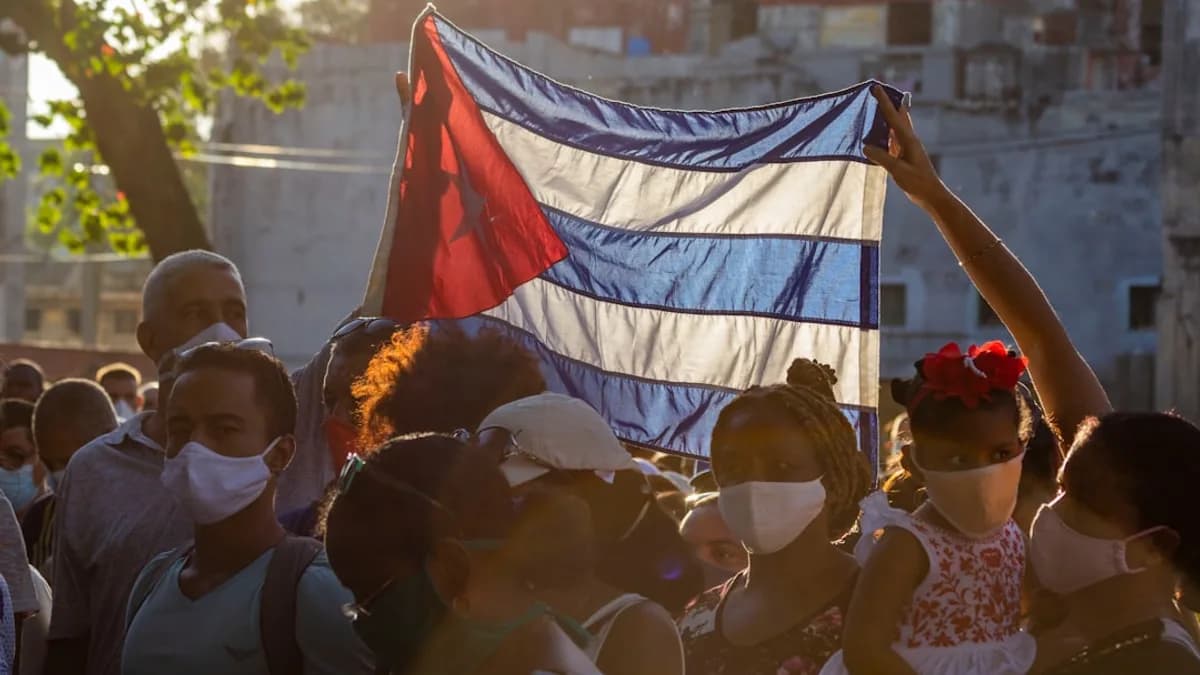
These declarations come amid reports of increased security measures and heightened alertness among Cuban authorities. The refusal to release political prisoners, many of whom have been detained following protests and dissent, remains a flashpoint in the standoff. Human rights organizations and foreign governments have criticized Cuba’s actions, but the president insists that the country will not bow to what he describes as “imperial” pressures. His stance signals a hardening of Cuba’s position and a readiness to weather further isolation or punitive actions from the United States and its allies.
U.S.-Cuba Relations: Historical and Current Context
The relationship between Cuba and the United States has long been fraught with tension, dating back to the Cold War era and the 1959 Cuban Revolution. Decades of U.S. embargoes, diplomatic isolation, and covert operations have shaped the geopolitical dynamics of the island nation. Periods of thaw, such as the rapprochement under the Obama administration, have often been short-lived, with subsequent U.S. administrations reverting to hardline policies.
In recent years, the Trump administration imposed stricter sanctions on Cuba, targeting the country’s economy and leadership in response to allegations of human rights abuses and support for allied regimes in Latin America [Source: Source]. These measures included restrictions on travel, trade, and remittances, exacerbating Cuba’s economic difficulties and fueling domestic unrest.
The current standoff is rooted in these longstanding grievances, but has been intensified by renewed calls for democratic reforms and the release of political prisoners. Washington has repeatedly criticized Havana for its crackdown on dissent, while Cuba accuses the U.S. of meddling in its internal affairs. Diplomatic exchanges have stalled, and the risk of escalation has increased as both sides exchange rhetorical barbs and threats. The president’s recent warnings are a direct response to perceived U.S. provocations, signaling that Cuba will not negotiate from a position of weakness.
Potential Implications of the Standoff
The escalating confrontation poses significant risks for both nations and the broader region. Any military action or attempted regime change by the United States could trigger a wider conflict, destabilizing the Caribbean and potentially drawing in other Latin American countries. Cuba’s strategic location and historical alliances with countries like Russia and China add complexity to the situation, raising the possibility of international involvement in the event of hostilities [Source: Source].
Regional stability is already fragile, with economic challenges, migration pressures, and political unrest affecting neighboring countries. A crisis in Cuba could exacerbate these issues, leading to increased refugee flows and heightened security concerns. The standoff also has implications for global powers, who may seek to mediate or influence the outcome through diplomatic channels or economic incentives.
International reactions have been mixed. Some governments and organizations have called for restraint and dialogue, urging both sides to avoid escalation and resolve their differences peacefully. Others have condemned Cuba’s human rights record and demanded greater accountability. The role of the United Nations and regional bodies such as the Organization of American States will likely be critical in shaping the response to the unfolding crisis.
Conclusion: The Road Ahead for Cuba and the U.S.
Cuba’s president has made clear that the island will not submit to U.S. threats or intervention, setting the stage for a potentially prolonged and dangerous standoff. His warnings reflect both the seriousness of the situation and the deep-seated mistrust that has characterized relations between the two countries for decades. As diplomatic efforts falter and tensions continue to rise, the prospect of resolution remains uncertain.
The coming weeks will be crucial as both sides assess their options and international actors weigh in. Diplomatic engagement, economic negotiations, and measured rhetoric could offer a path towards easing tensions, but the risk of further escalation cannot be dismissed. Given the breaking nature of this story, close monitoring of developments is essential, as the future of U.S.-Cuba relations hangs in the balance [Source: Source].