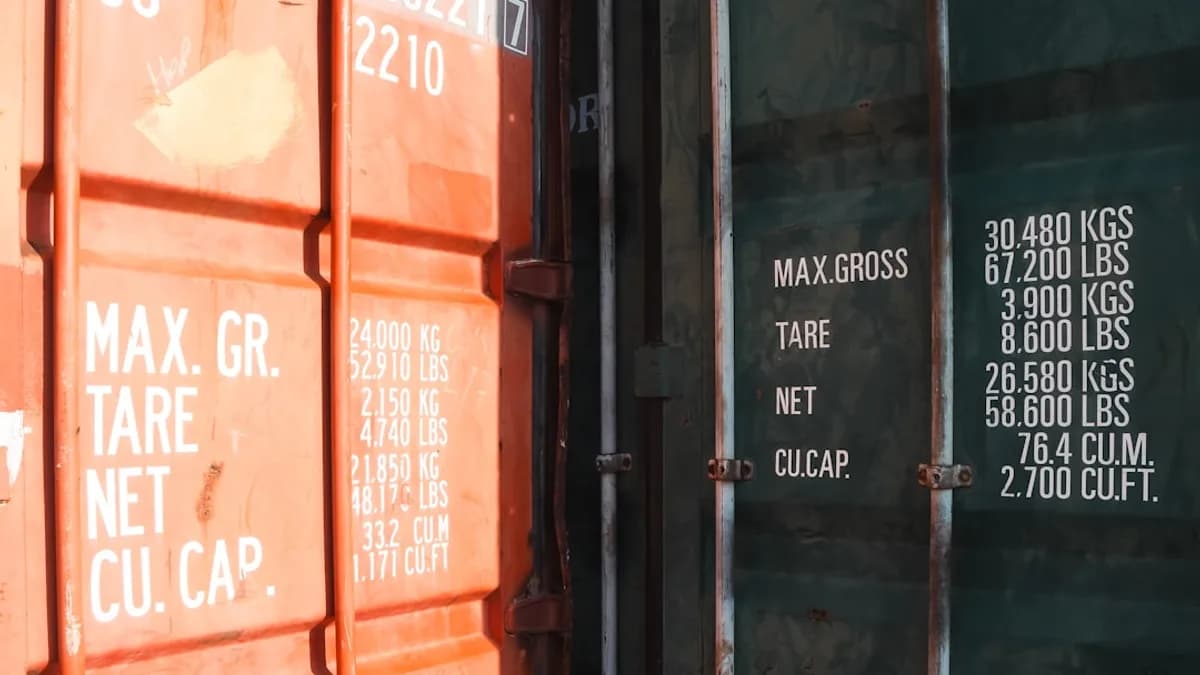
Introduction: Overview of China’s Export Slowdown Amid Iran Conflict
China’s export sector, long regarded as the engine of the world’s second-largest economy, is facing significant headwinds in early 2024. According to recently released trade data, China’s exports in March grew by just 2.5% compared to the previous year—a sharp slowdown that fell short of analyst expectations and marked a significant deceleration from the robust growth seen earlier in the year [Source: Source]. The slowdown comes amid escalating conflict in the Middle East, particularly the war involving Iran, which has culminated in a partial blockade of the Hormuz Strait—a vital artery for global energy and commodity shipments.
This geopolitical turmoil has disrupted key shipping routes, upending the supply chain dynamics that underpinned China’s earlier export gains, many of which were fueled by rapid adoption of artificial intelligence (AI) technologies. The contrast is stark: while AI-driven efficiencies and innovation propelled China’s exports through much of 2023 and early 2024, these gains are now being eroded by mounting external challenges. As China’s import figures surge to their highest levels in over four years, the shifting landscape underscores the complex interplay between technological advancement and geopolitical risk in shaping global trade flows [Source: Source].
The Role of AI in Boosting China’s Export Growth Pre-Conflict
Before the outbreak of the Iran war and the resulting disruptions in global trade, AI technologies played a pivotal role in driving China’s export momentum. Over the past several years, Chinese manufacturers and exporters have increasingly harnessed AI to streamline supply chains, optimize production processes, and reduce operational costs. Sectors such as electronics, automotive, consumer goods, and machinery saw tangible improvements in both efficiency and output, largely due to the integration of advanced AI-driven automation, predictive analytics, and smart logistics systems.
For example, AI-enabled robotics in factories allowed for more agile and customized production runs, which in turn enabled Chinese exporters to respond rapidly to changing international demand. AI-powered inventory management systems minimized waste and maximized throughput, while intelligent logistics platforms optimized shipping routes and schedules, reducing delays and transportation costs. These innovations contributed to a notable uptick in export competitiveness, especially in high-value-added sectors like semiconductors, electric vehicles, and consumer electronics.
Trade data from late 2023 into early 2024 reflected these AI-driven gains. China saw robust export growth, buoyed by strong demand from major trading partners in the United States, Europe, and Southeast Asia. Exporters were able to capitalize on the global digitalization wave, supplying components and finished goods crucial for AI, IoT, and renewable energy sectors. This period of growth also reinforced China’s status as a global hub for advanced manufacturing and supply chain innovation [Source: Source].
However, the momentum built on AI-enabled efficiencies proved vulnerable to external shocks, as the onset of the Iran conflict would soon reveal.
Impact of the Iran War and Hormuz Blockade on China’s Trade
The geopolitical landscape shifted dramatically with the outbreak of the Iran war in early 2024. The conflict quickly escalated into a broader regional crisis, culminating in a partial blockade of the Hormuz Strait. This narrow waterway is one of the world’s most critical shipping chokepoints, accounting for roughly a fifth of global oil and gas shipments. For China, which relies heavily on Middle Eastern energy imports and uses the region as a key transit hub for exports to Europe and Africa, the blockade has had immediate and far-reaching consequences.
Shipping disruptions through the Hormuz Strait have led to increased freight costs, longer transit times, and heightened risks of supply chain interruptions. Chinese exporters, especially those dealing in bulk commodities, petrochemicals, and industrial machinery, have found it increasingly difficult to fulfill overseas orders on time. Some shipments have been rerouted around Africa, adding weeks to delivery schedules and inflating logistics costs. Others have been delayed or canceled outright due to security concerns and insurance restrictions [Source: Source].
Paradoxically, while exports have slowed, China’s imports surged 14.1% in March—the largest year-on-year increase in over four years [Source: Source]. Several factors may help explain this divergence. Anticipating further disruptions and possible shortages, Chinese firms appear to be front-loading imports of energy, raw materials, and critical components. This “stockpiling” strategy is a hedge against future supply chain shocks and price volatility. Furthermore, some domestic industries, such as renewable energy and high-tech manufacturing, continue to expand rapidly, driving up demand for imported inputs even as export sales soften.
The data illustrates the double-edged nature of global trade dependencies: while China’s export machine is vulnerable to external shocks, the country’s vast domestic market and industrial base can generate strong import demand, at least in the short term.
Economic Implications for China and Global Supply Chains
The immediate economic implications for China’s manufacturing and export sectors are significant. The export slowdown threatens to dampen industrial output, reduce earnings for exporters, and increase pressure on employment in key manufacturing hubs. Small and medium-sized enterprises (SMEs), which often lack the financial buffers of larger firms, are particularly at risk. If shipping disruptions persist, China could see a cascading effect throughout its supply chain, with upstream suppliers facing order cancellations and downstream industries experiencing input shortages.
Globally, the ripple effects are already being felt. Multinational companies that rely on Chinese components and finished goods are facing increased uncertainty and higher costs. Industries such as automotive manufacturing, consumer electronics, and renewable energy—where China is a dominant supplier—are particularly exposed. The Hormuz blockade’s impact on energy prices and shipping costs further compounds these challenges, raising the prospect of inflationary pressures in markets far beyond China’s borders.
Longer-term, persistent geopolitical tensions and supply chain disruptions may incentivize some global firms to diversify their sourcing away from China—a trend that began during the COVID-19 pandemic and has gained momentum amid recent trade frictions. However, China’s deep manufacturing ecosystem, advanced logistics infrastructure, and ongoing investments in technology make a large-scale shift unlikely in the near term.
For China, the current crisis exposes both the strengths and vulnerabilities of its export-driven growth model. The country’s ability to weather external shocks depends not only on its industrial resilience but also on its capacity to navigate complex geopolitical environments and maintain stable relationships with key trading partners [Source: Source].
Strategic Responses and Future Outlook
In response to the export disruption, Chinese policymakers and business leaders are likely to adopt a range of strategies to mitigate risk and restore growth. Short-term measures may include government support for affected exporters, increased investment in domestic logistics infrastructure, and diplomatic initiatives aimed at securing alternative shipping routes or negotiating safe passage through the Hormuz Strait.
On the technological front, China is expected to double down on innovation to further boost supply chain resilience. This could involve expanding the use of AI and automation not just in manufacturing, but also in logistics, real-time risk monitoring, and contingency planning. Diversification of export markets—both geographically and across product categories—will be crucial to reducing dependence on any single trade route or region. Already, there are signs that Chinese exporters are seeking new opportunities in emerging markets, such as Latin America, Africa, and Southeast Asia.
The outlook for China’s trade performance will depend heavily on the trajectory of the Iran conflict and the duration of the Hormuz blockade. A prolonged crisis could accelerate long-term shifts in global supply chains, while a swift resolution might allow for a rapid rebound in exports. Either way, China’s commitment to technological advancement and export diversification will remain central to its strategy for navigating an increasingly volatile global trade environment [Source: Source].
Conclusion: Navigating Challenges in a Volatile Global Trade Environment
China’s recent export slowdown, set against the backdrop of the Iran war and the Hormuz Strait blockade, highlights the complex vulnerabilities of even the world’s most technologically advanced export engines. While AI-driven efficiencies propelled China’s trade growth in recent years, geopolitical shocks have demonstrated the limits of technological insulation from external risks. The surge in imports—driven by both precautionary stockpiling and ongoing industrial demand—underscores the dynamic and sometimes paradoxical nature of global trade flows.
As China adapts to these new realities, the interplay between geopolitical events and technological progress will continue to define its trade trajectory. The country’s resilience will hinge on its ability to innovate, diversify, and diplomatically navigate a rapidly evolving international landscape. Ultimately, China’s export engine may sputter in the face of global volatility, but its capacity to adapt will determine how quickly it can regain momentum [Source: Source].