The first Fed decision under Kevin Warsh did not change interest rates, but it changed the burden of proof for anyone betting on easier policy.
The question now is not whether the Federal Reserve paused. Markets expected that. The sharper question is whether Warsh’s Fed is preparing investors for a central bank that talks less like a guide and more like a judge: reactive, conditional, and less willing to validate market pricing in advance. The Fed held its benchmark fed funds rate range at 3.50%-3.75% on Wednesday, according to CoinDesk, but the statement and projections leaned hawkish enough to jolt both crypto and equities.
If the rate hold was expected, why did markets still flinch?
Because the hold was not the story. The path was.
The Fed’s decision to leave rates unchanged was “nearly unanimously” expected by markets, per CoinDesk. Yet policymakers’ updated projections pointed to a firmer policy stance than investors had been hoping for. Fed officials now project the fed funds rate at 3.8% at the end of 2026, up from 3.4% in the March projection. They also see rates at 3.6% in 2027 and 3.4% in 2028, both above earlier guidance.
That is the signal beneath the pause: no cut bias, and potentially a hike bias.
The statement gave the Fed room to hold that line. According to CoinDesk’s account, officials characterized economic activity as solid despite elevated uncertainty tied partly to the conflict in the Middle East. They also described inflation as still above the Committee’s 2% goal, with supply shocks contributing to price increases in some sectors, including energy. The message was reinforced by an emphasis on the Fed’s commitment to restoring price stability.
For markets, that framing matters because it pairs a solid-growth assessment with above-target inflation. That is not an obvious setup for near-term easing.
Which numbers turned a neutral pause into a hawkish signal?
The projections did the damage.
The Fed now expects personal consumption expenditure inflation to rise 3.6 this year, while core PCE inflation is projected at 3.3%. In March, both forecasts were 2.7%-2.7%, according to CoinDesk. That is a meaningful revision, and it helps explain why policymakers are “increasingly” leaning toward a rate hike this year.
The market reaction was immediate:
| Asset or index | Move after Fed decision |
|---|---|
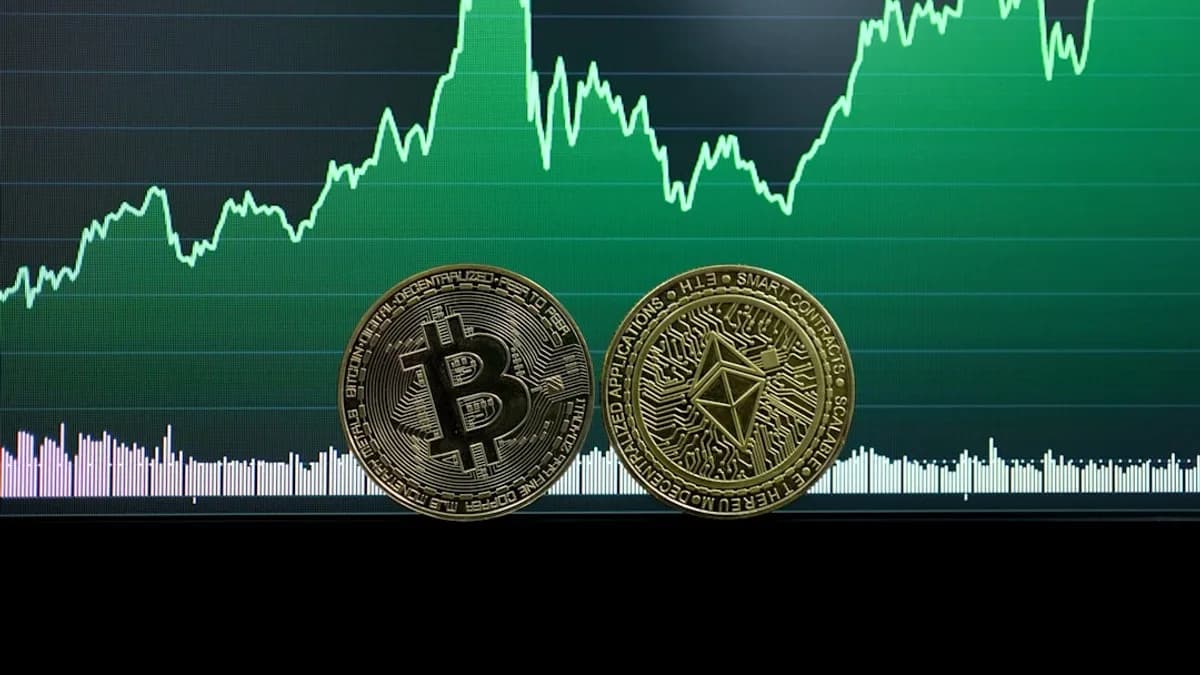
| Bitcoin | Fell from around $66,000 earlier to $64,800 shortly after the decision, then stabilized around $65,300 |
| S&P 500 | Dropped nearly 1%, erasing earlier gains |
| Nasdaq 100 | Dropped nearly 1%, erasing earlier gains |
CoinDesk also listed Bitcoin at $64,081.98, down 2.50%, in its related asset snapshot.
The source material does not provide Treasury yield moves, mortgage-rate changes, credit spreads, dollar action, wage growth, unemployment figures, or fresh consumer-spending data. That limits how far any clean market-causality claim can go. What can be said is narrower and more useful: the Fed’s own projections moved in the direction that matters most for rate-sensitive markets — higher inflation, higher policy-rate expectations, and no near-term relief embedded in the statement.
That is why Warsh’s press conference became the main event.
Is Warsh trying to weaken the market’s reliance on Fed guidance?
That is the central communication risk.
This was Warsh’s first U.S. central bank policy meeting after taking over from Jerome Powell. CoinDesk says he was confirmed by the Senate last month. The timing alone would have made the press conference important. But Warsh brings a specific complication: he has previously criticized the Fed’s use of forward guidance and quarterly economic projections, including the dot plot.
That means investors are not only parsing the rate path. They are testing whether the Fed’s communication regime is changing.
If Warsh downplays the dot plot, markets lose one of the regular signals they use to map the likely path of policy. If he emphasizes optionality, the same projections may become less of a promise and more of a snapshot. If he sounds hawkish, the rate-hike risk embedded in the new projections gains force.
MLXIO analysis: Warsh’s challenge is not to sound “clear” in the conventional sense. It is to be clear about uncertainty without encouraging investors to treat every sentence as a pre-commitment. That is a difficult balance. Too much ambiguity can create volatility. Too much specificity can box the Fed in if inflation or growth data shift.
The source supports one immediate conclusion: traders now care less about Wednesday’s hold than about how Warsh explains the Fed’s reaction function.
Can Warsh define credibility without overpromising on the next move?
That is the harder question beneath the dot plot debate.
The Fed’s own statement gives Warsh a credibility problem and an opportunity at the same time. Inflation is still above target. Growth is described as solid. Uncertainty is elevated, partly because of the conflict in the Middle East. Those are not clean inputs. They argue for caution, but not necessarily for easier policy.
The committee’s projections suggest policymakers are not ready to declare victory on inflation. The projected end-2026 rate of 3.8% sits above the current 3.50%-3.75% range, implying that officials see a credible case for tighter policy rather than cuts.
That does not mean a hike is guaranteed. The source does not say that. It says traders now see “a growing chance” that the Fed’s next move could be a rate hike rather than a cut.
MLXIO analysis: Warsh’s first credibility test is whether he can keep that optionality intact. If he sounds too eager to tighten, markets may price a more aggressive Fed than the committee intends. If he sounds too relaxed about inflation, the hawkish projections lose force. The press conference becomes the mechanism for aligning the statement, projections, and market expectations.
Who has the most to learn from this pause?
The clearest evidence comes from traders in Bitcoin and major U.S. stock indexes. They reacted within minutes.
That reaction does not prove why each asset moved. But it does show where the market’s sensitivity was concentrated after the release: risk assets did not treat the decision as a benign hold. They treated the projections as a repricing event.
Bond traders, banks, borrowers, and the White House are obvious stakeholders in any Fed decision, but the supplied material does not provide direct evidence on their reactions. The safest reading is that anyone exposed to the expected path of rates now has to reassess one assumption: the first Warsh meeting did not open the door to easier policy. It narrowed it.
For equity investors, the distinction is simple. A steady-rate decision paired with softer inflation projections would have told one story. A steady-rate decision paired with higher projected rates through 2028 tells another.
For crypto traders, the immediate Bitcoin move shows that the Fed still sits near the center of macro risk pricing. Again, the source does not establish the full causal chain. But the timing is clear: Bitcoin slipped after the decision as investors shifted attention to Warsh’s press conference.
What evidence would confirm that this is a Warsh communication reset?
The next few meetings will answer what Wednesday could only suggest.
Three scenarios now matter:
- Cautious hold sequence: The Fed keeps rates steady while Warsh stresses inflation vigilance and avoids giving markets a clean cut signal.
- Data-triggered cut path: Inflation projections or incoming data soften enough for the committee to reopen the case for easing.
- Hawkish pause or hike setup: Sticky inflation keeps the projected rate path elevated and turns “pause” into preparation for tightening.
The evidence to monitor is specific: future PCE and core PCE readings, labor-market resilience referenced by CoinDesk, shifts in the fed funds projections, and any sign that Warsh reduces the market’s reliance on quarterly projections or the dot plot.
The first decision under Warsh was not a dramatic policy move. It was a warning that the communication layer may be changing. If future meetings make the dot plot less decisive and the press conference more consequential, Wednesday will look less like a routine hold and more like the first step in a Fed that wants markets to stop treating guidance as a guarantee.
Disclaimer: This MLXIO analysis is for informational and educational purposes only. It is not financial, investment, legal, tax, or professional advice. It does not provide buy, sell, hold, price-target, portfolio, or personalized recommendations. Verify information independently and consult qualified professionals before making decisions.
The Bottom Line
- Warsh’s first Fed decision suggests policymakers may be less willing to pre-signal rate cuts.
- Higher rate projections challenge investor expectations for easier financial conditions.
- Crypto and equities are sensitive to a Fed stance that keeps inflation risks ahead of growth concerns.