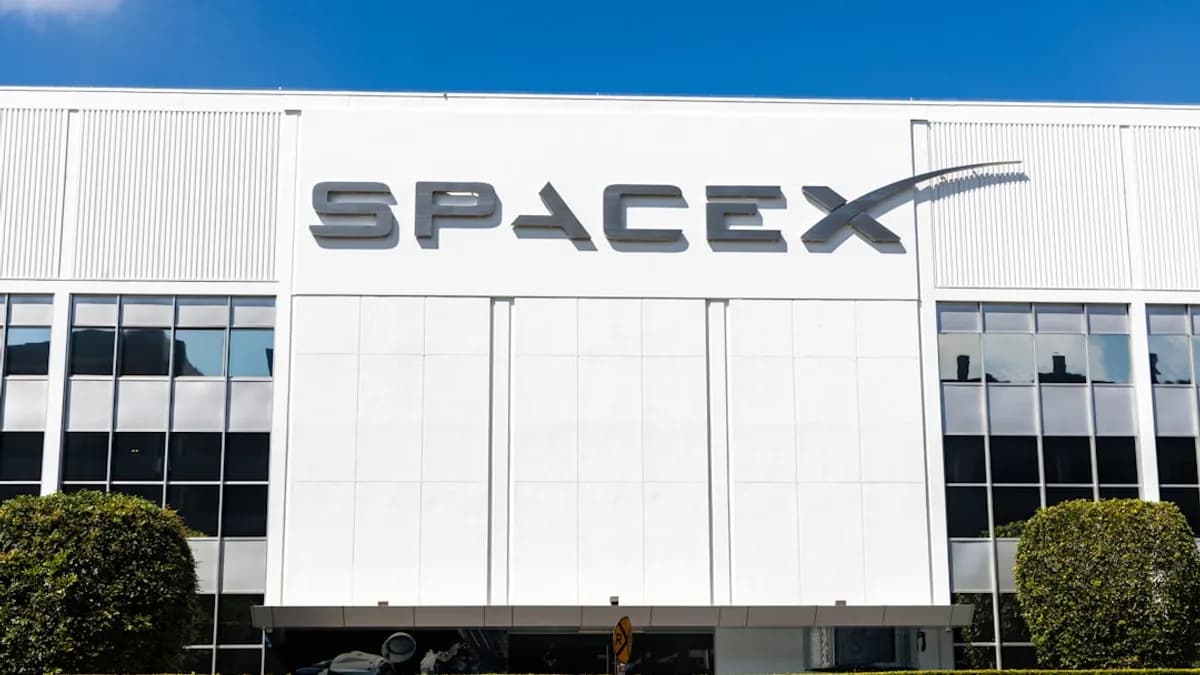
Why SpaceX’s $1.75 Trillion IPO Could Shake Up the Stock Market
A $1.75 trillion IPO would instantly make SpaceX one of the most valuable public companies on earth—rivaling Apple, Microsoft, and Saudi Aramco. That’s not just a headline; it’s a tectonic shift for the entire stock market. The sheer scale would dwarf every other tech or aerospace listing in history, and could spark a scramble among institutional investors to rebalance portfolios, dump lower-growth assets, and chase what’s being hyped as the next pillar of American innovation.
The hype is fueled by SpaceX’s track record: reusable rockets, commercial launches, Starlink’s global internet ambitions, and NASA contracts. Investors already treat Elon Musk’s private ventures as lottery tickets—Tesla’s $800 billion market cap is proof. But a $1.75 trillion price tag for SpaceX signals more than confidence in engineering: it’s a bet on the future of space as a commercial frontier, not just a science project. The speculative fervor recalls the dot-com bubble, but this time the narrative is about hardware, satellites, and off-Earth infrastructure.
Yet, beneath the optimism, this valuation reflects a market that’s willing to overlook traditional risk metrics in favor of Musk’s vision. As Yahoo Finance points out, SpaceX’s potential IPO would leave even seasoned investors wondering whether the price is justified—or just speculative mania. A trillion-dollar listing isn’t just about one company; it reshapes what growth, risk, and disruption mean for every sector orbiting the space economy.
Crunching the Numbers: What SpaceX’s Valuation Means for Investors
SpaceX’s revenue remains opaque, but estimates peg 2023 topline at around $8 billion, with projections reaching $20 billion by 2025 if Starlink’s rollout accelerates. That puts its IPO price-to-sales ratio north of 200x—wildly above aerospace peers like Boeing (P/S ~1.7) or Lockheed Martin (P/S ~2). Even Tesla, at its peak, rarely topped 25x. Investors banking on SpaceX’s growth are betting on exponential expansion, not steady margins.
Profitability is uncharted territory. SpaceX reportedly turned a profit in 2023, but margins are razor-thin. R&D and launch costs remain high, with Starlink alone requiring tens of billions to build out its satellite constellation. The company’s $5 billion capital raise in late 2023 hints at aggressive spending, not cash generation. Compare this to tech IPOs: Google debuted with a $23 billion market cap in 2004, earning $1.5 billion in revenue and netting $400 million profit. The multiples were steep, but nowhere near SpaceX’s.
Financial risks are substantial. Starlink faces regulatory hurdles and competition from Amazon’s Kuiper project. Launch failures, geopolitical tensions, and supply chain constraints could hit margins or delay growth. Investors must also factor in Musk’s unpredictable leadership style and the risk that SpaceX’s moonshot projects—Mars colonization, lunar landers—eat capital without near-term returns.
The $1.75 trillion valuation is a statement, not a guarantee. It assumes SpaceX will dominate launch, satellite, and interplanetary commercial markets—realizing growth rates that few public companies have sustained. For investors, the upside is enormous, but so is the downside if projections falter or market sentiment turns.
The Biggest Loser: Identifying the Stock Most Vulnerable to SpaceX’s Market Entry
One stock stands out as the most exposed: Boeing. The aerospace giant’s revenue depends heavily on government contracts and commercial launch services—both areas where SpaceX has already begun to undercut pricing and win market share. Boeing’s Starliner delays and cost overruns have rattled investor confidence, while SpaceX’s Falcon 9 and Dragon vehicles have become NASA’s preferred workhorses.
Boeing’s commercial launch segment generated roughly $5 billion in 2023, but SpaceX’s aggressive pricing and reliability are pushing legacy providers into defensive positions. As SpaceX enters the public market with a war chest, it can outspend rivals on R&D and underbid for contracts. Boeing’s share price, already down 35% from its 2019 peak after repeated setbacks, faces further erosion as investors rotate capital toward SpaceX.
Wall Street will likely dump Boeing in favor of a high-growth, Musk-led competitor. Satellite manufacturers like Northrop Grumman and Lockheed Martin face pressure, but Boeing’s exposure is most acute: it’s too slow to pivot, too reliant on government deals, and too vulnerable to SpaceX’s disruptive launch economics.
Diverse Stakeholder Perspectives on SpaceX’s IPO Impact
Institutional investors see opportunity, but warn of crowding risk. A trillion-dollar listing will force funds to rebalance, potentially triggering sell-offs in established tech and aerospace stocks. Hedge funds expect volatility: rapid inflows, followed by corrections as SpaceX’s quarterly results reveal whether the hype matches reality.
Industry analysts split. Bulls cite SpaceX’s vertical integration and Starlink’s potential to unlock recurring revenue—something legacy aerospace lacks. Bears highlight the gap between vision and execution; they argue that space remains a capital-intensive, low-margin business, and that Musk’s ambitions could implode under public scrutiny.
Competitors are nervous. Boeing and Lockheed Martin have lobbied for tighter regulation on private launch providers, fearing SpaceX’s cost advantage. Amazon, via Kuiper, is prepping for a price war in satellite broadband. Regulatory bodies—especially the FCC and FAA—are wary of SpaceX’s dominance, but welcome the prospect of greater innovation and lower costs for government contracts.
Retail investors are torn between FOMO and caution. The Musk effect draws meme traders and long-term believers alike, but some worry that SpaceX’s IPO could echo the volatility seen after Tesla’s public debut—wild swings, short squeezes, and outsized bets.
Tracing the Trajectory: How SpaceX’s IPO Compares to Historic Tech and Aerospace Listings
SpaceX’s $1.75 trillion IPO would eclipse Google’s $23 billion debut in 2004, Tesla’s $1.7 billion in 2010, and even Boeing’s modest 1962 listing. Only Saudi Aramco’s $1.7 trillion IPO in 2019 rivals the scale, but Aramco was a mature, cash-rich monopoly; SpaceX is a high-growth, high-risk disruptor.
The lesson from Google and Tesla: outsized IPOs can drive market-wide re-ratings if growth matches promise. Google soared 1,000% in its first decade; Tesla’s stock surged 2,000% post-IPO. But the dot-com bust and Facebook’s turbulent early years remind investors that hype can turn sour. Facebook’s $104 billion IPO in 2012 faced skepticism about monetizing mobile users; it took years to prove itself.
SpaceX differs: its business model combines hardware and software—launch services, satellite internet, and deep space exploration. Unlike Boeing or Lockheed, SpaceX owns its supply chain and controls end-to-end delivery. That vertical integration could translate to higher margins and faster innovation cycles, but also exposes investors to concentrated risk if any part of the operation stumbles.
What SpaceX’s IPO Means for the Future of Space Industry Investments
A trillion-dollar IPO would supercharge funding for space startups. Venture capitalists would chase the next SpaceX, flooding early-stage companies with capital for launch vehicles, satellite hardware, and orbital analytics. The halo effect could lift companies like Rocket Lab, Astra, and Planet Labs—if they can position themselves as complementary, not competitive.
Investor appetite will shift. SpaceX’s public debut reframes space as a commercial, not just governmental, industry. Pension funds, sovereign wealth funds, and ETFs will allocate to space sector indices—raising valuations for suppliers, software vendors, and satellite operators. Risks increase too: a SpaceX miss on earnings could drag the entire sector down, as happened with Tesla’s early stumbles, or with biotech IPOs in 2015.
Technological advancement could accelerate. SpaceX’s IPO signals that capital markets are ready to fund lunar mining, orbital manufacturing, and interplanetary logistics. But commercialization depends on regulatory clarity—especially for Starlink and launch licensing. The IPO will spotlight unresolved policy issues: frequency spectrum allocation, space debris mitigation, and cross-border launches.
Forecasting the Market Ripple Effects of SpaceX’s IPO Over the Next Decade
SpaceX’s public listing will trigger a chain reaction. Short term: expect volatility as funds rotate out of legacy aerospace and into space tech. Boeing’s market cap, already under pressure, could slide another 20-30% as contracts shift and investor sentiment sours. Lockheed and Northrop face similar, if less acute, pressure.
Long term: the IPO could force consolidation. Smaller launch providers may merge or exit, unable to match SpaceX’s capital base and R&D pace. Satellite broadband will become a price war between Starlink and Kuiper, with margins shrinking and smaller players squeezed out. Aerospace stocks will be re-rated on growth, not just dividend yield or contract stability.
Regulators will tighten oversight. Expect new rules on launch safety, space traffic management, and antitrust reviews as SpaceX’s market share climbs. Technological spillover could benefit defense contractors, but only if they pivot to new markets or partner with SpaceX.
By 2035, SpaceX could be the world’s largest commercial launch provider, with Starlink supplying internet to hundreds of millions. Boeing, unless it reinvents itself, risks fading into a value stock—reliant on government bailouts and legacy contracts. Investors should watch for sector ETFs and thematic funds to overweight space tech, reshaping the S&P 500 and Nasdaq. The IPO won’t just mint a new corporate titan; it will redraw the map for every company with aspirations beyond earth.
⚠️ Disclaimer: This article is for informational purposes only and does not constitute financial advice. Always do your own research before making investment decisions.
The Bottom Line
- SpaceX's massive IPO would instantly rival the largest companies by market value, reshaping institutional investment strategies.
- The astronomical price-to-sales ratio highlights the speculative nature of SpaceX’s public debut compared to traditional aerospace firms.
- Sectors linked to space and tech may see increased volatility and disruption as investors chase SpaceX-driven growth.