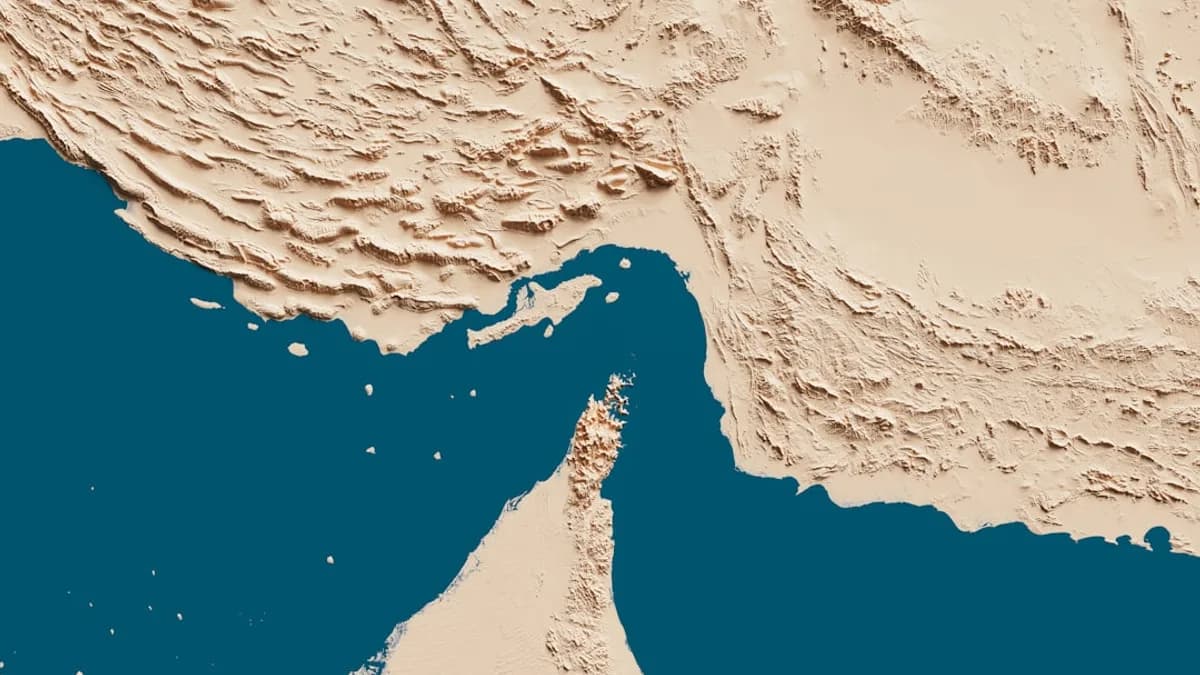
Updated: Refreshed with the latest available context on Strait of Hormuz flows, Red Sea disruptions, OPEC+ supply policy, speculative positioning, and recent Iran-related maritime risks. Some outdated price and inventory claims were revised for accuracy.
Why Market Greed Is Driving Oil Prices Despite Hormuz Strait Tensions
Oil traders are still chasing upside while the world’s most important energy chokepoint remains one headline away from crisis: the Strait of Hormuz. According to the U.S. Energy Information Administration, roughly 20 million barrels per day of crude oil, condensate, and petroleum products move through the strait—about one-fifth of global petroleum liquids consumption. It is also a critical route for liquefied natural gas exports from Qatar.
That should command a serious risk premium. Instead, markets have often treated Hormuz danger as a temporary headline rather than a structural threat. Prices have repeatedly rallied on geopolitical scares—especially around Iran, Israel, and attacks on commercial shipping—only to give back gains once immediate escalation failed to materialize.
The disconnect is not hard to understand. Traders see constrained OPEC+ supply, resilient U.S. fuel demand, uneven but still significant Asian consumption, and limited appetite among producers to flood the market. That creates a bullish setup. But it also encourages a dangerous mindset: profit now, hedge later.
The Strait of Hormuz remains the world’s most important oil artery. A sustained disruption there would be far more consequential than the 2021 Suez Canal blockage. Even a partial interruption would hit exports from Saudi Arabia, Iraq, Kuwait, the UAE, Iran, and Qatar. Yet market behavior continues to suggest confidence that any crisis will be contained quickly. That is not risk assessment. It is risk tolerance dressed up as conviction.
How Speculative Trading Amplifies Oil Price Volatility Amid Geopolitical Risks
Speculators are pouring gasoline on an already volatile market. Hedge funds, commodity trading advisers, and algorithmic systems routinely increase long positions when crude breaks higher, then unwind just as quickly when headlines cool. CFTC positioning data has shown repeated swings in managed-money exposure to Brent and WTI, with funds moving in and out based on momentum, central-bank expectations, inventory signals, and Middle East risk.
That flow matters. Oil is not just priced on barrels in storage. It is priced on expectations, fear, liquidity, and leverage. When tensions flare—an Iranian seizure of a tanker, a missile exchange, a drone attack, or a warning from the U.S. Navy—prices can jump sharply. When the threat appears contained, the same fast-money positions can reverse and drag prices lower.
The result is whiplash volatility. In 2024, crude briefly climbed near multi-month highs as the market priced in the risk of direct Iran-Israel escalation. Prices then retreated when neither side immediately moved to close Hormuz or strike oil infrastructure at scale. That pattern has become familiar: geopolitical panic, short squeeze, reassessment, selloff.
This instability is not just a trader’s problem. It affects refiners, airlines, shipping firms, governments, and consumers. Producers struggle to plan capital spending when price signals are dominated by short-term risk flows. Importing countries must decide whether to build inventories or wait for prices to cool. Refiners face margin uncertainty. The market’s short attention span spreads instability across the real economy.
The Disconnect Between Real-World Risks in the Hormuz Strait and Market Optimism
The Strait of Hormuz is not an abstract risk. It is a narrow, militarized corridor bordered by Iran and Oman, with shipping lanes only a few miles wide in each direction. Iranian naval forces have repeatedly harassed, boarded, or seized vessels in the broader Gulf region. In January 2024, Iran seized the Marshall Islands-flagged tanker St Nikolas, reinforcing that commercial shipping remains vulnerable.
Meanwhile, Houthi attacks in the Red Sea have already shown how quickly maritime risk can reshape trade routes. While the Red Sea is not the Strait of Hormuz, the lesson is relevant: drones, missiles, and low-cost asymmetric attacks can force global shipping to reroute, raise insurance costs, and strain logistics. Many vessels have avoided the Red Sea and Suez Canal route, traveling around the Cape of Good Hope instead—adding time, fuel expense, and operational uncertainty.
Hormuz would be far harder to work around. There is no simple alternative for most Gulf exports. Saudi Arabia and the UAE have some pipeline capacity that bypasses the strait, but not enough to replace total regional seaborne flows. Iraq, Kuwait, Qatar, and Iran are even more exposed.
Markets understand this in theory. But in practice, crude’s risk premium often fades quickly unless barrels are physically removed from supply. That is the complacency. Traders wait for confirmation of disruption before pricing it fully, even though the market’s ability to react after the fact would be limited.
Insurance costs, naval deployments, and shipping advisories all point to elevated risk. Yet oil implied volatility has often remained well below levels seen during true crisis periods. The message from markets is clear: danger exists, but traders believe it can be managed. History argues for humility. The 1980s Tanker War, the 2019 attacks on Saudi oil infrastructure, Russia’s 2022 invasion of Ukraine, and the Red Sea shipping crisis all show that energy markets can be caught badly offside.
Addressing the Argument That Market Greed Is Justified by Supply Constraints
There is a reasonable bullish case for oil. OPEC+ has continued to manage supply carefully, with Saudi Arabia and other producers using production cuts to support prices. U.S. oil output remains high, but shale growth is no longer the runaway force it was in the previous decade. Capital discipline, higher service costs, and shareholder-return demands have made producers more selective.
Demand is also not collapsing. The U.S. remains a major source of consumption, India continues to grow, and China—despite property-sector weakness and uneven industrial data—still matters enormously for global oil balances. Jet fuel demand has recovered from pandemic-era lows, and petrochemical demand continues to support crude and natural gas liquids markets.
So yes, higher prices can be justified by fundamentals. But that does not excuse ignoring tail risk.
The more accurate argument is that the market faces two competing forces: manageable near-term supply-demand tightness and severe low-probability geopolitical risk. The problem is that traders often price the first factor aggressively while discounting the second until it becomes unavoidable.
Spare capacity also complicates the bullish story. Unlike past periods when the world was running on fumes, some spare production capacity exists, especially within core OPEC producers. But spare capacity is unevenly distributed, politically controlled, and not a perfect substitute for disrupted Gulf shipping. If Hormuz were compromised, having barrels available on paper would not matter if they could not reach buyers.
Strategic petroleum reserves could cushion a shock, but only temporarily. They are emergency tools, not replacements for a functioning Gulf export system. A serious Hormuz disruption would force governments, refiners, and traders into a scramble for physical barrels. In that scenario, oil would not merely drift higher. It could gap violently.
That is why the “tight supply” argument is incomplete. Supply constraints explain the market’s willingness to buy dips. They do not justify complacency about a chokepoint that carries around one-fifth of global petroleum liquids flows.
Why Investors Must Prioritize Geopolitical Awareness Over Short-Term Gains in Oil Markets
Ignoring Hormuz risk is not just reckless; it is self-defeating. Investors who chase short-term gains without stress-testing geopolitical shocks are setting themselves up for sudden reversals. A single incident in the Gulf—especially one that damages a tanker, closes lanes, or triggers direct military retaliation—could send crude sharply higher and ripple through equities, currencies, bonds, inflation expectations, and central-bank policy.
Responsible investing in energy requires more than reading weekly inventory reports. It means building geopolitical scenarios into models. It means tracking shipping data, insurance rates, naval deployments, sanctions enforcement, OPEC+ policy, and refinery demand. It also means understanding that “no disruption yet” is not the same as “no risk.”
Institutional investors should demand clearer assumptions from counterparties and risk managers. How is Hormuz risk being priced? What happens if Gulf exports fall by 2 million barrels per day? What if the disruption is 5 million? What if LNG traffic is affected? What if insurance becomes unavailable for certain routes? These are not fringe questions. They are central to energy-market risk.
The lesson is simple: greed can work until the moment it stops. Oil traders may be right that supply is tight and demand is resilient. They may also be right that most geopolitical scares fade. But the Strait of Hormuz is not just another headline. It is a structural vulnerability at the heart of the global energy system.
The market can ignore that vulnerability for only so long. If the next crisis turns from threat to physical disruption, the repricing will be swift, disorderly, and brutal. Smart money should not wait for the strait to close before treating it as a serious risk.
⚠️ Disclaimer: This article is for informational purposes only and does not constitute financial advice. Always do your own research before making investment decisions.
The Bottom Line
- The Strait of Hormuz carries roughly one-fifth of global petroleum liquids flows, making it the world’s most critical oil chokepoint.
- Speculative trading and momentum-driven positioning can exaggerate crude price swings during geopolitical scares.
- OPEC+ supply restraint and resilient demand support bullish oil bets, but they do not eliminate the risk of a severe Hormuz shock.
- A sustained disruption in the strait could trigger a rapid repricing across oil, shipping, inflation, equities, and currencies.