Your earbuds could become a biometric key that works before you touch a screen — but the first public numbers show why “Ear ID” is not ready to replace Face ID yet.
Researchers are testing AccLock, an AirPods-style earbud authentication system that verifies a wearer through heart-related vibration signals captured inside the ear, according to Notebookcheck. The appeal is obvious: earbuds already sit in the ear during calls, commutes, work sessions, and workouts. If they can confirm identity passively, login stops being an action and becomes a background check.
Why could heart-rhythm earbuds make unlocking devices less awkward?
The friction AccLock targets is small but constant. PINs interrupt. Face scans require positioning. Fingerprints need contact. Earbuds, by contrast, are often already worn and tightly coupled to the body.
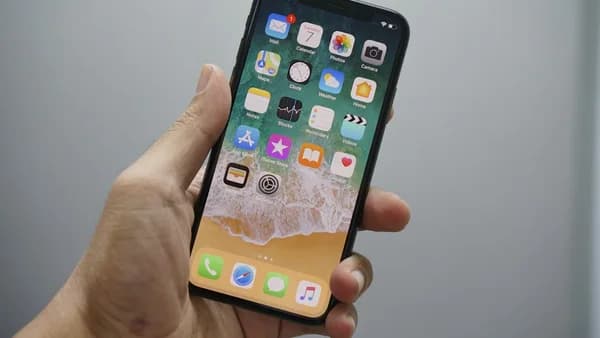
That makes in-ear heart-signal authentication a plausible next step after Touch ID and Face ID. Notebookcheck notes that Apple introduced Touch ID on the iPhone 5S, while Face ID launched on the iPhone X in 2017. AccLock is not an Apple feature, and no AirPods product is shipping with it. It is a research prototype.
That distinction matters. This should not be confused with product-rumor coverage around Apple audio hardware, such as MLXIO’s Apple Headphones Leak Sparks AirPods Max or Beats Mystery, or with conventional earbud performance reporting like $170 Anker Earbuds Make AirPods Pro 3 Calls Sound Muddy. AccLock is about biometric verification, not sound quality or a confirmed Apple roadmap.
The promise is passive identity. The problem is reliability.
What is AccLock, the earbud authentication system using in-ear heart signals?
AccLock is a proposed authentication system that uses distinctive features from in-ear BCG signals. BCG, or ballistocardiogram, refers to tiny mechanical movements caused by cardiac activity. In this context, the earbud is not reading a medical ECG. It is detecting subtle motion linked to the heartbeat.
The researchers describe AccLock this way:
“In this paper, we propose a passive authentication system called AccLock, which leverages distinctive features extracted from in-ear BCG signals to enable secure and unobtrusive user verification. Our system offers several advantages over previous systems, including zero involvement for both the device and the user, ubiquity, and resilience to environmental noise.”
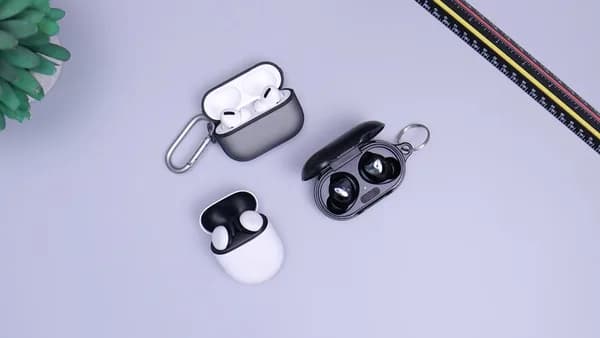
The key hardware point is that AccLock relies on a tiny accelerometer, a component already found in many wireless earbuds, including AirPods-style devices. That lowers the theoretical barrier. A dedicated medical-grade heart sensor is not required for the concept.
The biometric logic is familiar: if a person’s cardiac-related signal contains stable individual patterns, software can compare a live reading against an enrolled profile. The goal here is identity verification. It is not heart-disease diagnosis or health tracking.
How do earbuds read a user’s heart rhythm through accelerometers?
Each heartbeat creates small mechanical effects across the body. The ear is a useful location because an in-ear device sits close to tissue and stays relatively fixed when properly fitted. AccLock tries to capture those tiny vibrations through the earbud’s motion sensors.
A simplified workflow looks like this:
- Capture: The earbud records in-ear vibration data through its accelerometer.
- Clean: Software filters noise from speech, posture changes, music listening, and movement.
- Extract: The system identifies features linked to the wearer’s cardiac pattern.
- Compare: The live signal is checked against the enrolled user’s biometric profile.
- Decide: The device accepts, rejects, or asks for another authentication method.
The hard part is the real world. Earbuds move. People chew, walk, jog, talk, and adjust their posture. A loose fit can degrade the signal. Notebookcheck reports that walking, jogging, and jaw movement introduce vibrations that reduce accuracy.
The researchers tested AccLock on both 3D-printed earbuds and actual Apple AirPods. The prototype performed better at a higher sampling rate, especially while users listened to music, moved their heads, or shifted posture. AirPods performance dipped slightly because of data quality issues, though retraining helped the buds learn each user’s pattern after idle sitting.
How would AccLock work in an AirPods-style login scenario?
A plausible AccLock flow is simple. A user puts in earbuds, opens a phone or computer, and the device silently checks whether the in-ear heart-signal pattern matches the enrolled owner. If the match is strong, access is granted. If not, the device falls back to Face ID, a fingerprint, or a passcode.
Enrollment would likely be the crucial setup step. The user would wear the earbuds while the system records enough baseline data to build a biometric profile. Notebookcheck says AccLock improved after retraining, which suggests the profile-building process matters.
Periodic verification is the more interesting idea. A one-time unlock proves who was present at the start. Passive earbud checks could, in theory, keep confirming that the same enrolled user is still wearing the device. That is analysis, not a stated product plan, but it follows from the source’s emphasis on “zero involvement” and passive verification.
The weakness is also clear. If the earbud signal is uncertain, the system cannot simply guess. A consumer version would need conservative fallback behavior, because a false accept is a security failure and a false reject is a user-experience failure.
Why is AccLock less reliable than Face ID today?
The early numbers show feasibility, not readiness. In tests with 33 participants, AccLock reached an average False Acceptance Rate of 3.13% and False Rejection Rate of 2.99%, according to Notebookcheck’s summary of the research.
That means the system falsely accepted unauthorized users in 3.13% of cases and wrongly rejected legitimate users in 2.99% of cases. The sample size is small, so those figures should not be treated as consumer-scale performance.
| System | Status in source material | Reported accuracy signal |
|---|---|---|
| AccLock | Research proof of concept | 3.13% FAR, 2.99% FRR across 33 participants |
| Face ID | Shipping Apple biometric system | Apple claims FAR of one in one million; Notebookcheck notes no official peer-reviewed research documents supporting that claim |
The comparison is not flattering for AccLock, but it is also not surprising. Face ID has been a commercial product since 2017. AccLock is still a lab-stage system dealing with inconsistent earbud fit, motion noise, and lower-quality sensor data on commercial earbuds.
The stakes are binary. False rejects annoy users and push them back to passcodes. False accepts undermine the entire point of biometric security.
What privacy and product questions would heart-based earbud biometrics raise?
Heart-signal authentication would create a sensitive biometric template. The obvious product questions are not about whether the sensor can detect a pulse-like vibration. They are about where the template lives, how long raw data is retained, whether processing happens on-device, and how clearly users consent.
Notebookcheck flags privacy as a concern as biometric methods expand. That concern is sharper here because the signal is physiological. Even if AccLock is designed for identity rather than diagnosis, the underlying data comes from the body.
A serious consumer version would need answers on:
- Storage: Whether the biometric profile stays local or moves to a cloud account.
- Processing: Whether raw in-ear signal data leaves the phone or earbuds.
- Consent: Whether users can inspect, delete, or disable the biometric profile.
- Fallbacks: How the system behaves when the signal is noisy or confidence drops.
- Testing: Whether performance holds beyond 33 participants and across ordinary movement.
For now, AccLock is best read as a credible research direction, not a near-term Face ID replacement. The next useful signal will be broader testing: more users, more ear shapes, more motion, more real earbuds, and clearer privacy architecture. Until then, heart-rhythm earbuds remain an intriguing authentication path with one unresolved demand: they must become boringly reliable before they become trusted.
The Bottom Line
- Earbud-based authentication could make device unlocking more passive and less disruptive.
- AccLock shows how wearables may evolve from audio accessories into identity tools.
- The technology remains experimental and is not ready to replace established systems like Face ID.