How a TikTok Campaign Sparked a $23 Million Surge to Save Spirit Airlines
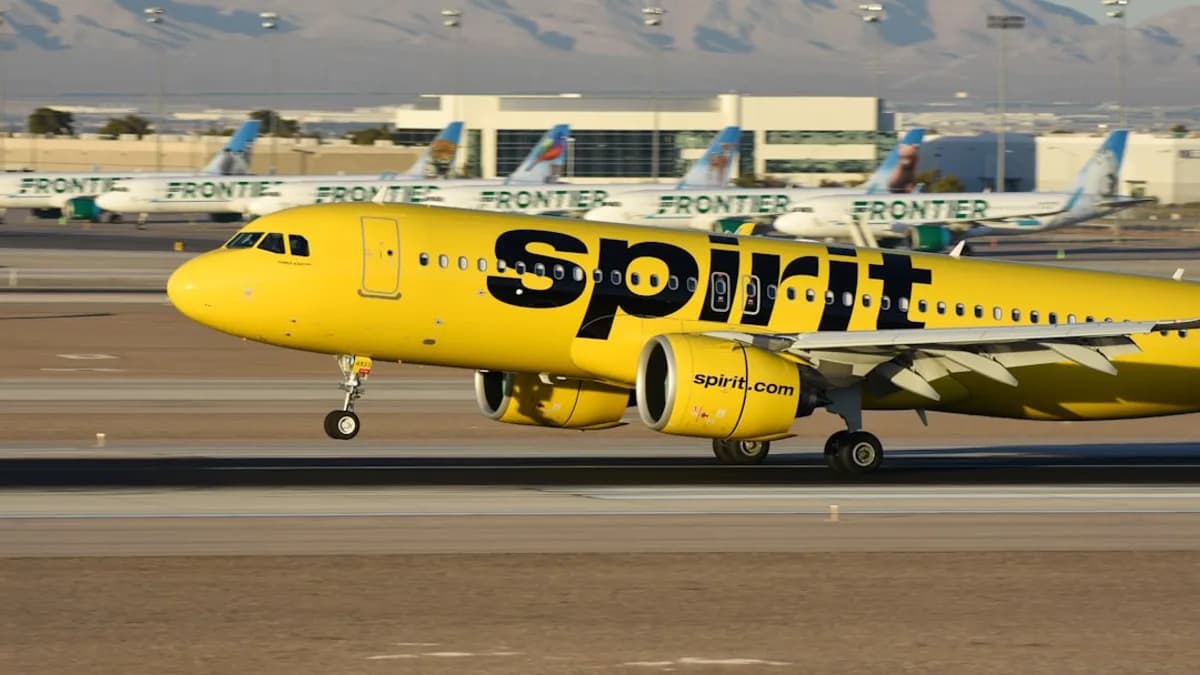
Spirit Airlines collapsed on a Saturday; by Sunday, a TikTok creator had mobilized 36,000 people and $23 million in pledges—enough to crash his own hastily built website. No slick campaign, no celebrity endorsement, just raw viral momentum. That’s the story, and the shock: social media’s power isn’t hypothetical anymore, it’s raising real cash, fast, for a real company in trouble. This wasn’t a GoFundMe for a sick pet or a local bakery. This was an attempt to rescue a publicly traded airline, and the engine wasn’t Wall Street—it was TikTok.
The campaign’s architect, @airlinepatron, didn’t promise equity, voting rights, or even a guaranteed seat. The pitch was pure grassroots: “What if we, the flying public, owned the airline?” Within hours, the link hit TikTok’s For You page. Pledges poured in from all 50 states, and the site buckled under demand. By the time the founder posted a video update, the pledges had nearly doubled. People weren’t just clicking—they were sharing, stitching, and debating the idea in real time.
This viral surge didn’t happen in a vacuum. Spirit’s abrupt shutdown—stranded passengers, cancelled flights, and a mountain of bad press—created a sense of urgency and outrage. TikTok, with its algorithm tuned for immediacy and controversy, amplified both. The campaign’s “founding patron” framing tapped into a wider trend: users want agency, not just as consumers, but as stakeholders. Unlike the meme stock frenzy of 2021, this wasn’t about short squeezes or sticking it to hedge funds. It was about ownership, and it spread faster than any airline rescue in history, according to TechCrunch.
Crunching the Numbers: What $23 Million Means for Spirit Airlines’ Revival
Spirit Airlines’ last quarterly report listed $400 million in cash and $3.7 billion in debt. A $23 million crowd pledge is barely a rounding error compared to the sums needed for a full-scale rescue or acquisition. In the airline world, even a modest fleet overhaul or regulatory compliance can chew through tens of millions overnight. Delta’s 2023 capital spend topped $6 billion; United’s bankruptcy in 2002 involved a $3 billion loan package. Spirit’s own failed merger with JetBlue was valued at $3.8 billion before it collapsed.
So, $23 million won’t buy Spirit’s planes, or even its landing slots at major airports. But that misses the point. The pledges represent kinetic energy—potential, not actual capital. Traditional bailouts, whether from government or private equity, hinge on hard cash and regulatory clearance; they’re slow, secretive, and focused on spreadsheet logic. Crowdfunding, by contrast, is noisy, public, and emotional. It can’t close a deal, but it can create leverage: public attention, political pressure, and brand value.
If the campaign were to convert even half its pledges into actual cash, it would still fall short of Spirit’s liabilities. But what it does supply is proof-of-concept: thousands of consumers willing to invest, not just buy tickets. That’s something no conventional airline rescue has ever achieved. In theory, this could be a bargaining chip—showing regulators, creditors, or potential buyers that Spirit has a base willing to support radical new ownership models.
Stakeholders React: Perspectives from Investors, Customers, and Industry Experts
Wall Street’s reaction? Skeptical, bordering on derisive. Spirit’s stock, already battered, barely twitched on Monday. Major investors dismissed the TikTok pledges as “noise,” arguing that real acquisition talks require institutional capital, not crowdsourced goodwill. One fund manager quipped, “You can’t run an airline on likes and retweets.” The numbers back him up: even the meme stock mania of AMC and GameStop saw retail investors struggle to influence actual corporate outcomes.
Customers, though, are energized. Spirit’s core demographic—budget travelers, college students, families—are exactly the kind of users who dominate TikTok. Many voiced support for the campaign, seeing it as a chance to reclaim agency from faceless boards and distant financiers. Some pledged cash, others volunteered expertise: pilots, mechanics, even former Spirit employees joined the comment threads, offering ideas for routes and service improvements.
Industry experts are split. Airline consultant Ben Baldanza (former Spirit CEO) warned that “crowdfunded ownership is a regulatory nightmare,” citing FAA rules on shareholder transparency and capital adequacy. But aviation historian Janet Bednarek pointed out that the industry has always been shaped by public sentiment—whether through unionization, passenger advocacy, or government intervention. The TikTok campaign, she said, “shows a new kind of stakeholder activism, one that can’t be ignored even if it can’t buy a fleet outright.”
From Past Airline Rescues to Today’s Social Media Movements: A Historical Comparison
Airlines have collapsed before—Eastern in 1991, Swissair in 2001, and most recently Virgin America’s absorption by Alaska in 2018. The tools for rescue were boring: bankruptcy courts, private equity, or government loans. Swissair’s rescue involved $1.2 billion in public funds; United’s bankruptcy required court approval for every major decision. None of these events saw meaningful public participation, beyond staged protests or passenger outrage.
Contrast that with Spirit’s TikTok campaign. Instead of waiting for regulators or billionaires, ordinary consumers jumped in, pledging money and ideas. The last comparable grassroots effort was the “Buy the Airline” campaign for Icelandic carrier WOW Air in 2019, which raised less than $1 million and fizzled out. The difference is scale and speed: TikTok’s algorithm turns outrage into action instantly, creating movements that dwarf anything possible in the pre-social-media era. For a broader view on viral social media dynamics, see Viral Culture Clashes and Gaming Nostalgia Shake Southeast Asia.
This isn’t just a numbers game. Social media shapes perception—of brands, of crises, of legitimacy. The Spirit campaign rewrites the script: instead of “airline fails, creditors circle, government steps in,” it’s “passengers rally, pledges surge, media covers.” Whether or not this campaign succeeds, it will force every airline board to rethink crisis strategy. Public opinion, amplified by TikTok, is now a variable in corporate rescue math.
What Spirit Airlines’ Social Media-Fueled Rescue Means for the Airline Industry and Consumers
The Spirit campaign signals a shift: ownership and rescue aren’t just for institutional investors anymore. Crowdfunding, once the domain of indie films and startup gadgets, is crashing through the gates of corporate finance. If even a fraction of Spirit’s pledges convert to real money, it could force regulators to clarify rules for consumer ownership of major companies—think SEC scrutiny, FAA oversight, and antitrust implications.
For airlines, this means customer engagement isn’t just about loyalty points or email blasts. Passengers want a seat at the table—literally. Brands that ignore this risk irrelevance; those that embrace it could harness unprecedented loyalty. Imagine an airline whose board includes “founding patrons,” or whose route decisions are shaped by viral polls. The Spirit campaign’s energy is a warning shot: traditional models of ownership and engagement are vulnerable to disruption.
Other industries are watching. Retail, hospitality, and even banking have seen flashes of consumer activism, but nothing on this scale. If Spirit’s campaign achieves even partial success—raising enough to influence terms, or securing a seat in bankruptcy negotiations—it will spark imitators. Struggling companies may see TikTok as a lifeline, not just a marketing channel. The mechanics are messy, but the precedent is powerful. For insights into how grassroots movements can outpace high-tech trends, read Gen Z’s Snail Mail Clubs Crush AI Hustles with $20K Months.
Predicting the Future: Will Crowdfunding Become a Viable Model for Corporate Turnarounds?
Crowdfunding’s limits are obvious: regulatory hurdles, capital scale, and operational complexity. The FAA doesn’t want thousands of anonymous shareholders; bankruptcy courts demand hard cash, not pledges. But the Spirit campaign isn’t about closing a deal—it’s about changing the terms of engagement. If public sentiment can move $23 million in days, what happens when that energy is harnessed for a distressed retail chain or a failing bank?
The hurdles are real. SEC rules for public offerings, FAA requirements for airline ownership, and the sheer logistics of managing tens of thousands of micro-investors are daunting. Most campaigns will stall before reaching critical mass. But TikTok’s ability to mobilize capital and attention is undeniable. Expect regulatory bodies to start drafting new frameworks for crowdsourced corporate rescue. Expect activist investors to harness viral platforms for proxy fights. And expect boards to monitor social media sentiment, not just quarterly earnings.
The next Spirit Airlines won’t just face bankruptcy lawyers—it’ll face TikTok. In five years, we could see hybrid models: institutional capital paired with crowdsourced activism, boards with consumer directors, and rescue deals shaped by viral demand. The numbers may not add up yet, but the momentum is there. Crowdfunding isn’t ready to take over Wall Street, but it’s rattling the gates—and the gatekeepers are watching.
Why It Matters
- A viral TikTok campaign raised $23 million in pledges to rescue a major airline within hours.
- The grassroots effort highlights the growing influence of social media on real-world financial events.
- Spirit Airlines' crisis demonstrates new possibilities for consumer-driven ownership and activism.