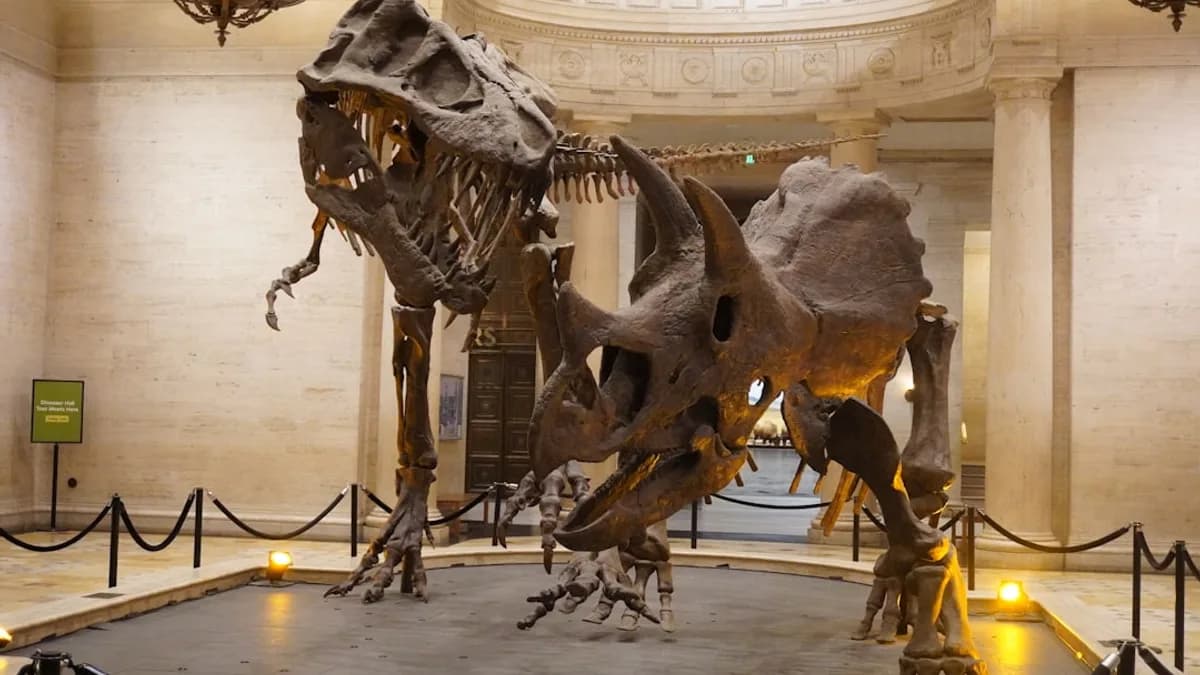
Why the Dinosaur Fossil Market Lags Behind the Art World in Development and Value
Dinosaur fossils, some over 60 million years old, routinely sell for less than a fraction of a Basquiat or a Banksy. The highest price ever fetched for a fossil—$31.8 million for "Stan" the T. rex in 2020—barely dents the art market, where single paintings clear $100 million with regularity. The reason is not just scarcity; it’s a lack of market infrastructure, fragmented provenance, and buyer uncertainty, according to CryptoBriefing.
The art market did not mushroom overnight. Its boom was built on centuries of documented sales, robust authentication systems, global auction houses, and a culture that prizes both private and public display. Art investors rely on indices, insurance models, and even fractionalized ownership platforms—none of which exist at scale for fossils. For fossils, inconsistent documentation and legal grey zones depress investor confidence. Few banks would underwrite a fossil as collateral, and few collectors are sure their latest trophy won’t be seized for an alleged breach of export rules.
Demand is also stifled by the fossil’s dual identity: scientific artifact and luxury collectible. While paintings are created for display, fossils are often expected to serve research. If the market matured, with improved tracking, insurance, and clearer legal frameworks, there’s little doubt that prices would climb. The raw supply constraint—no one is making more T. rex skulls—should, in theory, fuel a speculative boom. But until buyers trust the asset and its provenance, dinosaur bones will remain a niche for the brave, not a mainstream asset class.
Navigating the Ethical Minefield: Private Ownership Versus Public Museum Stewardship of Fossils
When a private buyer snaps up a world-class fossil, it’s not just a rich person’s flex—it’s a flashpoint for controversy. Every major sale triggers outrage from paleontologists who argue that scientific treasures belong in museums, not behind velvet ropes. Museums serve the public: they educate millions and enable peer-reviewed research. When specimens vanish into private hands, science loses the chance to study or reinterpret them as methods advance. The infamous "Sue" T. rex, for example, only became a scientific icon because it landed in a public institution after a complicated legal battle.
Yet critics who paint all private collectors as villains ignore the financial realities. Museums are stretched thin—U.S. federal funding for natural history collections has stagnated for decades. Some of the most spectacular finds—like Stan and Sue—were only excavated thanks to private capital. Collectors often hire skilled paleontologists to prep and restore fossils, preserving specimens that would otherwise erode in the field.
Private ownership can even drive discovery. In the U.S., landowners have the legal right to fossils found on their property, incentivizing them to allow and fund digs. And not every collector is a hoarder; some loan or eventually donate their fossils to universities or public exhibits. The real ethical dilemma is not ownership per se, but access and transparency. If a fossil is available for study and display, does it matter whose name is on the title?
How Legal Regulations Shape the Dinosaur Fossil Market and Influence Accessibility
Legal ambiguity is the fossil market’s Achilles’ heel. The patchwork of laws governing fossil excavation and sale varies wildly by country—and sometimes, by state. The U.S. is famously permissive, allowing private ownership of fossils found on private land. China, Mongolia, and Brazil, by contrast, treat fossils as national patrimony and ban export. These discrepancies create black markets and muddy chains of ownership.
High-profile seizures—like the 2012 repatriation of a Mongolian T. bataar from a New York auction—have rattled buyers. Auction houses now demand rigorous provenance documentation, but the historical record is often incomplete. The result: legitimate specimens are tainted by association, and risk-averse buyers flee. The lack of legal clarity deters insurance firms, market-makers, and institutional investors who could otherwise bring discipline and liquidity.
Clearer, harmonized laws would benefit everyone except smugglers. Transparency in provenance would allow scientists to track specimens, while investors could treat fossils as real assets, not legal liabilities. Countries with strong fossil policies, such as Canada, have demonstrated that it’s possible to balance scientific access, public benefit, and private rights—if the rules are clear, enforced, and publicly accepted.
Addressing Criticisms: Balancing Commercial Interests with Scientific and Public Good
Defenders of private fossil markets raise valid points: without commercial incentives, many fossils would remain undiscovered or decay in situ. Market mechanisms funnel capital into discovery and conservation. But unchecked commercialization risks turning science into a luxury hobby, where only collectors with deep pockets shape the paleontological record.
Opponents fear that secretive deals and siloed collections could set back research or deny the public the chance to see these wonders. The answer isn’t a blanket ban or laissez-faire indifference. Shared-ownership models—where collectors and museums co-fund purchases and guarantee scientific access—can thread the needle. Public-private partnerships, as seen with some rare art, could formalize this balance. But without enforceable transparency and ethical guidelines, the fossil trade will remain a Wild West—profitable for some, but a loss for science and society.
Building a Sustainable Future for Dinosaur Fossils: Calls for Market Innovation and Ethical Reform
If dinosaur fossils are to realize their full potential as cultural and financial assets, the market needs a hard reset. Clear provenance standards, insurance products tailored to paleontological assets, and a global registry would bring the fossil trade out of the shadows. Stronger ethical codes—ensuring research access and display, regardless of ownership—should be non-negotiable.
The art world’s evolution offers a blueprint: collaboration between collectors, institutions, and regulators built trust and liquidity. Fossil stakeholders must do the same. Investors and scientists alike should push for policy reforms that reward transparency and public benefit.
The next “Stan” shouldn’t vanish into a vault—it should inspire, educate, and, yes, reward those who saved it from the dust. The market can grow, but only if profit and preservation march together. The dinosaurs deserve nothing less.
Why It Matters
- The fossil market’s lack of infrastructure and legal clarity limits its growth and investor confidence.
- Ethical debates over private ownership versus museum stewardship impact access to scientifically valuable fossils.
- Legal regulations and fragmented provenance create uncertainty and risk for fossil collectors and sellers.