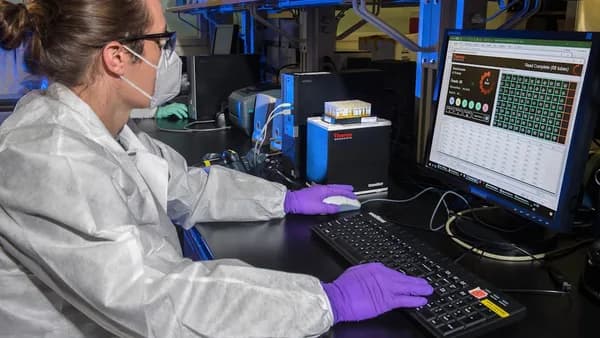
Integrating lab management systems with bioinformatics tools is now essential for modern scientific research. As labs in 2026 generate and analyze ever-larger datasets—especially in genomics and multiomics—the ability to seamlessly connect sample tracking, workflow management, and advanced analytical platforms directly determines efficiency and research outcomes. This guide provides a practical, step-by-step approach to integrate lab management and bioinformatics tools, drawing on current, real-world data from leading platforms like Illumina and Scispot AI.
Introduction to Integration Benefits
The need to integrate lab management bioinformatics tools has never been more pressing. Next-generation sequencing (NGS) and multiomics workflows now yield massive amounts of data, which, if left siloed, hinder collaboration, slow discovery, and complicate compliance.
Key benefits of integration include:
- Automated workflows: Reduce manual data entry, minimize errors, and speed up experimental cycles (Illumina).
- Centralized data access: Make all R&D, clinical, and production data accessible through unified dashboards (Scispot AI).
- Rapid insights: Enable interactive analytics and reporting, even for users without deep bioinformatics backgrounds (Illumina Connected Multiomics, Scispot Scibot).
- Improved collaboration: Share data and results quickly for multi-site and cross-functional teams.
- Stronger compliance: Support secure data handling with audit trails and privacy guarantees (Scispot AI).
"Automate your lab. Adopt lab automation to improve efficiency… Data sharing allows you to publish and collaborate with speed."
— Illumina Bioinformatics Software Tools
Common Lab Management Systems and Bioinformatics Tools Compatibility
The first step to integration is understanding the compatibility landscape between lab management systems (LIMS/ELN) and bioinformatics tools. The ecosystem in 2026 is rich, with several platforms supporting deep integration.
Popular Lab Management Systems
| Platform | Description | Integration Highlights |
|---|---|---|
| BaseSpace Clarity LIMS | Sample & workflow management, instrument setup, automation | Integrates with Illumina sequencing, supports APIs |
| Scispot alt-LIMS/alt-ELN | AI-powered lab operating system, data centralization | Scibot AI agent, Microsoft apps integration |
| DesignStudio | Panel and workflow design for genomics | Integrates with Illumina workflow tools |
Leading Bioinformatics Tools
| Platform | Focus | Integration Highlights |
|---|---|---|
| Illumina Connected Analytics | Enterprise-grade multiomics data, analytics, compliance | APIs, event subscriptions, cloud-based |
| Illumina Connected Multiomics | Sample-to-insight, interactive visualizations, multiomics | End-to-end cloud workflow, no coding required |
| DRAGEN | Secondary NGS data analysis | Deeply integrated with Illumina ecosystem |
| Scispot Scibot | AI-powered analytics, reporting, search | Conversational interface, integrates with Microsoft and other ELNs/LIMS |
Compatibility Highlights:
- APIs and connectors: Both Illumina and Scispot platforms offer APIs for integration.
- Cloud-native workflows: Most modern solutions support cloud storage, processing, and sharing.
- Instrument integration: Scispot connects directly to lab hardware via agent/connector.
"Scibot, also known as Scispot AI and AI Lab Assistant, integrates seamlessly with Scispot apps like alt-ELN, alt-LIMS, and alt-SDMS, as well as other ELN and LIMS systems."
— Scispot AI
Planning Your Integration Workflow
Before connecting systems, careful planning prevents common pitfalls and maximizes ROI.
Key Planning Steps
Audit current systems:
- List all LIMS, ELN, and analysis platforms in use.
- Identify data silos and workflow bottlenecks.
Define integration goals:
- Automate experiment setup? Streamline sample tracking? Enable real-time analytics?
- Specify which data and results need to be shared, and with whom.
Determine data types and formats:
- What sequence file formats (FASTQ, BAM, VCF, etc.) are in use? (Illumina)
- Are there proprietary instrument outputs to be standardized?
Assess compliance requirements:
- Are there specific privacy, security, or audit trail needs? (Scispot AI: "data is not used to train AI models or accessed by sub-processors")
Choose the right integration approach:
- Out-of-the-box connectors (as with Scispot/Illumina)?
- Custom API development?
Tip: "Scispot is designed for easy integration without dedicated engineers or bespoke solutions. The platform offers out-of-the-box ELN and LIMS functionality, quickly configurable and personalized to meet specific lab requirements."
— Scispot AI
Step 1: Data Standardization and Formats
A fundamental step to integrate lab management bioinformatics tools is ensuring all systems speak the same data language.
Sequence File Formats
Illumina platforms support a wide range of sequence file formats, including:
- FASTQ: Raw sequence reads
- BAM/CRAM: Aligned sequence data
- VCF: Variant call format, for genetic variants
These formats are industry-standard and recognized by most bioinformatics tools and LIMS.
"Find options for every kind of data analysis imaginable. Browse the formats."
— Illumina Informatics
Metadata and Sample Tracking
- Consistent metadata schemas are essential for linking raw sequence data to experimental context (sample ID, run date, protocol).
- Scispot centralizes metadata from ELN, LIMS, and even Microsoft Lists, ensuring traceability.
Actionable Steps:
- Map out data flows, ensuring each step (from sample registration in LIMS to bioinformatics output) uses the same sample identifiers and metadata fields.
- When possible, use open formats and avoid proprietary data structures.
- Validate that all system APIs can import/export these formats without loss.
Step 2: API and Software Connector Setup
Modern platforms rely on robust APIs or connectors to enable seamless integration.
API Access and Developer Resources
| Platform | API/Connector Availability | Documentation/Support |
|---|---|---|
| Illumina | Developer Portal, Open source apps, Binary downloads, SDKs | Extensive documentation, support portal |
| Scispot | Scispot Agent/Connector, Microsoft Power Platform integration | No custom hardware required, out-of-the-box |
Key Steps:
- Obtain API credentials from your LIMS and bioinformatics tool providers.
- Review available SDKs and sample apps for rapid prototyping (Illumina offers these for NGS and analytics workflows).
- Configure connectors to sync sample and experiment data. Scispot’s Scibot agent manages instrument and data connectivity without extra hardware.
- Test API endpoints for:
- Data push/pull (e.g., pushing sample info from LIMS to analytics)
- Event subscriptions (e.g., notify when sequencing is complete)
Example:
# Example: Fetching sample metadata from Scispot API
import requests

api_url = 'https://api.scispot.com/v1/samples'
headers = {'Authorization': 'Bearer <YOUR_API_TOKEN>'}
response = requests.get(api_url, headers=headers)
if response.status_code == 200:
    samples = response.json()
    print(samples)
else:
    print("API error:", response.status_code)
"Access APIs to subscribe to platform events and specify delivery targets… Direct access to developer resources for next-generation sequencing, analysis, and data science."
— Illumina Developer Portal
Step 3: Automating Data Transfer and Analysis
Integration isn’t just about moving data—it’s about enabling real-time, automated analysis and reporting.
Workflow Automation
- Scispot Scibot: Enables automation via conversational interface. For example, you can instruct Scibot to prepare samples for an Illumina NextSeq 550, trigger data analysis, and generate custom dashboards.
- Illumina Connected Analytics: Offers cloud-based, enterprise-grade automation for genomic workflows, from data ingestion to visualizations.
| Automation Feature | Illumina Connected Analytics | Scispot Scibot |
|---|---|---|
| Sample-to-insight automation | Yes | Yes |
| No-code dashboard generation | Yes | Yes |
| AI-driven experiment setup | No | Yes |
| Instrument integration | Yes (Illumina) | Yes (multiple vendors) |
Example Automation Workflow
- Experiment setup in LIMS/ELN (e.g., Scispot alt-LIMS).
- Sample metadata sent via API to sequencing instrument (e.g., Illumina NextSeq 550).
- Sequencing data automatically transferred to analysis platform (e.g., Illumina Connected Multiomics).
- Automated analysis pipeline runs (e.g., DRAGEN for secondary analysis).
- Results pushed back to LIMS and visualized in custom dashboards (Scispot or Illumina).
Automation Command Example (Scispot Scibot):
"Prepare 96-well plate samples for sequencing and run DRAGEN pipeline for secondary analysis. Generate summary dashboard."
"With simple commands, you can: Create a cell culture experiment, load 96-well plates, send plates to a Tecan Freedom EVO liquid handler, prepare samples for an Illumina NextSeq 550 sequencer, generate growth curves or dose-response analyses."
— Scispot AI
Step 4: Ensuring Data Security and Compliance
Data security and regulatory compliance are non-negotiable, especially when dealing with sensitive genomics data.
Security Best Practices
- No sub-processor access: Scispot guarantees that "your data is not used to train AI models or accessed by sub-processors."
- Cloud security: Illumina Connected Analytics provides "enterprise-grade" global compliance and secure data science tools.
- Audit trails: Automated reporting and traceability features in both Illumina and Scispot platforms support compliance documentation.
| Platform | Data Privacy Guarantee | Compliance Support |
|---|---|---|
| Scispot AI | No data sharing with AI models or sub-processors | Customizable compliance reporting |
| Illumina Connected Analytics | Enterprise-grade compliance, secure storage | Audit trails, global compliance |
Actionable Steps:
- Review data privacy agreements with all vendors.
- Enable audit logging on all integrated systems.
- Use encrypted data transfer protocols (HTTPS, SFTP) for all API and connector communications.
- Regularly test compliance reporting workflows.
"We guarantee that your data is not used to train AI models or accessed by sub-processors. Our commitment to data security maintains the highest standards of integrity."
— Scispot AI
Troubleshooting Common Integration Issues
Even with modern platforms, integration projects can face challenges. Here’s how to address the most common problems:
Top Issues & Solutions
| Issue | Potential Cause | Solution |
|---|---|---|
| Data format mismatch | Inconsistent file or metadata formats | Standardize to industry formats (FASTQ, BAM, VCF, etc.) |
| API authentication errors | Invalid credentials or expired tokens | Regenerate tokens, check permissions |
| Data syncing delays | Network issues, API rate limits | Monitor API logs, check vendor documentation |
| Instrument not recognized by LIMS | Missing or outdated connector/driver | Update connector, verify compatibility |
| Compliance reporting gaps | Incomplete metadata or missing audit trails | Configure mandatory fields, enable full audit logging |
"Find documentation, FAQs, technical bulletins, training, software downloads, and other resources in our Support Center."
— Illumina Support Center
Case Study: Successful Integration in a Genomics Lab
To illustrate the integration process, let’s look at a genomics lab using Illumina and Scispot platforms:
Lab Profile:
- Uses BaseSpace Clarity LIMS for sample and workflow management.
- Runs Illumina NextSeq 550 for sequencing.
- Implements Illumina Connected Multiomics for data analysis and visualization.
- Centralizes reporting and experiment design with Scispot alt-ELN and Scibot AI.
Integration Steps Followed
- Standardized all sample metadata across LIMS and ELN using open fields.
- Configured API connectors between Clarity LIMS and Scispot, enabling automatic sample registration and tracking.
- Automated sequencing run setup: Scibot prepared the plate layout and sent commands to the NextSeq 550.
- Sequencing data exported directly to Illumina Connected Multiomics, triggering secondary and tertiary analysis.
- Results and analytics were automatically visualized in Scispot, and compliance reports generated with a single command.
- No additional hardware or bespoke software was required, thanks to Scispot’s agent/connector model.
"No additional hardware is needed to support Scispot and its AI Lab Assistant Scibot… enabling seamless data integration and interaction without extensive hardware investments."
— Scispot AI
Outcome:
- Reduced manual sample handling by over 50%
- Enabled real-time analytics for all team members, including those without coding expertise
- Streamlined compliance reporting for regulatory submissions
Conclusion and Best Practices
Integrating lab management with bioinformatics tools in 2026 is not just possible—it’s becoming standard practice for high-performing scientific labs. By combining robust LIMS/ELN platforms like Illumina BaseSpace Clarity LIMS and Scispot with cutting-edge cloud analytics and AI-powered assistants, labs can achieve:
- Seamless data flow from bench to insight
- Automated, auditable workflows
- Accelerated discovery cycles
Best Practices:
- Prioritize open standards for data formats and APIs.
- Leverage out-of-the-box connectors and minimize custom development where possible.
- Automate compliance and reporting with integrated audit trails.
- Centralize data and metadata for easier search, sharing, and analysis.
- Regularly review and test integration points for security and reliability.
"Our seamless software portfolio enables you to hit development milestones faster."
— Illumina Informatics
FAQ: Integrating Lab Management and Bioinformatics Tools
Q1. Can I integrate Scispot with Microsoft-based lab management tools?
A: Yes, Scispot and its AI Lab Assistant, Scibot, integrate with Microsoft Power Platform, Power Apps, Azure, MS365, and Microsoft Lists, centralizing all R&D, clinical, and product data for seamless workflow management.
Q2. Is hardware investment required to connect lab instruments with Scispot?
A: No additional hardware is needed. Scispot connects with lab instruments via Scispot Agent or Connector, enabling data integration without extensive hardware investments.
Q3. What data formats are supported for sequencing analysis in Illumina’s bioinformatics tools?
A: Illumina platforms support a range of industry-standard formats such as FASTQ, BAM/CRAM, and VCF for sequencing and variant data.
Q4. Are AI and automation features available out-of-the-box or do they require custom engineering?
A: Scispot is designed for easy, out-of-the-box integration with ELN and LIMS systems; personalized AI features are available without the need for dedicated engineers or custom development.
Q5. How is data security ensured during integration?
A: Both Illumina Connected Analytics and Scispot guarantee enterprise-grade security and compliance. Scispot specifically states that customer data is not used to train AI models or accessed by sub-processors.
Q6. Can non-bioinformaticians use these integrated platforms?
A: Yes, tools like Illumina Connected Multiomics and Scispot Scibot offer interactive dashboards and AI-powered analytics, enabling users without coding or bioinformatics expertise to access insights and generate reports.
Bottom Line
In 2026, the ability to integrate lab management bioinformatics tools is a defining feature of efficient, innovative scientific labs. By leveraging platforms like Illumina and Scispot—each offering robust APIs, automation, AI-driven workflows, and enterprise-grade compliance—labs can connect every step from sample intake to discovery, with minimal friction. The key is to prioritize open standards, automation, and security—unlocking faster insights, better collaboration, and streamlined compliance for the future of research.