If you want to succeed in today's dynamic markets, learning how to use charting tools stock trading is an essential skill for both beginners and experienced traders. Stock charting tools help visualize price trends, spot trading opportunities, and build systematic strategies grounded in data, not just gut feeling. This step-by-step 2026 guide, built on real research data, will walk you through chart setup, essential technical indicators, pattern recognition, and integrating your tools with trading platforms for maximum edge.
Introduction to Charting Tools in Stock Trading
Stock charting tools have become indispensable for modern traders and investors practicing technical analysis. These visual platforms transform raw price data into actionable insights by displaying price movements, patterns, and key statistics over chosen timeframes. As outlined by stock-tools.com, leveraging these tools effectively starts with understanding their core functionalities and applying them consistently to support decision-making.
"To harness the full potential of a stock charting tool, it is first essential to comprehend its functionalities and offerings."
— stock-tools.com
Charting tools allow you to:
- Visualize price trends and volatility
- Identify support and resistance levels
- Apply technical indicators for trading signals
- Test and refine trading strategies
- Recognize recurring chart patterns for potential market moves
The right charting workflow can help take emotion out of trading and replace it with systematic, evidence-based decisions.
Setting Up Your Charting Software: Basics and Requirements
The first step in mastering how to use charting tools stock trading is setting up your software to fit your workflow. While source data does not name specific commercial platforms, most modern charting tools share similar setup processes and customizable features.
Getting Started
- Install or Launch: Choose your preferred charting tool and open the platform.
- Data Import: Load historical price data. For example, datasets typically include columns like date, open, high, low, close, adjusted close, and volume (as in the Amgen analysis).
- Chart Type Selection: Pick the chart type best suited to your analysis (see next section).
- Time Frame Configuration: Select time frames that align with your trading approach:
- Short-term traders: Use minute or hourly charts for capturing fast moves.
- Long-term investors: Opt for daily, weekly, or monthly charts for broader trend analysis.
Customization Features
Most charting tools offer:
- Overlays: Add layers such as Bollinger Bands or Fibonacci retracements for more context.
- Indicators: Integrate moving averages, RSI, MACD, and more.
- Drawing Tools: Annotate charts with trendlines, shapes, or notes.
- Volume Data: Display trading volume to assess move strength.
"Customizing the charting tool’s parameters is the next crucial step. Most tools offer extensive features to tailor your analysis to specific needs."
— stock-tools.com
Understanding Different Types of Stock Charts
Choosing the correct chart type is fundamental to effective technical analysis. Each type provides a different lens on price action and is suited for specific analytical needs.
| Chart Type | Data Shown | Best For | Visual Complexity |
|---|---|---|---|
| Line Chart | Closing price over time | Trend spotting, simplicity | Low |
| Bar Chart | OHLC (Open, High, Low, Close) | Volatility, detail | Medium |
| Candlestick | OHLC + color for sentiment | Trend/reversal spotting | High |
Line Charts
- Description: Connects closing prices with a continuous line.
- Use Case: Quickly grasp overall trends without intraday noise.
Bar Charts
- Description: Each bar shows opening, high, low, and closing prices for a period.
- Use Case: Assess volatility and detailed price range.
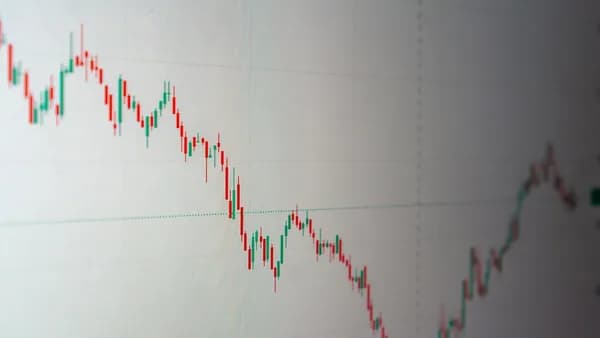
Candlestick Charts
- Description: Visualizes OHLC data with colored bodies and wicks ("shadows").
- Use Case: Instantly spot bullish (upward) or bearish (downward) sentiment and reversals.
"Candlestick charts...make it easier to quickly identify market sentiment and potential reversals or continuations in trends."
— stock-tools.com
Key Technical Indicators and How to Apply Them
Technical indicators offer quantitative ways to interpret price and volume data. They help identify market conditions, validate trends, and generate trading signals.
Most Widely Used Technical Indicators
| Indicator | What It Shows | Typical Use |
|---|---|---|
| Moving Averages | Smoothed price trend | Trend direction, dynamic support/resistance |
| RSI (Relative Strength Index) | Overbought/oversold conditions | Spotting potential reversal points |
| MACD (Moving Average Convergence Divergence) | Momentum and signal crossovers | Buy/sell signal generation |
Moving Averages
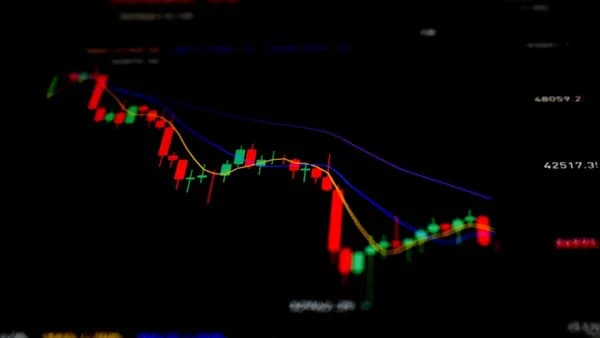
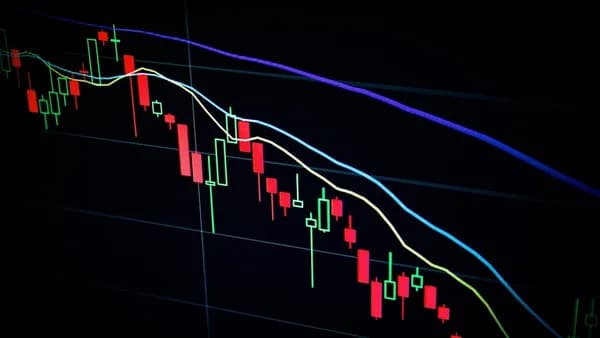
- How to Use: Overlay a moving average (e.g., 20-day, 50-day) on your chart. The line smooths out price fluctuations, revealing trend direction.
- Trading Insight: Price above the average may signal uptrend; below, a downtrend.
RSI (Relative Strength Index)
- How to Use: Add RSI to your chart (usually shown as a lower pane).
- Signals:
- Above 70: Overbought — potential reversal or correction.
- Below 30: Oversold — potential for bounce or reversal.
MACD
- How to Use: Place MACD below your price chart.
- Signals:
- Convergence/Divergence: Watch the MACD and signal lines for crossovers.
- Interpretation: Crossovers may precede significant price moves.
"Prominent indicators such as moving averages, the Relative Strength Index (RSI), and Moving Average Convergence Divergence (MACD) are often employed to discern market conditions."
— stock-tools.com
Drawing Tools and Pattern Recognition Techniques
Beyond indicators, drawing tools and pattern recognition are crucial for manual technical analysis.
Essential Drawing Tools
- Trendlines: Draw lines connecting swing highs or lows to define support and resistance.
- Shapes (Rectangles, Ovals): Highlight zones of consolidation or breakout.
- Fibonacci Retracements: Identify likely retracement levels during trends.
Recognizing Chart Patterns
Chart patterns are recurring formations that provide clues to future price moves.
| Pattern Name | Type | What It Predicts |
|---|---|---|
| Head and Shoulders | Reversal | Trend reversal (top/bottom) |
| Double Top/Double Bottom | Reversal | Failure to break a level |
| Triangles (Ascending, Descending, Symmetrical) | Continuation | Trend continuation after consolidation |
| Flags | Continuation | Short pause before move resumes |
Example: Head and Shoulders
- Structure: Three peaks (center is the highest or lowest).
- Signal: Indicates a likely reversal when the pattern completes.
Volume Analysis
Always confirm patterns with volume:
- High volume on breakouts: Confirms legitimacy.
- Low volume: Move may lack strength.
"Volume is an essential component of technical analysis because it reflects the strength and legitimacy of a price move."
— stock-tools.com
Creating and Testing Trading Strategies Using Charts
Effective trading isn’t just seeing patterns—it’s about building and validating systematic strategies. Charting tools enable this process.
Example: Using Historical Data
- Data Inputs: Date, open, high, low, close, volume (as used in the Amgen stock analysis).
- Strategy Development: Combine technical indicators (e.g., moving average crossovers) with pattern recognition (e.g., double tops) for entry/exit rules.
- Testing: Apply your strategy to historical charts and record hypothetical trades.
Quantitative Model Example
The Amgen stock project used various statistical models (Linear Regression, SVM, Spline/MARS) and combined them with ARIMA time-series forecasting. The raw data included:
| Model | Predicted Price | Notes |
|---|---|---|
| Linear Regression | $193.38 | Fewer variables, simple |
| SVM | $189.44 | Handles multiple predictors efficiently |
| Spline (MARS) | $201.84 | Captures nonlinear relationships |
| Ensemble | $197.99 | Weighted average for robust forecast |
"A lower RMSE indicates that the model’s predictions were closer to the actual values. However, a simpler model with the same RMSE as a more complex model is generally better, as simpler models are less likely to be overfit."
— github.com/Daniblit/Ensemble-Predictive-Model-Forecasting-AMGEN-stock-price-at-year-end-31s
Action Steps
- Define entry/exit rules using indicators and patterns.
- Backtest on historical data to measure effectiveness.
- Record results (profit/loss, win rate, drawdowns).
- Refine parameters based on results.
Common Mistakes to Avoid When Using Charting Tools
Even seasoned traders can fall into traps with charting tools. Watch out for these common errors:
- Overfitting: Relying on overly complex models or too many indicators, which may not generalize well.
- Ignoring Volume: Patterns without volume confirmation are often unreliable.
- Chasing Patterns: Seeing what you want to see, rather than what's objectively present.
- Improper Time Frame Selection: Using a time frame that doesn’t fit your trading style.
- Neglecting Economic/External Factors: As shown in the Amgen analysis, news and macro variables can impact prices beyond what charts capture.
"There are certain intangible factors which can often be impossible to predict beforehand..."
— github.com/Daniblit/Ensemble-Predictive-Model-Forecasting-AMGEN-stock-price-at-year-end-31s
Integrating Charting Tools with Trading Platforms
For seamless workflow, integrate your charting tool directly with your trading platform. While specific platform names or APIs are not detailed in the source data, the general process is as follows:
Integration Steps
- Connect Accounts: Many platforms allow you to link brokerage/trading accounts for direct order placement.
- Chart-Based Trading: Place orders directly from the chart using drag-and-drop or embedded buttons.
- Real-Time Data: Ensure your charting tool is synced with live market data for accurate analysis.
- Backtesting Modules: Some platforms include simulation features to test strategies before risking capital.
"Mastering stock charting tools demands consistent practice and an in-depth understanding of their features."
— stock-tools.com
Advanced Tips for Maximizing Charting Tool Benefits
Take your chart analysis to the next level with these advanced practices:
Multi-Time Frame Analysis
- Compare trends across multiple time frames (e.g., daily and hourly) for stronger confirmation.
Combine Technical and Fundamental Inputs
- As in the Amgen project, supplement chart signals with economic data (inflation, GDP, sector indices).
Use Model Ensembles
- Blend results from multiple models/indicators for more robust predictions, as demonstrated in the Amgen analysis.
Continuous Learning and Practice
- Regularly review your trades and patterns.
- Stay updated with new indicators and best practices.
- Practice drawing and recognizing chart patterns until it becomes second nature.
Summary and Next Steps for Traders
Learning how to use charting tools stock trading is a foundational skill for anyone serious about market success. Here’s what the research-backed process looks like:
- Set up your charting software correctly—choose the right chart type and time frame.
- Apply technical indicators like moving averages, RSI, and MACD to spot market conditions.
- Draw trendlines and patterns to visualize support, resistance, and potential breakouts.
- Test and refine strategies on historical data before trading live.
- Avoid common errors such as overfitting and ignoring volume or economic context.
- Integrate your charting tool with your broker for efficient trading.
- Keep learning, reviewing, and improving your process for ongoing success.
FAQ
1. What are the main types of stock charts used in trading?
Line charts, bar charts, and candlestick charts are the most common. Line charts show closing prices for trend spotting; bar and candlestick charts provide more detail, including open, high, low, and close prices. (stock-tools.com)
2. Which technical indicators should I start with?
Begin with moving averages, RSI, and MACD. Moving averages show trend direction, RSI indicates overbought/oversold conditions, and MACD provides momentum and crossover signals. (stock-tools.com)
3. How important is volume analysis in chart trading?
Volume is crucial for confirming price moves. High volume during breakouts or reversals adds credibility, while low volume may signal a false move. (stock-tools.com)
4. What is the risk of using too many indicators or patterns?
Overfitting—using too many variables or overly complex models—can make your system fragile and less likely to perform well on new data. Simpler strategies with similar accuracy are often superior. (github.com/Daniblit/Ensemble-Predictive-Model-Forecasting-AMGEN-stock-price-at-year-end-31s)
5. Can charting tools predict the impact of news or economic changes?
No. While charts reflect price and volume, external events and macroeconomic changes can have unpredictable effects that may not be visible in historical patterns alone. (github.com/Daniblit/Ensemble-Predictive-Model-Forecasting-AMGEN-stock-price-at-year-end-31s)
6. How do I choose the right time frame for my charts?
Short-term traders typically use minute or hourly charts; long-term investors use daily, weekly, or monthly charts. Match your chart time frame to your trading horizon. (stock-tools.com)
Bottom Line
Mastering how to use charting tools stock trading is a journey grounded in the careful application of technical analysis principles. By understanding chart types, applying essential indicators, practicing pattern recognition, and continuously testing your strategies, you can make more informed, data-driven trading decisions. Remember: Consistency, practice, and staying aware of both technical and external factors are key to long-term trading success.