Russia’s Scaled-Back Victory Day Parade Signals Vulnerability Amid Ukraine Attacks
Russia’s decision to downsize its annual Victory Day parade has surged as a trending topic after a series of Ukrainian attacks rattled Moscow’s strategy and global image. The parade, a key show of military might and national pride, was markedly muted this year, drawing sharp international focus and triggering a flurry of coverage from outlets including Al Jazeera, The New York Times, and CNN. While Google News cluster metrics aren’t public, the event’s dominance across major newswires signals a spike in audience demand for real-time insights into Russia’s shifting posture during wartime.
The scaled-down celebration coincided with reports of a temporary ceasefire in Ukraine, but sources emphasize that the reduction was less about diplomacy and more about operational strain and security concerns on Russian soil. According to Al Jazeera, Russian officials explicitly cited threats from Ukrainian attacks as the reason for a more subdued approach.
Military Parades Shrink as Ukraine’s Assaults Rattle Moscow
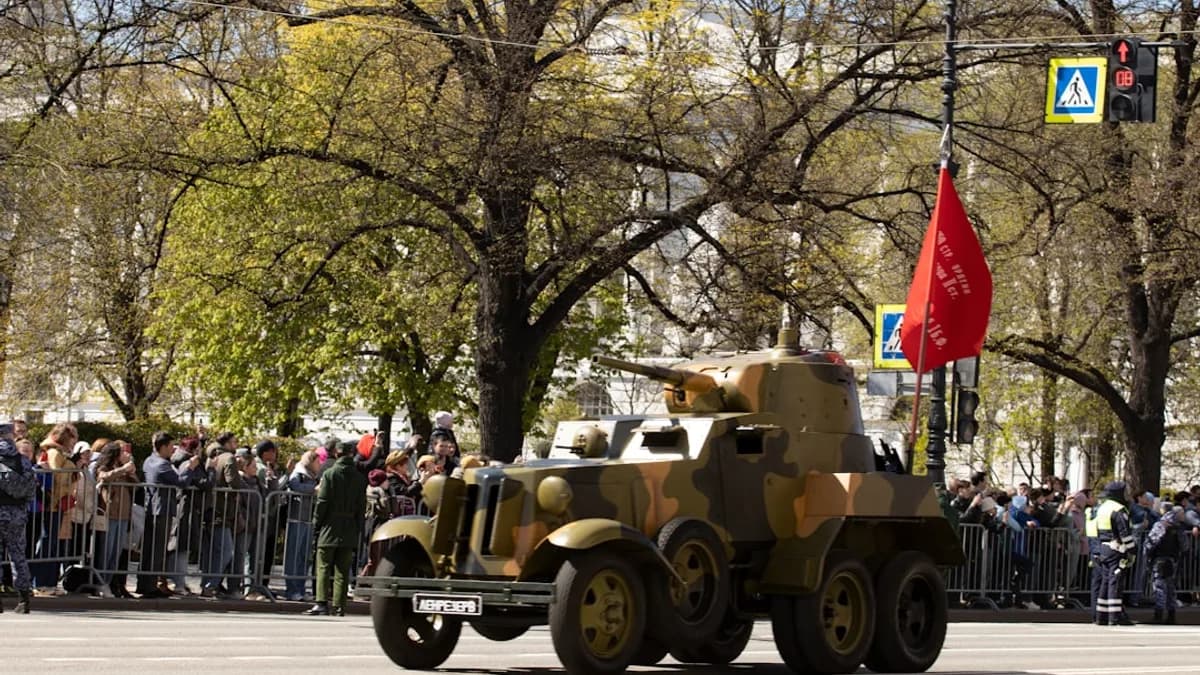
This year’s parade was punctuated by the visible absence of heavy weaponry and a reduction in military personnel—a stark contrast to the grandiose displays that have traditionally defined May 9 in Russia. The New York Times and BBC both highlight how this year’s event lacked the usual flyovers and hardware. Security fears in Moscow, triggered by Ukrainian drone strikes and incursions over the past months, forced officials to opt for a smaller, highly policed gathering.
Putin’s speech at the parade doubled down on anti-NATO rhetoric, but the spectacle’s contraction spoke louder than his words. The reduction is less a tactical choice and more an unavoidable admission of resource constraints and mounting operational risks.
Kremlin, Ukrainian Leadership, and NATO Shape the Narrative
President Vladimir Putin remained at the center of Russia’s public messaging, using the parade to denounce NATO and frame Russia as under siege. Meanwhile, Ukrainian President Volodymyr Zelenskyy issued a pointed decree mocking Moscow’s ability to hold a parade at all—a clear message that the symbolic value of the event is now contested ground according to The Guardian.
NATO itself was not a direct participant but served as the essential foil in Russian official statements. Western outlets, including Reuters and CNN, underscored the degree to which Russia’s usual projection of unity and strength was undercut by the event’s new realities.
Market Impacts: Security, Risk, and Perceptions of Russian Stability
The market implications of a scaled-back parade are subtle but significant. International investors and security analysts closely track the Kremlin’s willingness and ability to maintain national rituals, viewing disruptions as a signal of internal strain or operational vulnerability. The parade’s reduction, driven by ongoing Ukrainian attacks, raises questions about Russia’s capacity to sustain a prolonged war effort without further visible cracks appearing in its domestic front as highlighted by CNN.
For global energy and commodity markets, any sign of instability in Russia’s core institutions can trigger hedging behavior. While no immediate price swings are documented in the sources, the event’s symbolism could harden risk premiums on Russian assets and increase volatility in the months ahead.
Watch for Further Erosion of Kremlin Control and Narrative
The most actionable signal for the next 12 months: monitor any further contractions in Russian public ceremonies, emergency policies, or visible security measures in Moscow and other major cities. If Ukrainian attacks continue to erode the Kremlin’s confidence in hosting mass events, expect both the symbolism and reality of Russian power projection to weaken further.
Key evidence to track:
- Any further cancellation or reduction of state events tied to military prestige
- Shifts in Russian security postures and domestic media messaging
- Explicit policy changes or renewed mobilization efforts tied to ongoing attacks
The current parade’s scaled-back form is not just optics. It’s a tangible indicator of the mounting pressure on Russia’s leadership—and a barometer for the country’s ability to sustain its war narrative in the face of rising internal and external threats.