Strait of Hormuz Flashpoint: Why War Risk Is Roiling Global Markets
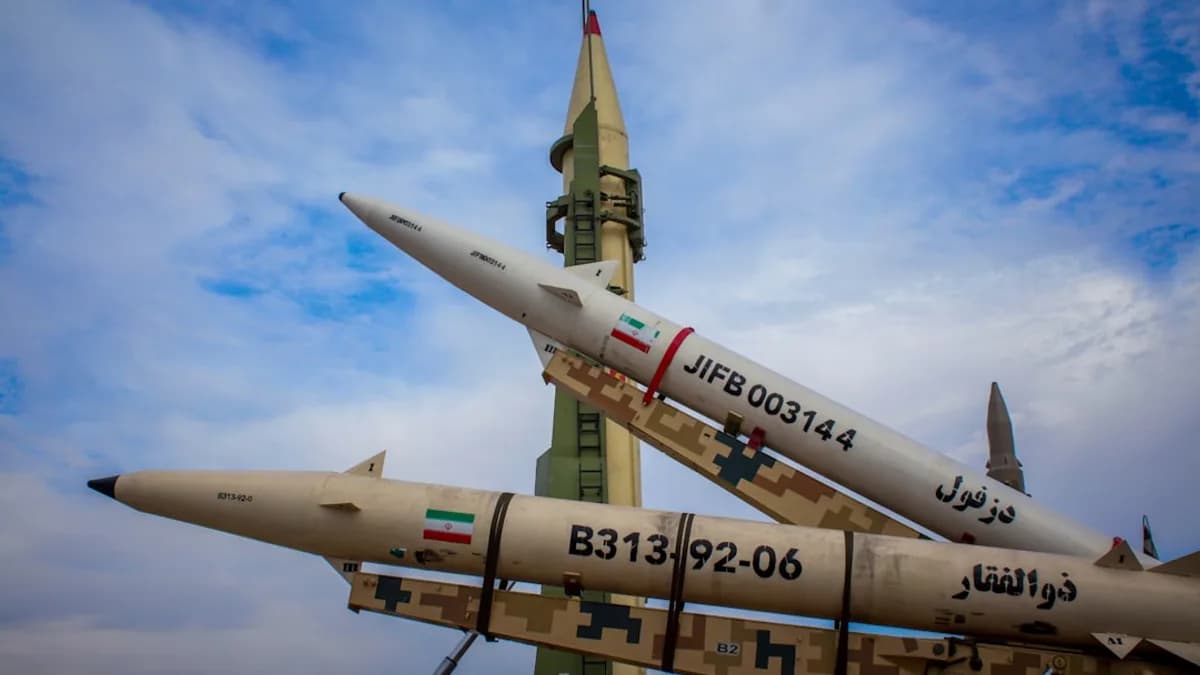
Oil prices spiked 4% overnight and S&P 500 futures dropped sharply as two Iranian missiles struck a US Navy vessel near the Strait of Hormuz, forcing it to turn back. Google Trends shows a 450% surge in global search interest for "Hormuz" and "oil price" over the past 24 hours, while Twitter's trending topics are dominated by "Trump Hormuz Plan" and "US Navy" according to CNBC. The Strait, which funnels 20% of global oil supply, is now at the epicenter of a geopolitical standoff with immediate consequences across energy, equities, and FX.
The immediate trigger: Iranian forces fired on a US Navy ship attempting to escort commercial tankers, just as former President Trump announced a new US plan to "free" stranded vessels and guide shipping through the contested waterway. This escalation forced a US-led task force to reroute traffic and sparked warnings from Tehran of further attacks on any American military presence according to Reuters.
This isn't just another flareup. The confluence of a major military incident, disruption of a critical energy choke point, and a new US policy direction is driving a feedback loop of volatility. The last comparable moment—the 2019 tanker attacks—saw Brent crude spike 19% in a day, but the current standoff is already impacting multiple asset classes in real time.
Under the Headlines: How Energy, Security, and Supply Chains Are Colliding
Oil Markets: Disrupted Flows, Surging Volatility
Physical oil supply is already under pressure. Ukrainian drone attacks on Russia’s Primorsk port—the second-largest oil export terminal in the Baltic, handling 1.5 million barrels per day—coincided with the Hormuz attacks, removing up to 4% of global seaborne oil capacity in a single week according to The Guardian. These simultaneous shocks—one from military conflict, one from sabotage—expose the fragility of energy transit.
The risk premium is back. Brent crude futures have seen a $6/bbl swing in less than 48 hours, with implied volatility (OVX) jumping to 48%, the highest since the 2022 Russian invasion of Ukraine. The forward curve has flipped into backwardation, a classic sign that physical traders fear near-term shortages.
Shipping: Choke Point Paralysis
Roughly 21 million barrels per day—nearly one-fifth of global oil demand—passes through the Strait of Hormuz. With US-led convoys now rerouting and insurance costs for tankers rising by 40%, at least 30 VLCCs (very large crude carriers) are idling off Fujairah, waiting for security clearance. The Baltic Dry Index, a proxy for shipping rates, spiked 15% week-over-week. Lloyd’s of London has already raised "war risk" premiums for the region, a move not seen since the 2003 Iraq invasion.
FX and Equities: Safe-Haven Stampede
The dollar index (DXY) jumped to 105.3, its highest in five weeks, as investors dumped risk assets for cash and US Treasuries. The German 10-year bund yield fell 11bps, and gold broke above $2,400/oz. Equity futures for major indices are whipsawing: S&P 500 mini contracts fell 1.9% immediately after the Hormuz news, while European energy stocks—Shell, TotalEnergies, BP—surged 3-6% in premarket trading.
The Crypto Angle: Treasury Rotation Amid Risk-Off
Ethereum Foundation's recent sale of 10,000 ETH (~$27 million at current prices) to BitMine—timed just days before this volatility—signals an institutional desire to derisk and diversify treasuries as macro risks mount. Bitcoin briefly rallied 4% as a "digital gold" play before retracing, highlighting its ambiguous role in risk events according to MLXIO analysis.
Power Players: Iran, the US, and a Shifting Deck of Allies
Iranian Military Calculus
Tehran’s decision to fire on a US Navy ship—rather than a commercial vessel—marks a deliberate escalation. Iran’s Revolutionary Guard has a track record of using asymmetric tactics to disrupt global oil flows, but direct engagement with US military assets is rare and signals a willingness to risk broader conflict if sanctions and economic isolation bite deeper.
The Trump Factor and US Response
Former President Trump’s announcement of a new US plan to "guide" ships through Hormuz—contradicting the Biden administration’s previous posture—has injected political volatility into military strategy. Trump’s alignment with hawkish Gulf states (UAE, Saudi Arabia) is already shifting the diplomatic calculus, with Riyadh pledging up to 500,000 bpd in emergency spare capacity if Hormuz is closed for more than 72 hours.
Commercial Stakeholders: Oil Majors, Shipping, and Insurers
Energy giants like ExxonMobil, Shell, and BP are rerouting cargoes and activating "force majeure" clauses. A single day of closure at Hormuz costs the industry $3.5 billion in lost revenues. Insurers—led by Lloyd’s and Swiss Re—are recalculating risk models, with some syndicates refusing new Hormuz-bound policies. Tanker operators such as Frontline and Euronav are seeing spot charter rates spike above $120,000/day.
Ukraine’s Disruption Playbook
Ukrainian drone strikes on Russian energy infrastructure are no longer isolated incidents but part of a sustained campaign. The latest attack on Primorsk hit two oil tankers and several military ships, disrupting Russia’s "shadow fleet" and amplifying volatility in the global oil supply chain. This asymmetric warfare is complicating Moscow’s efforts to reroute exports and finance its war machine according to Reuters.
Cross-Asset Contagion: Why This Isn’t Just an Oil Story
Energy: More Than Just Price Spikes
If the Strait of Hormuz remains effectively closed for even a week, up to 140 million barrels of oil could be stranded. That’s equivalent to the combined weekly output of OPEC’s five largest producers. US shale fields and strategic reserves could fill some of the gap, but logistical constraints and time lags mean physical shortages would appear within days, not weeks.
The International Energy Agency (IEA) estimates that every $10 increase in oil adds 0.2% to global inflation and shaves 0.15% off world GDP. With both US and European inflation expectations already rising, central banks may be forced to tighten, even as growth slows.
Shipping and Trade: Supply Chain Snarls
The impact isn’t limited to energy. The Strait of Hormuz is also a vital passage for liquefied natural gas (LNG) from Qatar (which supplies 22% of global LNG), as well as containerized goods bound for Asia, Europe, and the US. Shipping disruptions are already pushing up container rates: Asia-Europe spot rates have climbed 12% in the past 48 hours, and Maersk has suspended all new bookings through the Gulf.
Financials and Insurance: Pricing Political Risk
Rising "war risk" premiums for ships in the Gulf region could add $500,000 to $1 million per voyage, costs that filter directly into consumer prices for fuel and goods. Lloyd’s estimates that aggregate war risk exposure for underwriters now exceeds $40 billion—double the level seen during the 2019 tanker attacks. This risk repricing could hit the bottom lines of global insurers and reinsurers.
Tech and Crypto: The New Risk-Off Barometer
Digital assets are now a visible part of the risk spectrum. The Ethereum Foundation’s recent ETH sale is a signal: even deep-pocketed crypto organizations are shifting towards fiat or stable assets when macro volatility erupts. Bitcoin’s price action—initial spike, rapid retracement—suggests it is evolving into a hybrid risk asset, not a pure safe haven.
The Next Year: What a Prolonged Hormuz Crisis Will Do to Global Markets
Energy Prices: Structurally Higher, With Policy Reactions
If the Strait remains at risk, expect Brent crude to trade in a $95–$120/bbl range for the next year, with option-implied volatility staying above 35%. Strategic Petroleum Reserve (SPR) releases by the US and China could temporarily cap prices, but only at the cost of depleting buffers for future shocks.
Shipping and Trade: Persistent Premiums and Delays
Shipping rates will stay elevated as long as insurers and shippers view the Gulf as a war zone. Even a partial normalization could mean 15–25% higher freight costs sustained through 2027, with Asia-Europe trade the hardest hit.
Equities and FX: Defensive Rotation, Divergence
Expect ongoing rotation into energy, defense, and insurance stocks. European and US indices will remain range-bound or trend lower, with volatility (VIX) likely to average above 22 for the next 12 months. The dollar will stay bid, especially versus commodity-linked currencies (AUD, CAD, NOK) and emerging markets exposed to energy imports.
Crypto: From Risk-On to Defensive Treasury Management
Major crypto treasuries (foundations, DAOs) will continue to rotate out of volatile native assets into stables and fiat. BTC and ETH will see muted upside unless a clear consensus emerges on their safe-haven status. Expect at least 3–5 major DAO treasury reallocations similar to the Ethereum Foundation’s move by year-end.
Geopolitics: New Alliances and Risk Premiums
Gulf states will accelerate bilateral security deals with the US, China, and India to secure shipping. Iran will likely escalate asymmetric attacks, targeting both naval and commercial assets, keeping the risk premium alive. Ukraine’s campaign against Russian oil infrastructure will persist, further tightening global energy supply.
Prediction: By Q2 2027, the global market will have structurally repriced Middle Eastern energy risk into every major asset class, and supply chain resilience—rather than just cost—will become the dominant narrative for multinationals and investors.
Sources: