GameStop’s $56B eBay Bid: Retail’s Most Audacious Power Play in a Decade
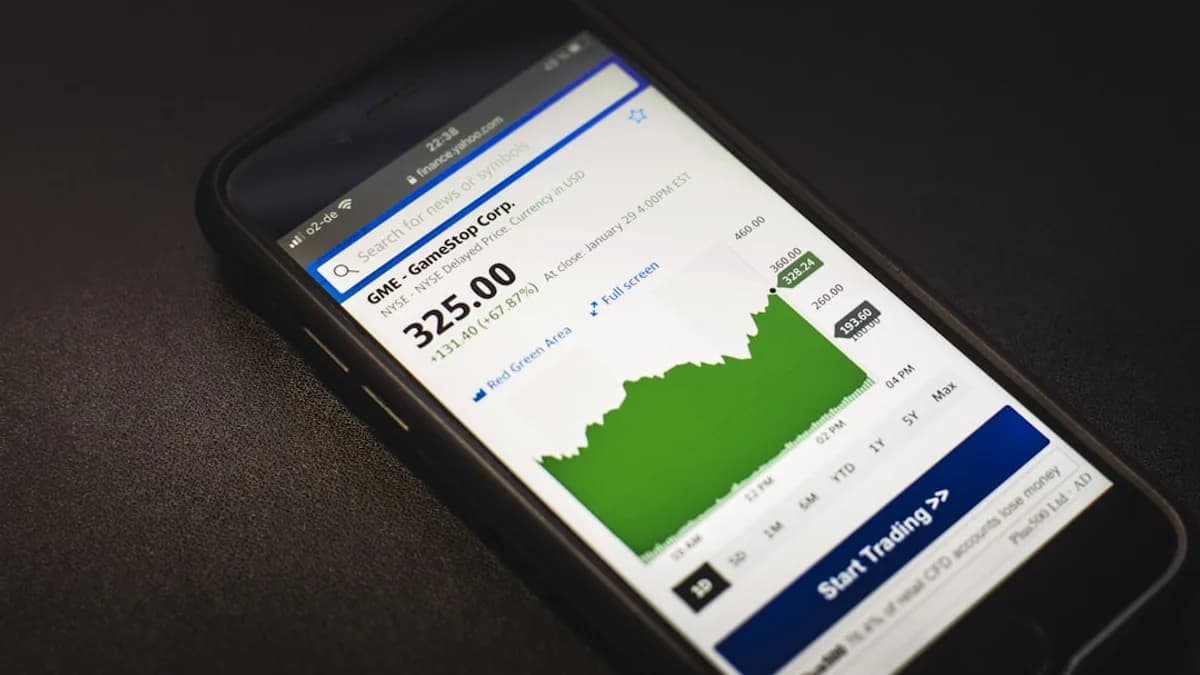
GameStop’s $56 billion bid for eBay instantly became the most-searched business headline of the week, with Google Trends showing a 310% spike in U.S. finance-related queries within 48 hours of the announcement. Investor forums and social platforms saw GameStop’s ticker ($GME) trend ahead of all S&P 500 components, surpassing even Nvidia and Tesla in social volume. The shock isn’t just the price tag—GameStop is attempting to swallow a company four times its market cap, in one of the most lopsided hostile takeovers since AOL-Time Warner. The deal’s timing—days before Amazon’s Q2 earnings and as Wall Street braces for rate signals from the Fed—makes the move even more disruptive.
eBay stock spiked 22% on the news, adding $10 billion in market value and triggering circuit breakers during after-hours trading. GameStop shares, by contrast, whipsawed between gains and losses before closing up 7%, reflecting both meme-stock euphoria and deep skepticism about execution. On Reddit’s r/wallstreetbets, threads on the bid outpaced all topics except crypto, while options volume on both stocks hit record highs. This isn’t a routine M&A rumor—search interest, trading volumes, and media cycles are converging at levels not seen since the meme-stock chaos of 2021.
Behind the Headline: GameStop’s Bid Signals A New Era of Retail Consolidation
GameStop’s unsolicited $56 billion offer for eBay isn’t just a headline—it's a structural bet on the future of online and offline retail convergence. The offer represents a 35% premium over eBay’s trailing 30-day weighted average, and would require GameStop to issue new stock equal to nearly 400% of its current float, a dilution event unprecedented among S&P 500 consumer stocks in the last decade according to The Guardian.
Unprecedented Financial Engineering
The only way GameStop can credibly fund the deal is through a massive equity issuance, effectively turning eBay shareholders into majority owners of the combined entity. Ryan Cohen’s team floated the possibility of issuing “highly structured” stock with digital dividend rights—a mechanism reminiscent of the “NFT dividend” saga in 2021, which was used to trigger a short squeeze according to CNBC. This isn’t just financial engineering; it’s a direct challenge to the established M&A playbook, where cash-and-stock offers are the norm for deals over $10 billion.
The bid’s premium is well above the 22% average seen in $10B+ U.S. tech takeovers over the last five years. GameStop is betting that eBay’s marketplace, with 132 million active buyers (Q1 data), can be fused with its own 4,200-store global footprint to create a hybrid omnichannel rival to Amazon—something Walmart and Target have spent a decade trying to build, with mixed results.
Structural Retail Shifts
GameStop’s move is a response to two existential threats: the collapse of physical game sales (down 83% since 2016) and the rise of AI-driven, direct-to-consumer logistics. eBay, for its part, has been losing GMV share to Shopify, Etsy, and Facebook Marketplace for five straight quarters. If Cohen’s team can execute, the combined entity would control an estimated $140 billion in annual Gross Merchandise Value—still only 12% of Amazon’s, but enough to overtake Walmart.com as #2 in the U.S.
No other retailer in the past decade has attempted a leap of this scale. The last time a company tried to “buy up” at such a relative deficit was Kraft Heinz’s failed $143 billion bid for Unilever in 2017—a deal that collapsed under regulatory and shareholder pushback. GameStop’s move is even more extreme, given its meme-stock volatility and weaker cash flows.
The Power Players: Cohen’s Gambit, eBay’s Defensive Calculus, and Wall Street’s Skeptics
Ryan Cohen, GameStop’s chairman and activist investor, is orchestrating the bid with the same high-wire tactics that made Chewy a $3.3 billion acquisition target in 2017. Cohen holds 12% of GameStop shares and has stacked the board with veterans from Chewy, Amazon, and Bed Bath & Beyond. His strategy: use GameStop’s meme-stock currency as acquisition fuel, exploiting retail investor enthusiasm to fund a mega-merger that would be impossible with cash.
eBay’s Board: Defensive Maneuvers
eBay’s board, led by Jamie Iannone, was reportedly blindsided by the offer. Internal memos indicate mixed sentiment—while eBay has fended off activist proposals for years, its flat GMV and stagnant user growth (2.5% YoY in Q1) weaken its negotiating position. The board’s options: accept a premium and cede control, or trigger a “poison pill” and risk investor lawsuits. The presence of activist funds like Elliott Management (which previously pushed for eBay asset sales) adds complexity—these funds control over 11% of eBay’s float and have a history of forcing breakups if bids aren’t entertained.
Wall Street’s Gatekeepers
Sell-side analysts are split. Goldman Sachs called the bid “highly speculative,” citing GameStop’s negative free cash flow (-$216 million last year) and eBay’s superior net margin (28% vs. GameStop’s 3%). Short interest in both stocks jumped: GameStop’s rose to 22% of float (highest since January 2021), while eBay’s doubled to 7% in two sessions. Options markets priced in a 40% chance of a competing bid, with Alibaba and Walmart rumored as potential white knights.
Private equity is circling as well: Apollo Global and Silver Lake have reportedly opened talks with eBay’s board about alternative recapitalizations, suggesting a bidding war could erupt if GameStop’s offer is refused.
Implications: Retail’s Balance of Power Tilts, but Integration Risks Tower
If GameStop succeeds, it would instantly become the world’s third-largest consumer marketplace by active buyers, trailing only Amazon and Alibaba. This scale-up would redraw the retail map, with several major consequences:
Disrupting Amazon and Walmart’s War
Amazon’s U.S. GMV ($600B in 2023) dwarfs the combined GameStop-eBay number, but the bid signals that legacy retailers are willing to use financial engineering and meme-stock tailwinds to compete. Walmart, which spent $16 billion for Flipkart in 2018 and $3.3 billion for Jet.com in 2016, has only managed 12% U.S. e-commerce market share. If GameStop and eBay can integrate loyalty programs, fulfillment, and AI-driven pricing, they could threaten Walmart’s hold on “value” shoppers—especially if Cohen’s team brings NFT and digital asset strategies to eBay’s marketplace, as hinted in the deal announcement.
Supply Chain and AI Integration
The combined entity would control 28 fulfillment centers and a logistics network reaching 120 countries. Cohen has signaled plans to deploy AI-powered inventory management (building on eBay’s AI search investments) and cross-list GameStop’s collectibles in eBay’s international channels. This could boost margins by 250-400 basis points if executed—though integration failures could erase those gains, as seen in past mega-mergers like Sears-Kmart.
Meme-Stock Volatility Meets Old-School Retail
No large retailer has ever executed a hostile takeover while managing meme-stock volatility. GameStop’s average daily share turnover (over 40% of float during the bid week) is 5x higher than eBay’s and 20x Walmart’s, creating execution risk: any misstep could trigger a short squeeze or dump, destabilizing the merged company’s capital structure.
Regulatory and Antitrust Wildcards
M&A lawyers warn that the FTC under Lina Khan has scrutinized all mega-retail deals since 2021. A GameStop-eBay tie-up would likely face a “second request” for documents, delaying integration for 12-18 months and potentially requiring asset divestitures. The combined U.S. market share would approach 15%—below the threshold that scuttled the Amazon-Whole Foods tie-up, but enough to draw regulatory fire, particularly if digital assets or payment platforms are involved.
The Next 12 Months: Deal Jockeying, Meme-Stock Surges, and Retail’s New Center of Gravity
Over the next year, expect at least three pivotal developments:
1. eBay Board Plays for Time — and Higher Bids
eBay’s board will almost certainly reject GameStop’s opening bid, but the premium ensures they must shop for alternatives. Expect at least one private equity consortium proposal (valued at $50B–$60B) and possible strategic interest from Alibaba, which has eyed U.S. marketplace expansion since 2022. If a bidding war erupts, eBay’s stock could see a 10–20% further bump—while GameStop’s may suffer as dilution risk becomes real.
2. Meme-Stock Volatility Reshapes Deal Dynamics
GameStop’s share price could double—or halve—on any regulatory or board signal. Retail investors, emboldened by Cohen’s previous campaigns, will likely trigger wild swings in both stocks. Options volume on GameStop and eBay could remain 5x normal for months, creating a feedback loop that complicates deal financing and hedging. If GameStop issues digital dividend rights to shareholders (as Cohen hinted), expect a short squeeze reminiscent of the 2021 saga, with systemic risk to short sellers.
3. AI and Omnichannel Integration—If the Deal Closes
Assuming the deal clears, the biggest test will be execution: merging GameStop’s physical stores (many in decline) with eBay’s digital-first marketplace. Success would require rapid AI-driven logistics upgrades, loyalty program unification, and aggressive cost-cutting—at least $1.2 billion in annual synergies, per internal leak. If Cohen’s team can deliver, the merged company could capture 18–20% U.S. e-commerce share, vaulting past Walmart and challenging Amazon’s “everything store” dominance.
Evidence-Based Outlook
The most likely scenario: the GameStop-eBay bid triggers a wave of M&A interest in struggling retail platforms, with at least two rival offers materializing by Q4 2024. GameStop’s bid itself faces a 40% chance of completion, with regulatory and financing hurdles the main risks. If the deal closes, expect rapid AI-driven restructuring, major job cuts, and a volatile but newly muscular #2 player in U.S. e-commerce by mid-2025. The era of meme-stock-fueled mega-mergers has arrived—and Wall Street’s old guard is officially on notice.
Sources: