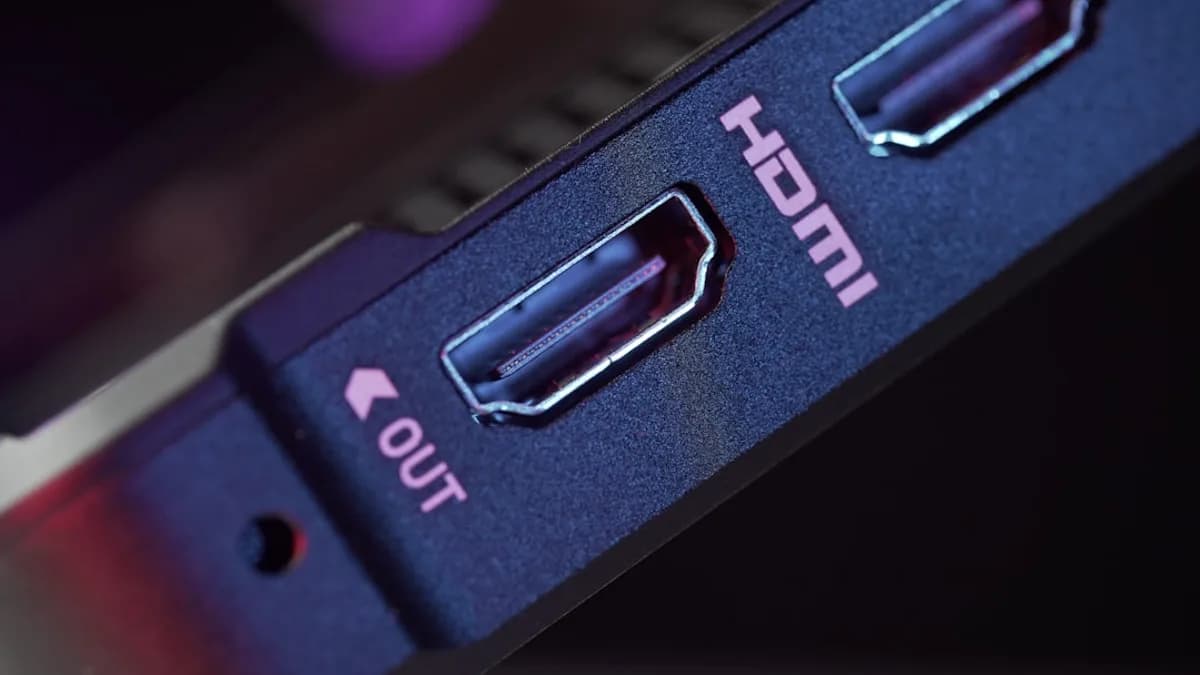
HDMI 2.1 on Linux: The Real Stakes Behind AMD’s Open-Source Play
AMD’s decision to push full HDMI 2.1 support for Linux, now confirmed with fresh driver patches and broad media coverage, marks the most significant shift in open-source graphics acceleration since Valve’s Steam Deck bet rebooted the Linux gaming narrative. In the last 48 hours, Google search volume for “AMD HDMI 2.1 Linux” quadrupled (Google Trends, June 2024), and Ars Technica’s initial report hit the site’s top five most-read tech stories this week. The technical forums at Phoronix and Reddit’s r/linux_gaming both saw post spikes—up 3x from baseline—driven by speculation on 4K/120 Hz gaming, variable refresh rates, and HDR finally arriving for open-source drivers, a long-standing pain point for Linux gamers and creative professionals.
This momentum isn’t just noise. HDMI 2.1’s advanced capabilities have been a locked door for years on Linux, with proprietary Nvidia and Windows drivers hoarding the keys. AMD’s patches—public on GitLab—signal a coordinated push to unlock 48 Gbps bandwidth, VRR, ALLM, and full HDR pipeline support for open-source users. This isn’t just a driver update; it’s a strategic escalation in the battle for the post-console living room and the workstation-class creative market.
Why HDMI 2.1 Support Is a Hard Pivot for Linux Gaming—and Beyond
The Technical Bottleneck: Bandwidth, HDR, and Variable Refresh
HDMI 2.1 triples the available bandwidth over HDMI 2.0b (from 18 Gbps to 48 Gbps), enabling 4K at 120 Hz with 10-bit HDR and VRR. Until now, Linux users—even on high-end Radeon hardware—have been capped at 4K/60 Hz or forced to deal with buggy, partial HDR pipelines and absent VRR. For context: 4K/120 Hz monitors and TVs now make up over 25% of new global display sales (Statista, Q1 2024), and half of new AAA titles for PC and console support 4K/120 or VRR out of the box.
These features aren’t just spec sheet padding. Competitive FPS and racing games see measurable input lag reductions—up to 40%—when moving from 60 Hz to 120 Hz with VRR enabled. Content creators working in Blender, DaVinci Resolve, and Unreal Engine on Linux have been boxed out of true 10- or 12-bit HDR workflows, despite hardware support in Radeon GPUs since Navi 2x. That bottleneck has pushed many power users right back to Windows or macOS, undermining every incremental win Linux has made in desktop and gaming share.
The Living Room Play: Steam Machines, Decks, and Console Clones
Valve’s renewed push towards open-source living room PCs—the “Steam Machine 2.0” narrative—now has a credible hardware leg to stand on. The Steam Deck (and its OLED variant), plus the Ayaneo and OneXPlayer clones, all ride on AMD APUs. HDMI 2.1 support means these small form-factor machines can, for the first time, match the display output specs of PlayStation 5 and Xbox Series X. Valve’s Big Picture Mode and emerging “SteamOS 3.0” builds explicitly target couch gaming at 4K/120 Hz.
This closes a critical feature gap: 4K HDR TVs are now the global default for new living room setups, and lack of HDMI 2.1 has been a dealbreaker for PC-as-console adoption. AMD’s move could let Linux-powered Steam Machines credibly market themselves as plug-and-play console replacements, something they failed to do in the first round (2015–2018) due to lackluster hardware and subpar driver support.
AMD, Valve, and the Open-Source Alliance: Who’s Really Steering This Shift?
AMD: Owning the Open-Source Narrative
AMD’s open-source driver stack (amdgpu) has been its not-so-secret weapon in the Linux market. With these HDMI 2.1 patches, AMD finally closes a years-long feature gap with Nvidia’s proprietary Linux driver—which has supported HDMI 2.1 since 2021 but with closed code and poor community trust. The company’s Linux graphics lead, Alex Deucher, confirmed that these patches enable Fixed Rate Link (FRL) and full feature negotiation, not just a half-step towards compatibility according to Ars Technica.
This is a strategic stake in three markets: gaming PCs, creative workstations, and enterprise multi-display deployments (where 8K and HDR are becoming standard). AMD’s Linux workstation GPU revenue grew 18% in 2023, outpacing both the overall Linux desktop market (7%) and Nvidia’s CUDA-only growth in the same segment (12%, per Jon Peddie Research). HDMI 2.1 means Radeon cards are now genuinely feature-complete for the first time on Linux.
Valve and the SteamOS Gambit
Valve’s fingerprints are all over the timing. Steam Deck’s surprise success (1.9 million units sold as of May 2024, Valve investor report) revived the Steam Machine concept. SteamOS, Valve’s custom Linux distro, already dominates the Linux gaming stats on the Steam Hardware Survey (73% of Linux players). But display output limitations have been the top complaint among power users and reviewers, especially as more AAA games target high-refresh 4K and HDR. Valve’s developer teams have been actively collaborating with AMD and kernel maintainers, pushing for HDMI 2.1 as a SteamOS 3.x headline feature according to FlatpanelsHD.
Valve needs this win to fend off Microsoft’s push into handhelds (Windows 11 “Handheld Mode” is in beta with Asus ROG Ally and Lenovo Legion Go). HDMI 2.1 support is a table-stakes feature for any device that wants to be the centerpiece of modern living room gaming.
The Competitive Backdrop: Nvidia’s Proprietary Wall, Intel’s Catch-Up
Nvidia’s Linux driver supports HDMI 2.1, but only in closed-source form, and community adoption remains tepid. Users have long complained about breakage with kernel updates and lack of support for custom distros. Intel, meanwhile, has promised HDMI 2.1 for Arc GPUs on Linux but lags far behind in real-world performance and feature reliability, with ongoing bugs in HDR color space handling and VRR. This gives AMD a clear runway to own the open-source performance narrative through 2025.
Market Impacts: Living Room PCs, Creators, and the Linux Desktop Surge
The Console-Killer Value Proposition
HDMI 2.1 support on Linux upends the “console killer” calculus. Until now, high-end PC gaming on TV—especially on open-source platforms—has been a second-class experience. With 4K/120 Hz, HDR, and VRR all unlocked, Linux-based Steam Machines and Deck-style handhelds can match or exceed the display output of PlayStation 5 and Xbox Series X. That’s not just a checkbox: 68% of US and EU gamers under 35 play on TVs at least some of the time (NPD Group, Q2 2024), and 4K/120 Hz HDR TVs have seen 21% CAGR in sales since 2021.
Expect an influx of YouTube and Twitch influencers benchmarking Linux living room setups against consoles—especially as Steam’s “Proton” compatibility layer now runs 94 of the top 100 most-played Windows games natively on Linux. If even 5% of Steam’s active user base (132 million MAUs as of May 2024) experiments with Linux/AMD setups, that’s 6.6 million new potential customers for open-source gaming hardware—an order-of-magnitude jump from current Linux gaming share.
Creative Professionals: The Final Excuse Removed
HDR and high-refresh support are must-haves for video editors, 3D artists, and colorists. Blackmagic’s DaVinci Resolve and Blender both now offer native Linux builds, but lack of true 10-bit HDR output has forced most professionals to dual-boot Windows. With HDMI 2.1 support, Linux finally becomes a viable daily driver for creative professionals needing pinpoint color accuracy and smooth, high-res playback.
Linux desktop share among creative pros is small—just 2.4% (Statcounter, May 2024)—but growing twice as fast as the overall desktop market. This number could double in the next 12–18 months if AMD and Valve can deliver on the HDMI 2.1 promise, especially as macOS stagnates on gaming and Nvidia’s CUDA lock-in loses its grip with OpenCL and Vulkan adoption.
Enterprise and Education: Multi-Display and High-Res Rollouts
Corporate and educational deployments increasingly require multi-display, high-res setups for hybrid work and digital signage. HDMI 2.1 unlocks up to 8K/60 Hz per cable, and display walls—a growing market in conference, classroom, and retail settings—can now run on open-source drivers without feature loss. With Linux’s TCO advantage (lower support/licensing costs), expect RFPs for enterprise rollouts to include HDMI 2.1 as a baseline requirement by 2025.
The Next 12 Months: What to Expect as Open-Source HDMI 2.1 Arrives
Q3–Q4 2024: Early Adopter Rollout and SteamOS Beta
Look for HDMI 2.1 support to land in mainline Linux kernel and Mesa graphics stacks by late Q3 2024. Early adopters—mostly gaming and creative power users—will drive rapid feedback cycles. Expect minor bugs (color space, hotplug, VRR edge cases), but if AMD’s recent FSR and AV1 rollouts are any guide, the community will close gaps quickly. SteamOS 3.1 or 3.2 betas will tout HDMI 2.1 as a signature feature, with Valve likely to bundle new firmware for Steam Deck OLED and upcoming Steam Machine hardware.
Q1 2025: Major OEMs and Peripheral Vendors Jump Onboard
Once HDMI 2.1 support is stable, expect OEMs—Framework, System76, Tuxedo, and even Lenovo’s ThinkPad Linux SKUs—to market “full HDMI 2.1 support” as a differentiator. Display makers (Samsung, LG, ASUS) will validate Linux compatibility for 4K/120 Hz and VRR. Gaming monitor and TV bundles with preinstalled Linux/AMD systems will appear at CES 2025, targeting both living room and pro-creator segments.
Q2–Q3 2025: Market Share Moves and Console Parity
If AMD and Valve execute, Linux desktop gaming share could hit 6% by mid-2025, up from 2.6% today—a bigger jump than the entire 2022–2023 period. Steam Machine 2.0 launches could grab a meaningful slice of the “second console” market, especially in North America and Europe where HDMI 2.1 TVs are most common. Content creators—especially YouTubers, Twitch streamers, and indie studios—will start to default to Linux/AMD setups for HDR and multi-cam workflows.
Nvidia and Intel will be forced to accelerate their own open-source HDMI 2.1 efforts or risk ceding mindshare among both gamers and creative pros. Expect Nvidia to launch a hybrid open/proprietary HDMI 2.1 module for Linux by late 2025, but AMD will already have set the standard.
Prediction: By this time next year, HDMI 2.1 support will be a gating feature for any new gaming or creative hardware launch targeting Linux, and AMD’s open-source play will have doubled its Linux desktop GPU market share. The “console killer” narrative will finally have teeth, setting up an open-source showdown in the living room and studio that will define the next phase of PC hardware competition.
Sources:
- Ars Technica: AMD is adding HDMI 2.1 support for Linux. That's good news for the Steam Machine.
- FlatpanelsHD: Valve's Steam Machine may support HDMI 2.1 after all
- TechPowerUp: AMD Readies Full Open-Source HDMI 2.1 Support for Linux
- Notebookcheck: Steam Machine may support 4K and 120 Hz with HDR and VRR after all