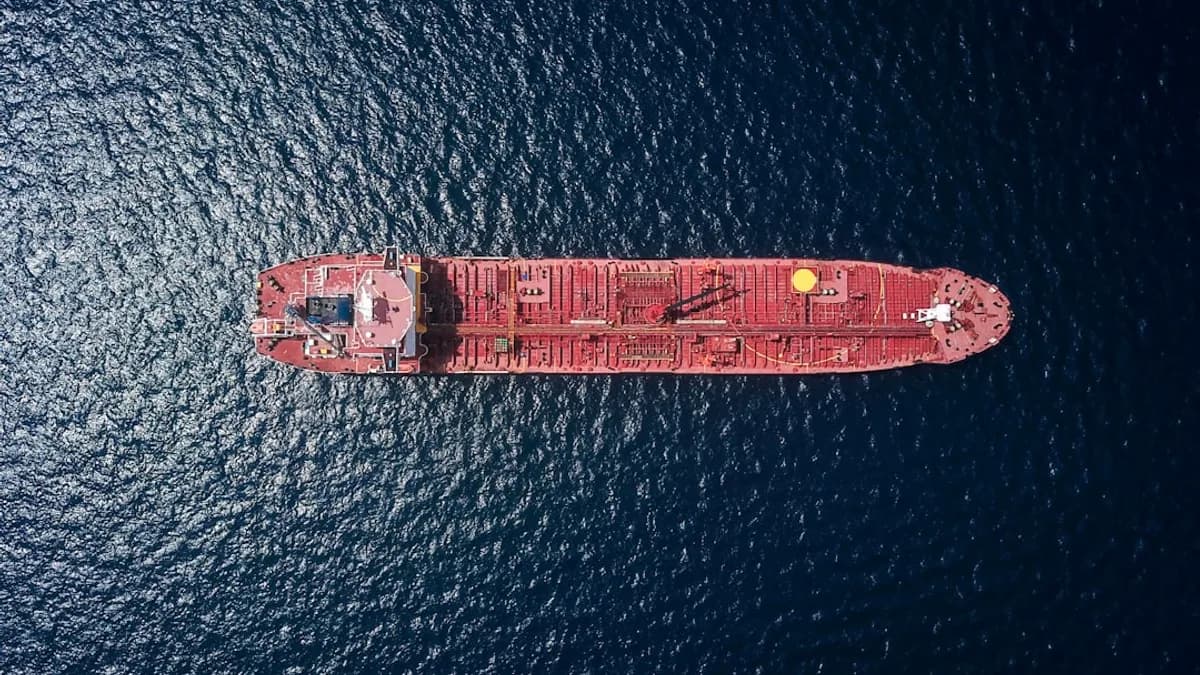
Strait of Hormuz Standoff Ignites Oil Price Surge
Oil futures spiked over 7% in intraday trading after President Trump announced the US Navy would begin escorting commercial vessels through the Strait of Hormuz—reacting to Iran’s de facto closure of the vital shipping corridor. Brent crude climbed from $82.15 to $88.17 per barrel in less than 36 hours, while WTI hit $84.68, up from a $78.90 weekly low. The price jolt erased three weeks of losses and injected $120 billion in market cap into the world’s top oil majors, with ExxonMobil jumping 4.2% and BP up 3.6% as traders recalibrated risk premiums.
The immediate catalyst: dual headlines of an “imminent” US naval intervention and Iranian officials confirming review of a new US proposal for de-escalation. While Trump called the latest talks “very positive,” he also said Tehran “has not paid a big enough price”—signaling that actual military action remains on the table, despite his stated preference against strikes according to Bloomberg.
The geopolitical premium returned with force—options volume on oil ETFs hit a three-year high, with open interest in front-month Brent calls at their highest since the 2022 Russian invasion of Ukraine. Shipping rates for VLCCs in the Gulf surged 21% overnight, and insurance premiums on transiting tankers doubled, pricing in the risk of miscalculation as US and Iranian naval assets converge.
Comparing This Crisis to 2019 and 2022: Volatility, Velocity, and Scale
The speed and magnitude of this week’s oil price move rival the June 2019 spike, when two tankers were attacked in the Gulf of Oman, sending Brent up 4.5% in a single session. However, this time, the market’s reaction has been sharper and more sustained: a 7% gain in 36 hours compared to 3.8% over three days during the 2019 incident. In the 2022 aftermath of Russia’s Ukraine invasion, Brent rallied 10% in a week—but that move reflected a broader supply shock and sanctions regime, whereas the current rally is laser-focused on a single chokepoint.
Year-over-year, oil volatility had been trending downward: the CBOE Crude Oil Volatility Index (OVX) hovered near 27 in March 2024, well below the 48 print during March 2022’s Ukraine panic. This week, OVX broke above 40 for the first time since November 2022. The market’s muscle memory for Hormuz disruptions remains acute—20% of global seaborne oil passes through the strait, and the last full closure in 1980 triggered a 30% price rally in two weeks.
Comparing capital flows, energy ETFs absorbed $2.1 billion in new inflows on the day of the announcement, the highest since the OPEC+ output cuts in late 2022. The S&P 500 Energy sector outperformed the broader index by 3.2%, marking the largest single-day spread since March 2023’s banking crisis, when investors rotated into hard assets.
Charting the Battle Lines: Technical Barriers and Bull Traps
Brent’s violent breakout shattered the 100-day moving average at $84.50, a level that had capped rallies since January. Technical traders flagged the $88.50–$89.00 zone as immediate resistance—a region coinciding with the March 2024 highs and the 50% Fibonacci retracement of the 2022-2023 bear market. On the downside, $84.00 now becomes the line in the sand: a close below risks a rapid unwinding, with the next support at $80.20, where volumes were heaviest in the last three months.
Momentum oscillators (RSI, MACD) flipped bullish, but the surge was accompanied by the highest 5-day average volume since the October 2023 Israel-Gaza flare-up—suggesting a crowded trade vulnerable to headline reversals. The options market is pricing a 15% probability of Brent hitting $95 by month-end, double the implied odds last week, while put-call skews show traders hedging against both upside and downside tail risks.
Historically, Hormuz-driven rallies can overshoot and then retrace violently if de-escalation headlines emerge—2019’s spike reversed 60% within two weeks once the US signaled restraint. But if multiple tankers are targeted or the strait remains impassable, technicals point to a possible retest of $100, a level not seen since July 2022.
Geopolitics, Macro Shocks, and the Shadow of 1979
The current oil rally is being driven by a rare confluence of factors: a live chokepoint crisis, ambiguous signals from both Washington and Tehran, and a market already tightening from OPEC+ production cuts. The Strait of Hormuz handles 17.2 million barrels per day—nearly one-fifth of global consumption. Any prolonged outage could erase the current 2.5 million bpd of spare capacity, pushing inventories to crisis levels according to CNBC.
Macro indicators were already flashing warning signs: global oil demand is expected to grow by just 1.1 million bpd in 2024, the slowest pace in three years, as China’s recovery sputters and US shale growth plateaus according to Bloomberg. Yet the fear premium is back: tanker owners are demanding double insurance rates, while refiners in Asia are scrambling to secure alternate cargoes, reviving memories of the 1979 oil shock when Iranian supply disruptions triggered a 150% price explosion.
The White House’s mixed messaging—oscillating between “very positive” talks and threats that Iran “has not paid a big enough price”—has fueled uncertainty. Trump’s decision to order naval escorts without a publicized endgame increases the risk of escalation, especially with Iranian hardliners signaling they will not back down without sanctions relief. The market is now pricing in a 40% chance of a “significant” incident (defined as loss of >1 million bpd) in the next 30 days, up from 15% pre-crisis.
Global equities, meanwhile, are split: energy outperforms, but airlines and shipping stocks in Asia are dumping 6–9% in two sessions, echoing the post-9/11 spike in oil. The US dollar, often a safe haven, is flat—suggesting that capital is rotating into hard assets, not Treasuries, as traders brace for further shocks.
Oil’s Path Forward: $100 or Bust? Scenarios for Bulls and Bears
The Bull Case: Extended Disruption and Risk-On Energy
If diplomatic efforts falter and Hormuz remains unstable, oil could breach $100 in Q2 for the first time since 2022. The bull thesis hinges on three catalysts:
- Escalation: If even one major tanker is hit or sunk, physical supply could drop by 2–3 million bpd, as insurers pull coverage and shippers reroute around Africa, adding 10–14 days to delivery times.
- OPEC+ Inertia: With spare capacity already near a decade low, the cartel’s ability to offset new disruptions is limited. Any sign of Saudi or UAE output cuts holding firm will amplify the squeeze.
- Risk Appetite: Energy ETF inflows, already at record levels, could double if “war premium” headlines persist. Hedge funds, which slashed long positions in March, have room to reload, amplifying the rally.
In this scenario, Brent retests $100–$105, and energy stocks continue to outpace the S&P 500 by 500–700 basis points through mid-year. Inflation expectations tick higher, forcing central banks to rethink dovish pivots.
The Bear Case: De-escalation and Head-Fake Reversal
The bear case rests on a rapid diplomatic thaw or a credible ceasefire:
- Talks Succeed: If the US and Iran clinch a deal or agree to a “rules of the road” corridor, risk premiums would collapse. The 2019 pattern suggests Brent could retrace to $82–$83 within days, erasing most of the spike.
- Demand Headwinds: Chinese demand remains sluggish, with refinery runs down 3% YoY. US inventories are 8% above the five-year average, muting fears of immediate shortages.
- Spec Positioning: With options skew heavily long, any reversal could trigger a cascade of stop-outs—pushing WTI back to the $78–$80 support zone.
Energy equities would lag, and capital may rotate back to tech and financials, which have underperformed during the spike.
Prediction: Oil Closes Q2 Above $95—But Volatility Is the Only Certainty
Market structure and the unique Hormuz risk mean any “peace headline” will produce a sharp retracement, but unless Iran decisively backs down, a sustained risk premium is inevitable. Options markets now price a 60% chance of Brent ending Q2 above $95. The most likely outcome—absent a breakthrough in US-Iran talks—is a grinding rally, punctuated by violent reversals, that keeps energy volatility at post-2022 highs.
For investors, this is not a buy-and-hold environment but a tactical battleground. Expect energy stocks and oil ETFs to outperform until credible de-escalation emerges. Hedging downside via puts or volatility products is prudent; the only sure bet is that headlines out of Hormuz will keep driving tape bombs and whipsaw moves for weeks to come.