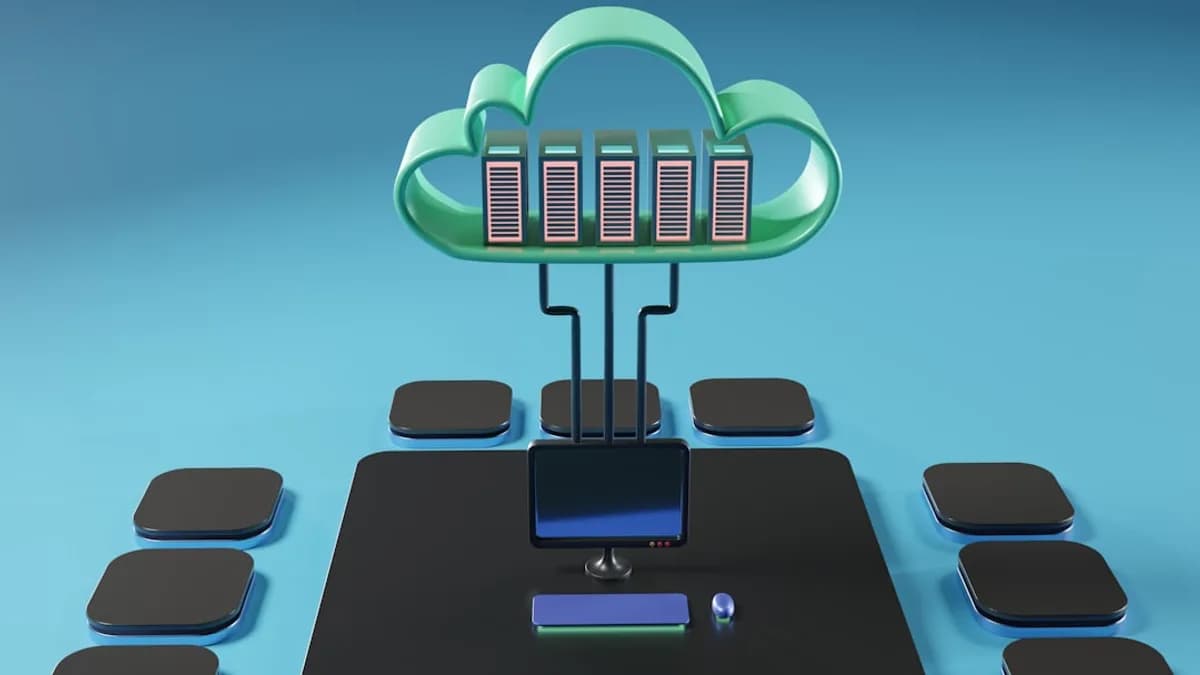
Startups in 2026 are facing unprecedented challenges: rapid iteration cycles, fierce competition, and pressure to keep burn rates low. The quest for cost efficiency in serverless DevOps platforms for startups has become central to engineering and business strategy. Serverless DevOps promises not just agility and scalability, but also the ability to tame cloud costs—if you understand the real numbers and trade-offs involved. This analytical guide grounds every insight in current research and real-world data, helping you make informed decisions about your serverless journey.
Introduction to Serverless DevOps Platforms
The DevOps landscape has evolved rapidly, with serverless platforms now considered the default choice for modern startups (LeanOps). Serverless computing—offered by providers such as AWS Lambda, Azure Functions, and Google Cloud Functions—removes the burden of managing servers and infrastructure. Instead, developers deploy code that runs in response to events, and the cloud provider handles all provisioning, scaling, and maintenance.
Key characteristics of serverless DevOps platforms include:
- Event-driven execution: Functions execute only when triggered, not continuously.
- No manual provisioning: Infrastructure is abstracted away and managed by the provider.
- Pay-as-you-go billing: Costs are incurred only for actual compute time or requests, not for idle resources.
- Automatic scaling: Applications scale up or down instantly based on demand.
This model changes how startups approach architecture, staffing, and, most importantly, cost management.
Why Startups Should Consider Serverless Architectures
Startups, especially in early and growth stages, must prioritize agility and capital efficiency. Serverless DevOps platforms align with these needs for three main reasons (LeanOps, GeeksVisor):
Speed Without Sacrifice
- Rapid experimentation: Cloud-native serverless platforms let teams spin up environments in minutes.
- Streamlined CI/CD: Continuous integration and delivery pipelines are easier to automate, enabling deploys in hours instead of days.
- Reduced manual overhead: Teams can focus on product features rather than infrastructure firefighting.
Cost Efficiency That Scales
- No upfront infrastructure investment: Traditional models require paying for capacity (servers, load balancers) even when idle.
- Pay only for what you use: Serverless eliminates wasted spend by billing per function execution.
- Predictable cost scaling: As your usage grows, costs scale linearly, making budgeting for cloud spend more manageable.
Focus on Product, Not Operations
- Managed operations: Providers handle scaling, patching, and high availability.
- Smaller ops teams: Startups can operate with leaner teams, redirecting resources to innovation.
“Serverless and cloud native DevOps practices let startups move faster, spend less on infrastructure, and keep small teams focused on what matters—delivering customer value.”
— LeanOps, 2025
Cost Components in Serverless DevOps
Understanding the real cost efficiency of serverless DevOps platforms for startups requires dissecting all potential cost factors. While serverless shifts many costs from CapEx to OpEx, startups must account for both visible and hidden variables.
Direct Cloud Platform Costs
- Compute charges: Billed per function invocation and execution time (GeeksVisor).
- Storage and bandwidth: Usage-based fees for object storage and outbound data transfer.
- API gateway and event triggers: Charges for managed endpoints and message processing.
DevOps Tooling and Software
- Text editors and IDEs: Many are free (e.g., Visual Studio Code, Notepad++), while premium options (e.g., PhpStorm) range from a few dozen to several hundred dollars (MDN).
- Image/video editors: Ranges from free (GIMP, Paint.NET) to hundreds of dollars for professional suites (Adobe Photoshop/Premiere).
- Publishing tools: Free SFTP clients (FileZilla, WinSCP) are widely available; secure publishing is a must.
Human Resource Costs
- Reduced ops workload: Serverless reduces the need for manual server management, patching, and scaling (GeeksVisor).
- Reallocated engineering effort: More developer time can be spent on product development.
Network & Hosting
- Bandwidth costs: Hosting providers charge based on bandwidth consumed (MDN).
- ISP and connectivity: Costs vary based on needs; basic websites require low bandwidth, while advanced applications with media delivery may require higher-cost connections.
Comparative Cost Analysis of Popular Serverless Platforms
To analyze the cost efficiency of serverless DevOps platforms for startups, let's compare traditional DevOps costs with those of serverless models, using the concrete data and patterns provided by GeeksVisor and LeanOps.
| Cost Factor | Traditional DevOps | Serverless Architecture |
|---|---|---|
| Infrastructure | Continuous instance billing | Pay-per-use (execution time only) |
| Scaling | Manual/provisioned | Automatic, event-driven |
| Maintenance | Manual patching, monitoring | Fully managed by provider |
| Resource Utilization | Idle resources billed | No idle cost—billed on execution |
| Downtime Risk | Manual recovery, higher risk | Automated failover, higher uptime |
| Deployment Frequency | Weekly/biweekly | Continuous, event-triggered |
| Observability | Traditional tools, limited | Needs modern, serverless-aware tools |
Real-World Cost Reductions
- 30–40% lower operational costs were routinely achieved after moving DevOps to serverless, according to GeeksVisor.
- Infrastructure cost savings up to 60% are possible due to the elimination of idle resource billing.
“At GeeksVisor, teams we’ve helped transition to serverless routinely achieve 30–40% lower operational costs and cut release cycles from days to hours.”
— GeeksVisor, 2026
Performance vs. Cost Trade-offs
While serverless DevOps platforms offer substantial cost efficiency, there are inevitable trade-offs between performance and spend.
Speed and Scalability
- Instant provisioning: Serverless functions spin up in milliseconds; no long server startup times.
- Parallel scaling: Functions scale independently and in parallel, which is ideal for bursty or unpredictable workloads.
Cost Control vs. Complexity
- Cost aligns with demand: You only pay for compute resources when functions are running.
- Operational complexity shifts: Monitoring and debugging distributed serverless systems can require investment in modern observability tools (LeanOps).
Release Velocity
- Accelerated CI/CD: Serverless pipelines can deploy after every commit, replacing slow manual preparation with automated triggers.
- Simplified rollbacks: Isolated functions make reverting changes safer and quicker.
Scaling Considerations and Cost Implications
Serverless architectures are inherently designed for elasticity, a core requirement for startups expecting rapid (and often unpredictable) growth.
Automatic, Demand-Based Scaling
- No manual intervention: Serverless backends scale up or down automatically, removing the need for staff to monitor and adjust server counts.
- Zero waste spending: Since you are only billed for actual usage, overprovisioning is impossible.
Linear Cost Scaling
- Predictable cost growth: As usage increases, costs rise proportionally rather than exponentially (GeeksVisor).
- Capacity planning simplified: No need to estimate peak load in advance.
Scaling Trade-offs
- Cold start latency: Some serverless platforms may introduce millisecond-level delays when functions are first invoked.
- Potential for cost spikes: If traffic surges unexpectedly, costs can rise quickly—but only in direct proportion to usage.
Hidden Costs and Vendor Lock-in Risks
Despite clear benefits, startups must remain vigilant for less obvious costs associated with serverless DevOps platforms.
Tooling Fragmentation
- Too many tools: Startups often face decision paralysis with choices like Terraform vs. Pulumi for IaC, or various CI/CD products (LeanOps).
- Complex stacks: A fragmented toolchain can lead to higher maintenance and integration costs.
Observability and Debugging
- Traditional monitoring tools may fall short: Serverless workloads require investment in new tracing and telemetry solutions.
- Visibility gaps: Without adequate observability, troubleshooting can become time-consuming and stress-inducing.
Security and Compliance
- Automated security required: Secrets management, API security, and compliance checks must be embedded into DevOps pipelines (LeanOps).
Vendor Lock-in
- Platform-specific features: Deep integration with a cloud provider’s serverless offerings can make future migration more challenging.
- Long-term strategic risk: Migrating away from a provider may require significant re-architecture.
“Without a clear strategy, startups risk building a stack that is complex, inconsistent, and difficult to maintain.”
— LeanOps, 2025
Case Studies: Startups Leveraging Serverless DevOps
Real-world results from GeeksVisor and LeanOps demonstrate the impact of serverless DevOps on startup cost efficiency.
Example 1: GeeksVisor Startup Transformation
- Challenge: High operational costs and slow deployments on traditional DevOps infrastructure.
- Action: Migrated to a serverless model, automating pipelines, and eliminating idle server costs.
- Result: Achieved 30–40% operational cost reduction and release cycle times reduced from days to hours.
Example 2: LeanOps Startup Journey
- Challenge: Engineering team overloaded with infrastructure management, unable to focus on product.
- Action: Adopted cloud-native serverless services and modern CI/CD automation.
- Result: Smaller team delivered features faster, with lower cloud spend and improved reliability.
“Serverless lets DevOps focus on deployment logic, not infrastructure logistics—a key reason why cost and speed finally align.”
— GeeksVisor, 2026
Recommendations for Budget-Conscious Teams
Startups aiming for maximum cost efficiency in serverless DevOps should consider the following best practices, based strictly on research data:
- Favor Pay-As-You-Go Platforms: Choose serverless providers that bill strictly for execution time and actual usage (GeeksVisor).
- Invest in Modern Observability: Ensure you have the right tools for tracing, logging, and debugging distributed, event-driven workloads (LeanOps).
- Automate Security Early: Integrate secrets management, identity controls, and vulnerability scanning into your pipelines from day one.
- Keep Your Stack Simple: Avoid overcomplicating toolchains—choose widely adopted IaC and CI/CD tools to reduce future migration pain.
- Monitor and Forecast Usage: Use built-in cloud tools to visualize spend and set thresholds for alerts, preventing surprise bills.
- Focus on Developer Productivity: Use free or low-cost editors and publishing tools (MDN), reserving paid licenses for specialized needs only.
Conclusion and Future Trends
The cost efficiency of serverless DevOps platforms for startups is well established in 2026: lower operational costs, faster release cycles, and scalability that matches real demand. However, realizing these benefits requires careful attention to tooling, observability, and vendor strategy.
Looking ahead, trends point to:
- Greater automation in security and compliance (DevSecOps).
- Simpler, unified observability stacks tailored for serverless.
- Continued reduction in human operational overhead, allowing even leaner teams to compete at scale.
Serverless is not a silver bullet, but when implemented with discipline and the right supporting practices, it delivers on its promise: letting startups do more with less.
FAQ: Cost Efficiency Serverless DevOps Platforms Startups
Q1: How much can startups expect to save by switching to serverless DevOps?
According to GeeksVisor, startups routinely achieve 30–40% lower operational costs after migrating to serverless models, with some cases reporting up to 60% reduction in infrastructure costs due to the elimination of idle billing.
Q2: Are there free tools suitable for DevOps teams in a serverless environment?
Yes. Many code editors (like Visual Studio Code, Notepad++) and publishing tools (FileZilla, WinSCP) are free (MDN). These can meet most needs for small startup teams.
Q3: What are the main hidden costs in serverless DevOps?
Key hidden costs include tooling fragmentation, the need to invest in modern observability solutions, and potential vendor lock-in if heavily adopting platform-specific features (LeanOps).
Q4: How does serverless architecture affect scaling costs?
Serverless architectures scale automatically with real demand, so costs increase linearly and predictably as usage grows. There is no need for overprovisioning or paying for idle capacity (GeeksVisor).
Q5: What performance trade-offs should startups expect?
While serverless offers instant scaling and rapid deployment, there may be cold start latency and a need for more sophisticated debugging tools for distributed systems (LeanOps, GeeksVisor).
Q6: Is serverless DevOps suitable for all startup workloads?
Serverless is ideal for event-driven, bursty, and unpredictable workloads, but not always for long-running, compute-intensive tasks. Teams should evaluate workload patterns to decide fit.
Bottom Line
The research is clear: serverless DevOps platforms offer compelling cost efficiency for startups, enabling rapid innovation with lower operational and infrastructure expenses. Success hinges on a thoughtful approach to tooling, observability, and automation. For budget-conscious startup teams in 2026, embracing serverless is not just a tactical win—it’s a strategic imperative for sustainable growth.