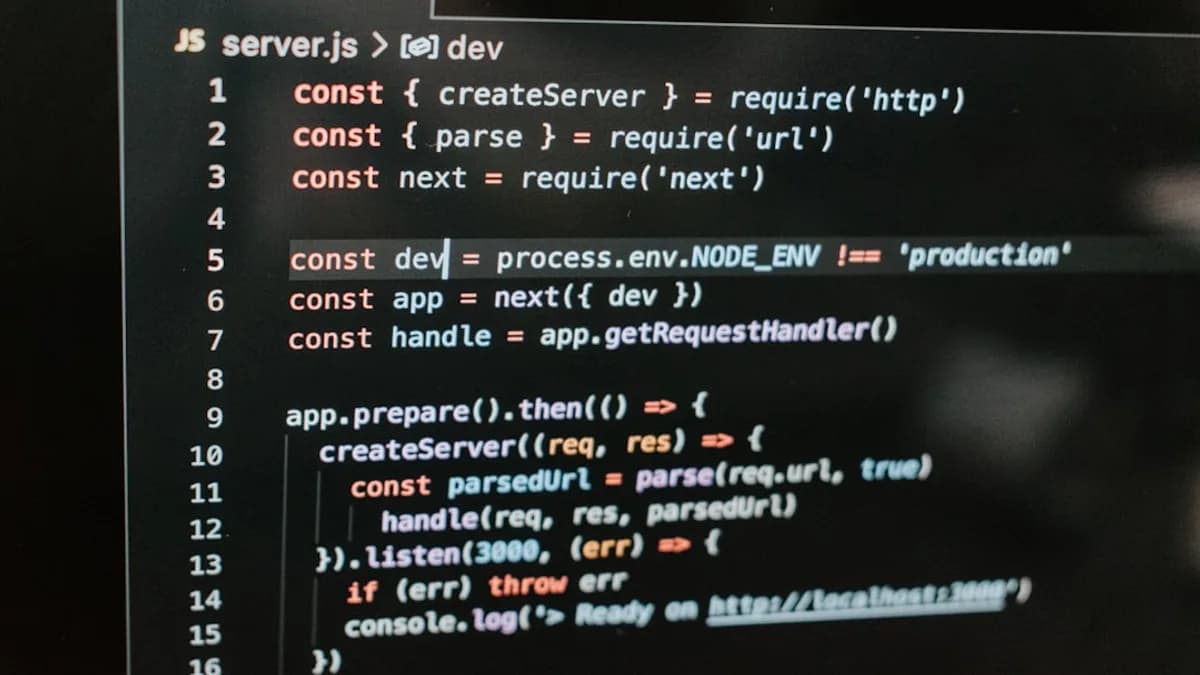
Serverless frameworks have transformed how web developers build and deploy applications, providing a streamlined approach that emphasizes code over infrastructure. As organizations continue to seek scalable, cost-effective solutions, understanding the landscape of serverless frameworks is essential for web developers in 2026. This analytical guide explores the benefits, limitations, and ideal use cases of leading serverless frameworks, helping web developers make evidence-based decisions for their next project.
Introduction to Serverless Architecture in Web Development
The adoption of serverless architecture is accelerating among web developers due to its ability to abstract away server management. Instead of provisioning and maintaining servers, developers can focus purely on writing code for specific functions or services. The underlying infrastructure—scaling, deployment, and maintenance—is managed by the cloud provider, dramatically reducing operational overhead (kaashivinfotech.com).
Key Insight:
"Serverless frameworks help developers focus on coding without worrying about infrastructure." (optiblack.com)
In practical terms, serverless frameworks empower web developers to deploy applications that automatically scale, respond to events, and integrate with cloud APIs—all without direct server management.
Primary keyword used: serverless frameworks web developers
Key Features of Serverless Frameworks
Serverless frameworks offer a suite of features that simplify the development lifecycle and boost productivity for web developers. According to MDN and the referenced industry overviews, these frameworks provide:
- Abstraction of Infrastructure: Developers write business logic while the framework manages deployment, scaling, and server orchestration.
- Automated Scaling: Functions scale in response to workload, handling from a few to millions of requests seamlessly.
- Multi-Language Support: Most frameworks support several programming languages, letting teams leverage their existing expertise.
- Event-Driven Triggers: Easily connect functions to events like HTTP requests, database updates, message queues, and more.
- Plugin Ecosystems and Extensions: Extend framework functionality with plugins for monitoring, security, CI/CD, and integrations.
- Infrastructure as Code (IaC): Define and deploy resources using code, ensuring repeatable and version-controlled infrastructure.
- Local Development Tools: Simulate cloud environments locally for testing and debugging before deployment.
- Community Support: Open-source frameworks benefit from active communities and frequent updates.
Common Functionalities
| Feature | Description |
|---|---|
| Auto-scaling | Functions scale automatically based on demand |
| Multi-language support | Node.js, Python, Java, Go, Ruby, .NET Core, and more |
| Plugin ecosystem | Extendable via plugins for logging, security, and CI/CD |
| Event trigger integration | Tie functions to HTTP events, databases, queues, and custom events |
| IaC support | Define infrastructure using YAML, JSON, or manifest files |
| Community and docs | Active open-source communities, frequent updates, and extensive documentation |
| Local development | CLI tools for local testing, simulation, and debugging |
Expert Opinion:
"Serverless frameworks provide abstractions and automation for common serverless tasks, such as defining functions, setting up triggers, and managing resources." (kaashivinfotech.com)
Overview of Leading Serverless Frameworks
Web developers in 2026 have access to a robust selection of serverless frameworks, each with unique strengths and supported languages. Below is a summary drawn from the most cited and widely used frameworks, according to optiblack.com, simform.com, and kaashivinfotech.com.
Comparison Table: Top Serverless Frameworks
| Framework | Cloud Support | Languages Supported | Key Features | Notable Use Cases |
|---|---|---|---|---|
| Serverless Framework | Multi-cloud (AWS, Azure, GCP) | Node.js, Python, Java, Go, Ruby, .NET Core, etc. | Plugin ecosystem, IaC, multi-cloud, rollback, CLI | Microservices, CI/CD, event pipelines |
| AWS SAM | AWS only | Node.js, Python, Java, Go, etc. | Short syntax, local testing, SAM CLI, policy templates | AWS Lambda-centric, event-driven tasks |
| Architect | AWS (Node.js focus) | Node.js | High-level manifest, REST APIs, auto-provisioning | RESTful APIs, web apps |
| Apache OpenWhisk | Multi-cloud/on-prem | Python, Node.js, Java, Swift | Event-driven, container scaling, strong community | Event processing, integration tasks |
| Knative | Kubernetes | Any containerized language | Scales to zero, modular, event-driven | Real-time, container-based workloads |
| Kubeless | Kubernetes | Python, Node.js, Ruby, Go | K8s-native, event source integration | K8s-centric, event streaming |
| Fission | Kubernetes | Python, Node.js, Go, Java, Ruby | Fast deployment, warm containers, monitoring | Fast, language-flexible workloads |
| Zappa | AWS (Python focus) | Python | Python web frameworks (Flask, Django), auto scaling | Python APIs, web backends |
| AWS Chalice | AWS | Python | AWS integrations, local testing, built-in APIs | Python serverless apps on AWS |
| Claudia.js | AWS | Node.js | API Gateway config, easy updates/rollbacks | Node.js Lambda deployments |
| Jets | AWS | Ruby | Ruby-focused, API Gateway/event triggers | Ruby Lambda deployments |
| Deep Framework | Multi-cloud | Python, ML frameworks | ML model deployment, TensorFlow support | ML workloads, AI APIs |
| Sigma | Multi-cloud | Data pipelines | Data pipeline definition, integration | Data processing flows |
Notable Frameworks in Detail
Serverless Framework
- Multi-cloud support
- Plugin ecosystem for monitoring, security, and CI/CD
- Used by major brands: Coca-Cola, Reuters, GoDaddy.
AWS SAM (Serverless Application Model)
- AWS-centric, single deployment configuration
- SAM CLI for local building, testing
- Best for: All-AWS stacks and CloudFormation-based IaC.
Architect
- Node.js/AWS focus
- Simple manifest for defining web APIs
- Automatic resource provisioning
Apache OpenWhisk
- Event-driven and container-based scaling
- Strong community support
Knative
- Kubernetes-based, supports any containerized language
- Scales to zero, ideal for event-driven workloads
Critical Warning:
"Choose based on your project’s needs: scalability, language compatibility, and deployment options." (optiblack.com)
Benefits: Scalability, Cost Efficiency, and Speed
The primary reasons web developers turn to serverless frameworks are their dramatic improvements in scalability, efficiency, and development speed.
Scalability
- Automatic scaling: All leading frameworks (Serverless Framework, AWS SAM, OpenWhisk, etc.) automatically scale functions based on incoming demand, from zero to millions of requests.
- Kubernetes integration: Frameworks like Knative, Kubeless, and Fission leverage Kubernetes for advanced scaling, including scaling to zero when idle.
Cost Efficiency
- Pay-per-use model: By running code only in response to events, serverless frameworks help reduce costs—there are no charges for idle resources.
- Reduced operational overhead: Developers spend less time on infrastructure management, further lowering costs.
Key Insight:
"This approach enables developers to focus more on coding and less on managing servers, making it an efficient and cost-effective way to build and deploy applications." (kaashivinfotech.com)
Speed and Productivity
- Faster deployments: Automated provisioning and deployment minimize time-to-market.
- Extensive templates and plugins: Frameworks like Serverless Framework and Architect provide ready-to-use templates and extensions, speeding up common tasks.
- Integrated development tools: CLIs and local simulators (e.g., SAM CLI, Serverless CLI) support rapid iteration and testing.
Drawbacks: Cold Starts, Debugging, and Vendor Lock-in
Despite their advantages, serverless frameworks present several challenges for web developers.
Cold Starts
- Issue: Functions may experience latency when invoked after a period of inactivity, especially on cloud providers with cold start behavior.
- Mitigations: Some frameworks (Fission, Serverless Framework with plugins) offer "warm" containers or plugins to reduce the impact.
Debugging Complexity
- Distributed architecture: Debugging serverless apps can be more complex due to the stateless and distributed nature of functions.
- Local simulation: Tools like SAM CLI and Serverless Framework’s local plugins help, but full parity with cloud environments is limited.
Vendor Lock-in
- Framework/provider tie-in: Frameworks like AWS SAM, AWS Chalice, and Zappa are tightly coupled to AWS services.
- Multi-cloud flexibility: Serverless Framework, OpenWhisk, and Kubernetes-based tools (Knative, Kubeless, Fission) help reduce vendor lock-in by supporting multiple clouds or on-premises deployments.
| Drawback | Description | Frameworks Most Affected |
|---|---|---|
| Cold starts | Latency on first invocation after idle | All, mitigated by Fission, plugins, warmers |
| Debugging | Complex distributed tracing and simulation | All, especially in multi-function scenarios |
| Vendor lock-in | Tight coupling to a single cloud provider’s APIs and services | AWS SAM, Zappa, Chalice, Claudia.js |
Warning:
"Despite its countless benefits, serverless comes with a catch." (simform.com)
Integration with Frontend Frameworks
Modern web applications often require seamless integration between backend serverless functions and frontend frameworks (such as React, Vue, Angular, or Svelte).
- API-first development: Serverless frameworks typically expose RESTful APIs or GraphQL endpoints that frontend apps can consume.
- Rapid prototyping: Fast deployment cycles with serverless make them well-suited for projects that iterate quickly on frontend-backend contracts.
- Language matching: Frameworks like Architect (Node.js), Claudia.js (Node.js), and Zappa (Python) allow developers to use matching languages across stack layers.
Expert Opinion:
"Integration with various web frameworks like Flask and Django." (kaashivinfotech.com, on Zappa)
Example: Zappa + Flask/Django
Zappa enables Python web frameworks to be deployed as serverless APIs, making it a popular choice for Python-centric full-stack teams.
Example: Architect + Node.js
Architect offers a manifest-driven approach tailored for AWS Lambda and Node.js, reducing boilerplate and integrating smoothly with JavaScript-based frontends.
Security Considerations in Serverless Environments
Security remains a central concern for web developers adopting serverless frameworks.
- Provider-managed security: Cloud providers implement baseline security measures, but developers are responsible for application-level security.
- IAM and permissions: Frameworks like AWS SAM offer policy templates to scope Lambda function permissions.
- Event source validation: Proper validation and sanitization of event data is critical to prevent injection and other attacks.
- Timely updates: Open-source frameworks with active communities (e.g., Serverless Framework, OpenWhisk) provide frequent security patches.
Best Practice:
"Evaluate... the availability of timely security patches." (optiblack.com)
Case Studies of Serverless Web Apps
While the sources do not provide detailed case studies, several companies and scenarios are directly mentioned as successful adopters of serverless frameworks:
- GoDaddy: Used Serverless Framework for managing AWS service deployments, local testing, and streamlined CI/CD processes (simform.com).
- Coca-Cola, Reuters, Nordstrom, Expedia: All cited as users of Serverless Framework for deploying scalable, event-driven applications (simform.com).
Use Cases
- Event streaming pipelines
- Image and video manipulation
- IoT applications
- Processing SaaS events
- Multi-language, microservices architectures
Case in Point:
"We improved our trial rates by 20% in 1 week after working with Optiblack leading to increase in paid users" (optiblack.com, testimonial)
Choosing the Right Serverless Framework for Your Project
Selecting the most suitable serverless framework depends on your project’s requirements, team expertise, and deployment needs. Based on optiblack.com and simform.com, consider the following:
Key Decision Factors
| Factor | Consideration Points |
|---|---|
| Scalability | Does the framework auto-scale and handle large concurrency? |
| Language Support | Are your preferred languages and libraries supported? |
| Deployment Options | Is there multi-cloud, Kubernetes, or local development support? |
| Community and Support | Are there frequent updates, good documentation, and support channels? |
| Integration & Extensibility | Can you add plugins or integrate with your CI/CD, monitoring, and APIs? |
Recommendations
For Multi-Cloud Flexibility:
Choose Serverless Framework or Apache OpenWhisk.For AWS-Centric Projects:
Use AWS SAM, AWS Chalice (Python), Architect (Node.js), or Claudia.js (Node.js).For Kubernetes Environments:
Consider Knative, Kubeless, or Fission.For Python Web Apps:
Opt for Zappa or AWS Chalice.For ML/AI-Driven Projects:
Explore Deep Framework, which is designed for serverless ML model deployment.
Critical Tip:
"For AI-driven projects, focus on frameworks that offer scalability, flexibility, and robust integration capabilities." (optiblack.com)
Conclusion and Future Trends
Serverless frameworks are empowering web developers in 2026 with the ability to build highly scalable, cost-effective web applications without the burden of infrastructure management. The most popular frameworks—Serverless Framework, AWS SAM, Architect, OpenWhisk, Knative, and others—offer a spectrum of solutions for everything from event-driven APIs to AI-powered microservices.
Looking forward:
- The trend toward multi-cloud and Kubernetes-native serverless frameworks is likely to continue.
- Integration with AI/ML libraries, better local testing, and cross-language support will further enhance developer productivity.
- Security, debugging, and cold start optimizations remain areas of active improvement, supported by vibrant open-source communities.
FAQ: Serverless Frameworks for Web Developers
Q1: What is a serverless framework?
A serverless framework is a toolkit that simplifies the development, deployment, and management of serverless applications by abstracting away server infrastructure. (kaashivinfotech.com, simform.com)
Q2: Which programming languages are supported by serverless frameworks?
Supported languages include Node.js, Python, Java, Go, Ruby, .NET Core, and more, depending on the framework. (optiblack.com, simform.com)
Q3: Are serverless frameworks limited to a single cloud provider?
No. Some frameworks (e.g., Serverless Framework, OpenWhisk) are multi-cloud, while others (e.g., AWS SAM, Zappa) are tied to AWS. (optiblack.com, kaashivinfotech.com)
Q4: Can I develop and test serverless applications locally?
Yes. Most frameworks offer CLI tools and local simulators for building, testing, and debugging before deploying to the cloud. (simform.com, kaashivinfotech.com)
Q5: What are the main drawbacks of using serverless frameworks?
Common drawbacks include cold starts (latency on first invocation), debugging complexity, and potential vendor lock-in. (simform.com, optiblack.com)
Q6: How do serverless frameworks handle scaling?
They provide automatic scaling based on demand, using cloud-native or Kubernetes-native mechanisms to manage concurrency and resources. (optiblack.com)
Bottom Line
The serverless paradigm offers web developers unprecedented agility, scalability, and cost-efficiency. Frameworks like Serverless Framework, AWS SAM, Architect, and Knative enable teams to focus on delivering value through code, not infrastructure. However, each framework comes with its trade-offs in language support, cloud compatibility, and operational complexity. By aligning framework features with project needs—guided by the evidence and real-world use cases cited above—web developers can harness the full power of serverless technology in 2026 and beyond.