Why Savvy Investors Are Shifting Focus from Palantir to AI Infrastructure
While retail traders chase Palantir’s surging share price, institutional investors are quietly dumping application-layer bets and redirecting capital towards the bottlenecks that actually control the flow of AI progress. Palantir’s stock has doubled since 2023, but its revenue—$2.2 billion last year—barely registers against the multi-trillion-dollar ambitions of AI hardware, model training, and data platforms. The company's dependency on government contracts and its opaque claims about “AI capabilities” have rattled more sophisticated investors, who see diminishing returns in software firms that lack real leverage over core AI resources.
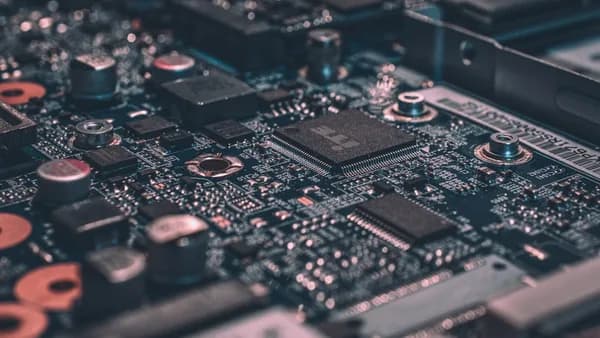
The real power in AI lies not in the applications, but in the infrastructure—the “chokepoints” that determine who gets access, at what speed, and for what price. Nvidia’s $1 trillion market cap isn’t just a story of GPU dominance; it’s proof that control over scarce AI resources translates directly into pricing power and outsized margins. With model training costs ballooning (OpenAI reportedly spent over $100 million to train GPT-4) and hardware availability lagging, investors are chasing the foundational layers: chipmakers, distributed computing platforms, and proprietary datasets.
This shift isn’t theoretical. Asset managers and VCs are doubling down on companies that build, operate, or gatekeep the infrastructure underpinning AI. The thesis is clear: owning the chokepoints means dictating the terms of innovation. As Yahoo Finance reports, serious capital is moving upstream—leaving Palantir and its peers fighting for scraps in a market defined by whoever controls the pipes, not the water.
Quantifying the Market Potential of AI Chokepoints: Data and Investment Trends
Money is flooding into AI infrastructure at a pace that dwarfs the app layer. In Q1 2024 alone, global VC funding for AI hardware and cloud platforms hit $9.7 billion, up 68% year-over-year, according to PitchBook. By contrast, AI application software drew just $2.6 billion—a five-year low. Private equity is joining the fray: Blackstone and KKR have both launched funds targeting data center buildouts, with Blackstone’s latest raising $7.1 billion in March.
Market projections reflect this conviction. The global AI hardware market—chips, networking, storage—is expected to reach $260 billion by 2030, with annual growth rates topping 30%. Model training platforms, led by Nvidia, AMD, and emerging startups like Cerebras, are forecast to capture $70 billion in revenue by 2027, up from $17 billion in 2023. Data processing and proprietary data providers (like Scale AI and Databricks) are seeing valuations leap; Databricks’ $43 billion valuation in its latest round outpaces Palantir by more than 2x, despite lower reported revenues.
Investors are betting on scarcity and control, not just growth. Nvidia trades at nearly 40x forward earnings, higher than any software application firm. Chokepoint companies consistently command premium multiples: AWS, Microsoft Azure, and Google Cloud together control over 70% of the AI training market, and their infrastructure margins are expanding. Application-layer firms like Palantir, meanwhile, have seen their price-to-sales ratios stagnate—signaling that the market is skeptical about their ability to capture real AI value without owning the bottlenecks.
Diverse Stakeholder Perspectives on AI Chokepoint Investments
Venture capitalists see chokepoint investments as a hedge against commoditization. Andreessen Horowitz, Sequoia, and Lightspeed have all shifted their deal flow towards hardware, cloud, and data platforms. “The rails are where the profits go,” one prominent VC put it in a recent interview. Institutional investors echo that sentiment, with pension funds and sovereign wealth funds stacking up stakes in data center REITs and GPU manufacturers, betting that supply constraints will drive sustained pricing power.
AI developers, however, express frustration—and sometimes fear—over the concentration of infrastructure control. The cost of training a state-of-the-art model has soared: a 2024 Stanford study estimated that access to top-tier GPUs costs small labs up to $10 million per project, effectively locking out all but the largest players. End-users worry that chokepoint dominance could stifle innovation and inflate prices, especially as cloud providers tighten access and raise fees.
Regulators and governments are wary. The European Commission is already probing Nvidia and Microsoft for potential antitrust violations in AI infrastructure. The U.S. Department of Justice has signaled aggressive scrutiny, warning that “control over AI hardware and training platforms is a national security issue.” China, meanwhile, is pouring billions into domestic chip and data initiatives, aiming to cut reliance on U.S. chokepoints. For investors, these signals are a double-edged sword: regulatory risk could disrupt market leaders, but also create opportunities for new entrants in regions pushing for “AI sovereignty.”
Tracing the Evolution of AI Investment: From Application Software to Core Infrastructure
AI’s investment arc is echoing the trajectory of cloud computing and semiconductors. In the early 2010s, capital chased SaaS companies and NLP apps, with little regard for the hardware beneath. By 2016, cloud infrastructure was the star; AWS and Azure became profit engines while apps fought for razor-thin margins. The semiconductor cycle tells a similar story: in the 1990s, PC manufacturers got the headlines, but by 2000, Intel and TSMC controlled the supply—and the profits.
Lessons from past booms are clear. Application-layer companies can scale quickly, but their dependence on infrastructure providers means their upside is capped. The dot-com crash wiped out thousands of software firms, but left Cisco and Intel dominant. The cloud boom created Salesforce and Zoom, but AWS grew faster and more profitably. Investors who chased the bottlenecks, not the brands, captured the lion’s share of returns.
The current AI shift is more pronounced, because model training and inference are orders of magnitude more resource-intensive than past software cycles. Control over GPU supply, data center access, and proprietary datasets isn’t just a competitive advantage—it’s an existential barrier for most AI startups. The lesson: in tech, the power always flows to the gatekeepers, not the crowd.
What Investing in AI Chokepoints Means for Industry Players and End Users
The influx of capital into AI chokepoints is reordering the competitive map in both tech and finance. For industry giants, owning infrastructure means squeezing rivals out of the market. Microsoft’s $10 billion stake in OpenAI gives it preferential access to Azure’s supercomputing clusters, effectively gating the next wave of AI innovation. Amazon’s $4 billion investment in Anthropic secures a pipeline of proprietary models for AWS—and locks startups into its ecosystem.
For end users, the consequences are mixed. More money in infrastructure means faster innovation cycles and lower unit costs—at first. But as chokepoint owners consolidate, expect pricing power to shift sharply. Cloud compute prices, which dropped 20% annually for a decade, are now rising; Nvidia’s H100 chips regularly sell for $40,000 each on the secondary market, up from $10,000 two years ago. Access is narrowing, and products are increasingly tied to whichever cloud or hardware provider dominates.
Palantir and its peers face a reckoning. Their value proposition depends on leveraging AI, but without control over hardware and model training, they become customers—not gatekeepers. Unless they pivot towards owning infrastructure, they risk irrelevance as chokepoint owners dictate the pace and nature of innovation. Investors are pricing this in: Palantir’s market cap has stalled at $50 billion, while Nvidia and Microsoft have added hundreds of billions in the same timeframe.
Forecasting the Future: How AI Chokepoint Investments Will Shape the Next Decade
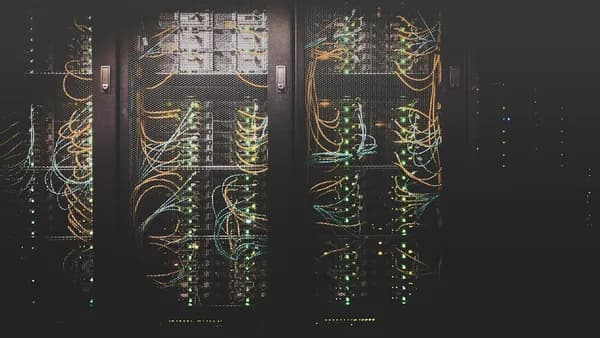
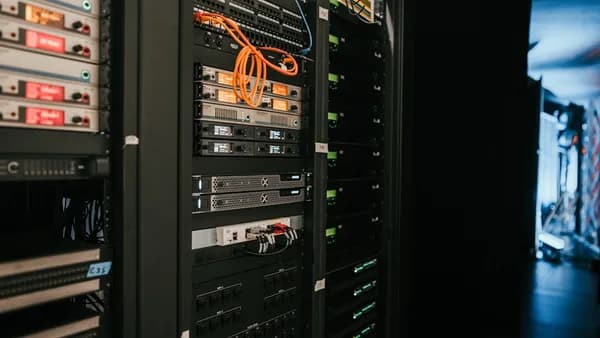
The next ten years will be defined by a tug-of-war over AI bottlenecks. Investors will chase the rarest resources—top chips, proprietary data, and scalable compute—favoring companies that can gate access and set prices. Expect continued consolidation: data center M&A activity hit $45 billion in 2023, and is projected to surpass $70 billion by 2025, as giants scramble to own the physical infrastructure.
Emerging disruptors will come from unexpected quarters. Startups building specialized AI hardware (like Graphcore and Groq) could undercut Nvidia’s dominance if they crack performance and cost barriers. Decentralized compute networks (such as Akash and CoreWeave) promise to democratize access, but their survival depends on overcoming regulatory hurdles and supply chain constraints. Proprietary data providers may see explosive growth if privacy regulations force companies to build and maintain their own datasets.
Geopolitical friction will intensify. U.S.-China tech decoupling is already reshaping investment flows, with Beijing investing $15 billion in domestic AI chips and Washington restricting exports. The EU’s AI Act will push European firms to insource infrastructure, creating regional winners and losers. For investors, navigating these cross-currents will be critical: betting on chokepoints means watching not just the market, but the regulators and politicians who can redraw the map overnight.
Serious money is betting that the next trillion-dollar AI winners won’t be application brands like Palantir, but the companies that control the pipes, chips, and data. Investors who miss this pivot risk being left with the tech equivalent of tollbooth tokens—valuable only so long as the gatekeepers allow. The smart play: follow the chokepoints, not the headlines.
The Bottom Line
- Major investors are shifting capital from AI applications to infrastructure that controls access and pricing.
- Companies like Nvidia and OpenAI are positioned to dictate AI innovation due to their control of critical resources.
- Palantir’s reliance on government contracts and limited leverage makes it less attractive as AI scales.