Ford brought back more than 300 veteran quality inspectors and engineers after its AI quality checks failed to match human expertise — a warning shot for executives betting that factory judgment can be automated as easily as factory vision.
The automaker adopted AI across parts of its operations, including quality checks, but executives said the company had to rehire experienced staff to cover the gaps left by automated systems, according to BBC Tech. The people most affected are not just Ford workers. They are every manufacturer, investor, and customer now being asked to trust AI inside high-stakes industrial decisions.
Ford’s quality leaders admit AI was trained on too little human know-how
Ford’s clearest admission came from Charles Poon, vice president of vehicle hardware engineering. He did not frame AI as useless. He framed Ford’s deployment as incomplete.
“Artificial intelligence is a fantastic tool, but it's only as good as the information you use to train it,” Poon told reporters.
That sentence is the center of the story. Ford did not say it abandoned AI. It said its tools lacked enough of the experience held by engineers who had worked through “many product cycles.”
Poon was more direct about the mistake:
“Mistakenly, we thought that by just introducing artificial intelligence and ingesting the design requirements that we had, that would produce a high-quality product,” he said.
So what actually failed: the model, the rollout, or the assumption that design requirements were enough? MLXIO analysis: the source supports the third reading most strongly. Ford’s issue was not that AI cannot help with quality. It was that formal specifications did not capture the judgment of veteran technicians.
That is a different problem from bad software. It is an organizational knowledge problem.
Factory teams now have a harder AI lesson: automation still needs mentors
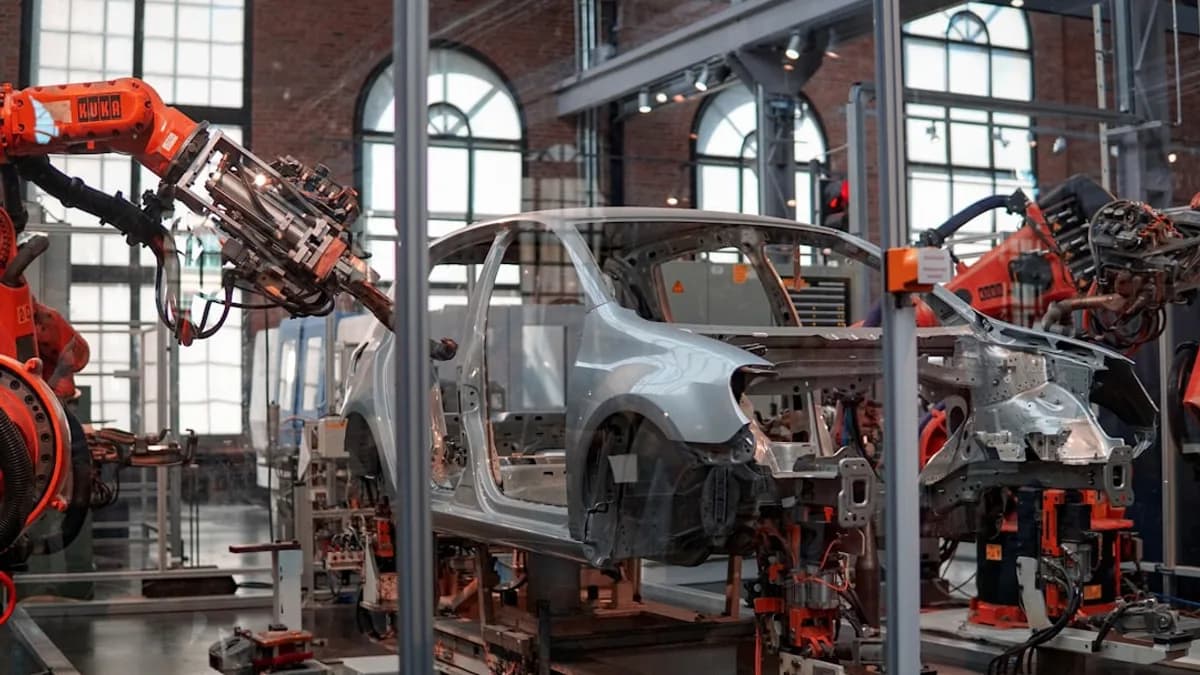
Ford had already pitched AI as part of a broader industrial push. In an October earnings call, chief operating officer Kumar Galhotra said the company was “deploying AI across the entire industrial system.” That included 900 AI-powered cameras in plants “to detect quality issues at the source and help us mitigate supply disruptions.”
The rehire move shows the limit of that approach. Cameras can collect signals. Models can process patterns. But Ford’s own executives now say the systems needed training from the company’s most experienced people.
| Ford’s AI push | Ford’s correction |
|---|---|
| 900 AI-powered cameras deployed in plants | More than 300 veteran inspectors/engineers rehired in recent years |
| AI used for quality checks | Humans brought back to train systems and mentor younger workers |
| Design requirements fed into automated tools | Ford says experienced judgment was underweighted |
| AI framed as part of the “entire industrial system” | Talent refresh tied to quality improvement |
The builder’s question is blunt: can AI inspect better if the people who understand quality are removed before their knowledge is captured?
Ford’s answer, at least in this case, appears to be no. Poon reportedly said many veteran technicians had left before their expertise could be used to improve the technology. Ford later reintroduced them to train its automation, machine learning, and AI tools.
This connects to a wider point we made in Future Trends Everyone Keeps Misreading — Here's Why: the first wave of hype often mistakes adoption for maturity. Ford adopted AI. The harder work was teaching it what veteran workers already knew.
Buyers get a better JD Power result, but not a full explanation
Ford’s admission landed alongside a positive quality milestone. The company said it became the number one mainstream automaker in the US JD Power Initial Quality Study, a position it had not held since 2010.
That matters because the rehire story is not simply “AI failed, humans won.” Ford says the broader quality push worked. In a press release, the company said “reaching best-in-class quality required a significant talent refresh.”
That refresh included replacing senior leaders across engineering, supply chain, and manufacturing, as well as hiring roughly 300 veteran engineers “who carry the hard-earned wisdom of decades of design.”
For customers, the inspection method is secondary. The buyer’s question is simpler: does the vehicle arrive with fewer problems?
The source does not give defect rates, warranty costs, or model-level quality data. That limits how far the analysis can go. We know Ford tied its quality improvement to leadership changes and veteran engineering hires. We do not know how much of the JD Power gain came from rehiring, AI upgrades, management changes, or other process changes.
MLXIO analysis: that ambiguity is important. Ford’s quality rebound supports the value of human expertise, but it does not prove AI was the only drag on quality. The company changed people, processes, and oversight at the same time.
Rivals should treat Ford’s reversal as a deployment warning, not an anti-AI verdict
Ford’s move does not mean industrial AI is dead. It means replacing expert judgment with AI before the system is properly trained can backfire.
The automotive industry has heard this promise before in different forms: more automation, fewer bottlenecks, higher consistency. The Ford case adds a specific AI-era twist. The risk is not only whether machines can perform a task. It is whether companies can convert human operating knowledge into training data, validation rules, and escalation paths before experienced workers walk out the door.
What should competitors learn from this without overreading it?
MLXIO analysis:
- Keep humans close to deployment: Ford’s rehire suggests expert inspectors are not just legacy labor. They are training assets.
- Avoid one-step replacement: AI tools should prove themselves against experienced workers before they become the primary quality gate.
- Measure by line and use case: A broad claim that AI works “across the entire industrial system” is less useful than evidence that it works in a specific plant, process, and quality checkpoint.
- Preserve institutional knowledge: Ford’s comments imply that losing veteran staff before capturing their expertise weakened the AI program.
The competitor question is not “Should we use AI?” It is “Which decisions are we comfortable letting AI make without an experienced human reviewer?”
That distinction will shape industrial AI more than another executive quote about productivity.
Investors get the margin story, but also the execution risk
Ford’s AI push came during what the BBC described as Wall Street enthusiasm for AI’s potential to increase margins. Ford boss Jim Farley also said in an interview with Walter Isaacson last June:
“AI will leave a lot of white collar people behind.”
That comment now reads differently. Ford may still use AI to reduce work in some areas, but its quality-control experience shows that cutting too quickly can create a need to rehire.
The investor question is: do AI savings survive contact with operational reality?
The supplied source does not include Ford’s labor savings, warranty expenses, or cost of the rehires. So the economics cannot be quantified here. But the disclosed numbers still tell a story: Ford installed 900 AI-powered cameras, then rehired more than 300 veterans to compensate for the pitfalls of automation and improve the tools.
That is not a clean replacement curve. It is a hybrid operating model.
This is where the broader tech-finance debate matters. As we argued in Key Trends Reveal the Next Tech and Finance Shake-Up, markets often reward the promise of automation before the operating model proves durable. Ford’s case shows why industrial AI needs a different standard: not just productivity claims, but evidence that quality holds when systems scale.
Industrial AI vendors now face a tougher proof burden
Ford’s experience creates a problem for companies selling AI into factories. The pitch can no longer stop at faster inspection or fewer manual checks. Buyers will want proof that AI systems can absorb expert knowledge, flag uncertainty, and improve under supervision.
The vendor question is: can your system learn from the people it is supposed to replace?
Practical safeguards follow directly from Ford’s experience, though the source does not say which ones Ford now uses:
- Parallel checks: Run AI and veteran inspectors side by side before removing human review.
- Expert training loops: Use experienced engineers to label, correct, and stress-test automated checks.
- Escalation rules: Require human review when the system lacks confidence or encounters unfamiliar conditions.
- Performance audits: Track whether AI quality checks continue to match expert judgment after deployment.
- Mentoring links: Pair AI adoption with training for younger workers, which Ford says its rehired veterans are doing.
None of that rejects AI. It makes AI less theatrical and more accountable.
Ford’s next factory AI test is whether humans stay in the loop
Ford’s next move will show whether this was a tactical fix or a deeper shift in how it deploys AI. The strongest evidence of a real change would be continued use of veteran engineers as trainers, validators, and mentors — not just a one-time rehire wave after automated checks fell short.
The weaker signal would be a return to broad claims about AI replacing skilled judgment without published proof that quality systems are improving under real factory conditions.
Ford’s lesson is narrow but sharp: AI quality control depends on the quality of the human knowledge behind it. In factories, the competitive edge may not come from removing experienced people from the line. It may come from knowing exactly where their judgment still makes the machine better.
Impact Analysis
- Ford’s reversal shows AI deployments can fail when they miss hard-earned human expertise.
- Manufacturers may need to rethink how they capture and train models on tacit factory knowledge.
- Customers and investors are being reminded that automation in high-stakes quality control still needs human oversight.