Why Professional Agency is the New Currency for Career Growth in Tech
Forget technical skills — professional agency is emerging as the real differentiator for career growth in tech. Max Schoening’s perspective on Lenny’s Podcast spotlights a shift: it’s not just what you know, but your ability to chart your own course within an organization that sets you apart, according to CryptoBriefing.
Agency in this context means autonomy to make decisions, choose priorities, and own outcomes. Designers and developers who operate with agency aren’t just executing tasks — they’re steering product direction, advocating for user needs, and driving innovation. In practice, agency manifests when a designer pushes for a user-centric feature, or a developer prototypes a new workflow without waiting for management approval.
This shift isn’t just philosophical. The correlation between agency and successful product development is backed by numbers: teams with high autonomy ship products faster and iterate more aggressively. According to a 2023 McKinsey report, companies prioritizing team agency saw a 20% uptick in innovation metrics and a 15% reduction in time-to-market. The lesson? In an industry where change is constant, professionals who can seize agency — and organizations that nurture it — are the ones who actually move the needle.
How AI is Revolutionizing Product Workflows and Redefining Designer Roles
AI is doing more than automating routine tasks; it’s fundamentally reshaping how product teams work and what designers are expected to deliver. The surge of tools like Figma’s AI-powered plugins, GitHub Copilot, and Adobe Sensei means that designers now generate mockups, iterate on layouts, and even test user flows with a fraction of the manual effort required just two years ago.
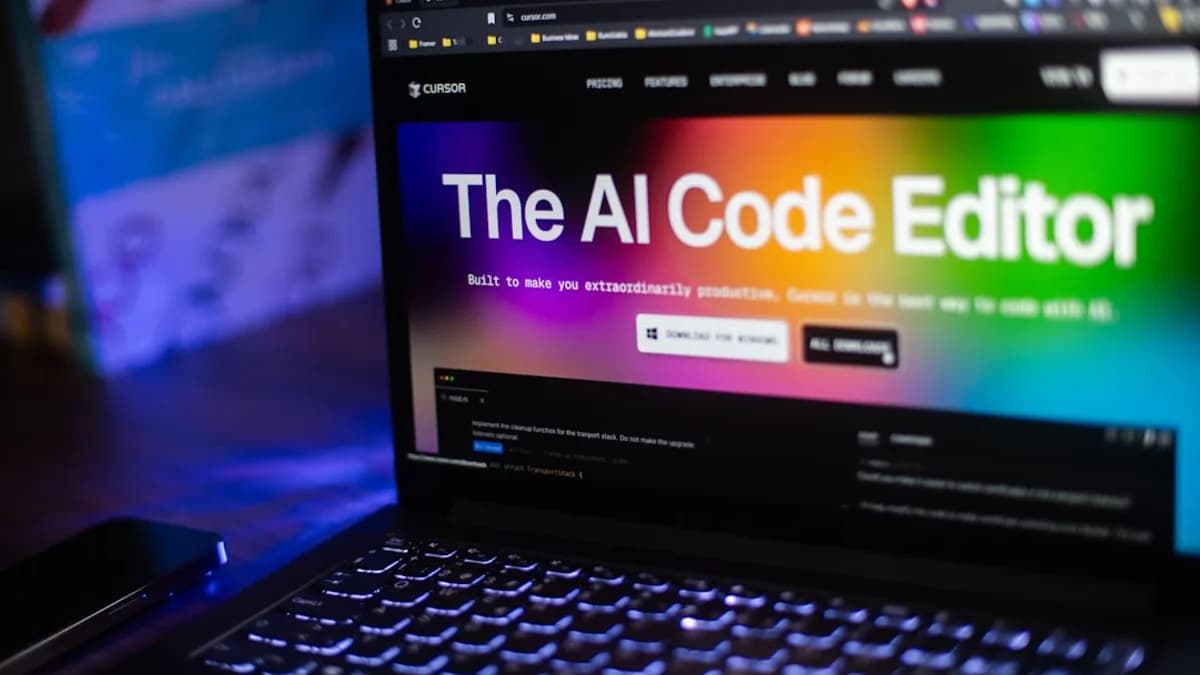
The intimidation factor around coding — long a barrier separating design and development — is evaporating. AI-driven code generation allows designers to prototype interactive elements without wrestling with syntax. Take Framer’s AI integration: a designer types in a desired animation, and the tool spits out production-ready code, no developer handoff needed. This isn’t just convenience; it’s a restructuring of the workflow.
The shift is clear in responsibilities: designers are increasingly expected to handle micro-interactions, accessibility checks, and even basic API integrations. AI takes care of the repetitive technical work, freeing up designers to focus on user experience and creative problem-solving. Some teams report a 40% reduction in time spent on design-to-dev handoff, according to internal Slack metrics published by Shopify in 2024. As AI absorbs more technical grunt work, the role of the designer expands — and their agency grows.
The Rising Trend of Designers Learning to Code: Bridging Creativity and Technical Skills
Designers aren’t waiting for AI to bridge the gap; they’re learning to code themselves. This trend isn’t new, but it’s accelerating. The motivation is simple: fluency in code means tighter collaboration, more control over the end product, and fewer lost-in-translation moments.
On product teams, designers who code can iterate faster, prototype richer experiences, and troubleshoot issues without relying on developers. For example, Airbnb’s design team shifted to mandatory React training for all designers in 2023, reporting a 25% jump in project velocity and a 30% drop in revision cycles.
The benefits are clear, but the challenges persist. Designers face steep learning curves, especially when diving into complex frameworks or debugging production issues. But the payoff is tangible: when designers code, they can directly test hypotheses, build experiments, and deliver value without bottlenecks. Coding knowledge isn’t just a résumé bullet — it’s a lever for greater agency within product teams.
Quantifying the Impact: Data and Metrics Behind AI-Driven Product Development
AI adoption in product design isn’t hype — it’s measurable. Gartner’s 2024 Digital Product Survey found that 67% of leading product teams use at least one AI-powered tool in their workflow, up from 38% in 2022. Adobe’s own internal data shows that Sensei-powered features cut design iteration time by 35% for creative teams using Illustrator and Photoshop.
Productivity gains are real. GitHub Copilot’s rollout led to a documented 55% reduction in time spent on boilerplate code for mixed design-development teams. Error rates dropped as well: Shopify’s AI-assisted prototyping tools reduced handoff errors by 28% in Q1 2024.
Designer coding proficiency is also rising. The UX Collective’s annual survey found that 48% of designers self-identify as “code-proficient” in 2024, compared to just 27% in 2020. The combination of AI tools and coding upskilling means teams aren’t just moving faster — they’re making fewer mistakes and delivering more innovative products.
Diverse Perspectives: How Designers, Developers, and Product Managers View AI and Coding Trends
Designers see AI as a mixed blessing. Many appreciate the automation of tedious tasks — AI handles pixel-perfect adjustments, accessibility checks, and even user testing simulations. But some worry that AI tools will homogenize design, flattening creative differentiation. Coding integration is generally positive, but designers stress the need for time and support to build technical skills.
Developers welcome the shift — designer-coders reduce bottlenecks and foster clearer communication. However, some express concern about “code hygiene” and maintenance: rushed code from designers can introduce bugs or technical debt. AI-assisted workflows are praised for speeding up prototyping, but developers warn that overreliance on AI-generated code can obscure logic and make debugging harder.
Product managers are bullish on productivity gains, but cautious about skill gaps. They see AI as a way to streamline workflows and shrink timelines, but worry about the risk of over-automation and the loss of deep craft. The rise of designer-coders means tighter feedback loops and less friction, but PMs also flag the need for clear accountability and standards as roles blur.
Tracing the Evolution: Historical Context of Designer Roles and Technological Shifts
Designer roles have morphed dramatically since the 2000s. Early web designers focused on visuals and layout, rarely touching code. The rise of Flash and HTML5 forced designers to learn basic scripting, but most stuck to tools like Photoshop and Dreamweaver. The UX boom in the 2010s pushed designers toward wireframing, user research, and product strategy, but coding stayed on the sidelines for most.
Technology disruptions — from responsive web design to mobile-first frameworks — repeatedly forced designers to adapt. The 2016 launch of Figma marked a milestone: real-time collaboration blurred lines between design and engineering. Today’s AI-driven shift is more radical. The technical bar for designers is rising, making coding and automation central to the role rather than nice-to-haves. The milestones are clear: designers now build, test, and deploy, not just mock up.
What the AI-Driven Shift Means for Future Product Teams and Industry Standards
Hiring is changing fast. Job postings increasingly demand experience with AI tools and coding frameworks — even for traditional design roles. Skill development is no longer optional: designers who don’t upskill risk irrelevance. Team dynamics are also in flux. With AI handling grunt work, teams can reallocate talent toward creative strategy, user research, and high-impact experimentation.
Professional success is being redefined. Designers with agency — those who can ideate, prototype, and ship — are now the most valuable players. Coding skills aren’t just “nice-to-have”; they’re table stakes. Organizations that invest in cross-training, flexible workflows, and AI literacy are the ones likely to attract top talent and deliver standout products.
For designers, the advice is clear: learn to code, master AI tools, and take ownership of workflow. For companies, support upskilling, foster agency, and set new standards for collaboration. The winners will be those who treat the AI shift not as a threat, but as a runway for broader creative impact.
Forecasting the Next Decade: Predictions on AI, Designer Coding, and Professional Autonomy
AI’s next leap will be real-time workflow orchestration — tools that not only generate assets, but actively manage project timelines, assign tasks, and flag bottlenecks. Expect AI to evolve from assistant to collaborator, handling everything from asset optimization to user testing on live prototypes.
Designer coding proficiency will become ubiquitous. By 2030, “designer-developer” will be a standard job title at most product-led companies. Coding bootcamps and AI tool certifications will replace traditional design degrees in many hiring pipelines. Teams will favor hybrid talent — professionals who can ideate, build, and iterate without handoff.
Professional agency will scale with AI integration. As automation absorbs routine work, designers and developers will focus on creative direction, strategic decisions, and user advocacy. The most successful teams will be those who empower individuals to take risks, experiment, and own outcomes.
The bottom line: the next decade will reward professionals who combine creativity, technical fluency, and agency. Those who cling to siloed roles will find themselves sidelined, while those who embrace AI and coding will shape the future of product development.
Why It Matters
- Professional agency is becoming a key factor for individual and team success in the tech industry.
- AI tools are rapidly transforming product development workflows, raising expectations for designers and developers.
- Organizations that foster autonomy see measurable benefits in innovation and speed to market.