Xpeng’s Production-Ready L4 Robotaxi: Skipping the Waiting Line
Xpeng is putting a production-ready Level 4 robotaxi on actual streets, not just test tracks—while competitors, including Tesla, are still tinkering with prototypes and closed pilots. This is not another endless AV beta: Xpeng’s GX L4 is engineered to move straight into real-world service, a leap that could redraw the timeline for autonomous vehicles worldwide. According to Notebookcheck, the Chinese automaker is ditching the endless testing cycles that have bogged down rivals, moving directly to mass production.
This signals more than just technical bravado. Xpeng is betting that its approach will let it scale up faster, gather real-world data at speed, and pressure rivals stuck in perpetual R&D. For the industry, it’s a line in the sand: Either accelerate deployment or risk irrelevance as China’s EV giants cut out the “pilot purgatory” that has stalled global robotaxi ambitions.
LiDAR-Free: Xpeng’s Cost Gambit and Its Risks
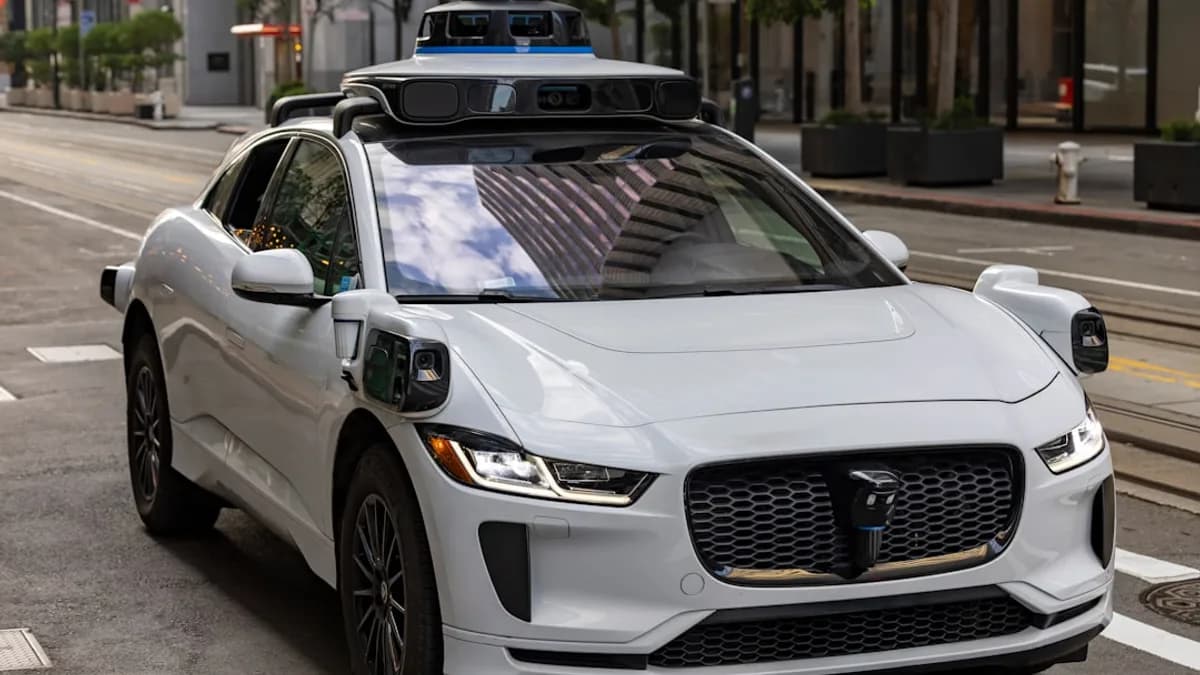
Xpeng’s GX L4 robotaxi will ship without the industry’s go-to crutches: expensive LiDAR sensors and high-definition maps. Most AV developers, including Waymo and Cruise, have fixated on LiDAR for precise environmental modeling, and even Tesla’s own “vision-only” approach has kept the door open for future sensor additions. Xpeng is committing to camera- and radar-based perception—no redundancy, no fallback.
The upside is obvious: lower bill of materials, simpler supply chain, and a chance to undercut competitors on price. But the trade-off is steep: camera and radar alone must be good enough to support hands-off, eyes-off operation in chaotic urban conditions. If Xpeng’s algorithms can deliver, it will force a major rethink of AV sensor suites. If not, the company risks spectacularly public failures.
MLXIO analysis: This is a high-wire act. Ditching LiDAR could turbocharge scale and affordability, but leaves Xpeng with less margin for error. The industry will be watching for edge-case failures and real-world interventions.
What We Know: Xpeng’s Production Plans and Market Shot
Details on GX L4 production capacity or deployment numbers are not disclosed in the source. What’s confirmed: Xpeng is moving to actual mass production, not limited pilot runs. The company is signaling that this is a commercial-grade product, not a test fleet.
What remains foggy is the volume of GX L4 robotaxis planned, which cities will see them first, and how quickly Xpeng can move from “production-ready” to “ubiquitous on the street.” Without these numbers, it’s hard to benchmark Xpeng’s actual threat to Tesla, whose Autopilot and Full Self-Driving push has yet to deliver true L4 autonomy in public service.
Industry and User Reactions: Cautious Curiosity
The immediate industry reaction—per the source—is surprise at the speed and boldness of Xpeng’s rollout, especially given the absence of LiDAR and HD maps. Expert skepticism centers on safety: Can a vision- and radar-only robotaxi handle unpredictable urban chaos? No external investor or consumer sentiment is included in the source, but MLXIO inference is that trust will be hard-won. Removing visible sensor “hardware” may challenge public confidence, especially in markets accustomed to over-engineering as a proxy for safety.
Learning from AV History: A Contrarian Bet
The industry’s AV track record is littered with projects that leaned heavily on LiDAR and mapping. Most have hit a wall at city-scale deployment, slowed by cost, mapping complexity, and regulatory drag. Xpeng is betting that skipping these steps—using cheaper, more scalable tech—will avoid the bottlenecks that snared Western peers.
This is a contrarian play. If it works, it will make legacy AV development look bloated and slow. If it fails, it will confirm skeptics’ warnings that “vision-only” is not ready for prime time.
Why It Matters: Urban Mobility and Competitive Pressure
If Xpeng’s GX L4 robotaxi performs as advertised, city transportation could shift faster than expected. Ride-hailing fleets could become truly autonomous, accelerating the shift away from private car ownership. Xpeng’s aggressive strategy might also force regulators to revisit safety standards and approval processes—especially as robotaxis without LiDAR or HD maps become visible on public roads.
For Tesla and other AV rivals, this is a direct challenge to catch up—or risk being outflanked by a company willing to cut technological corners for speed and scale.
What Remains Unclear
Critical data points are missing: production targets, ride volumes, geographic rollout, and real-world safety performance. Without early deployment metrics, it’s impossible to judge whether Xpeng’s GX L4 will scale or stall. The market’s response—consumer trust, regulatory acceptance, and technical durability—remains to be seen.
What to Watch: First-Mover Advantage or Spectacular Failure?
The next 12-18 months will reveal whether Xpeng’s high-stakes bet pays off. Watch for:
- Early incident reports and intervention rates from GX L4 deployments
- Expansion beyond initial rollout cities
- Any walk-back on the LiDAR-free architecture if edge-case failures mount
- How quickly competitors (especially Tesla) respond with production-grade L4 vehicles
If Xpeng’s gamble pays off, this could mark the true start of the robotaxi era—faster, leaner, and more scalable than the industry expected. If not, it will be a warning shot about cutting corners in autonomous safety. Either way, the world is now watching China’s AV strategy, not Silicon Valley’s.
Why It Matters
- Xpeng’s direct-to-production robotaxi could speed up the global rollout of autonomous vehicles.
- By eliminating LiDAR, Xpeng may cut costs and pressure competitors to rethink expensive sensor strategies.
- A successful launch would challenge industry norms and possibly disrupt current leaders like Tesla and Waymo.