Why Xiaomi’s Global Launch of Redmi A7 4G Signals a Shift in Budget Smartphone Strategies
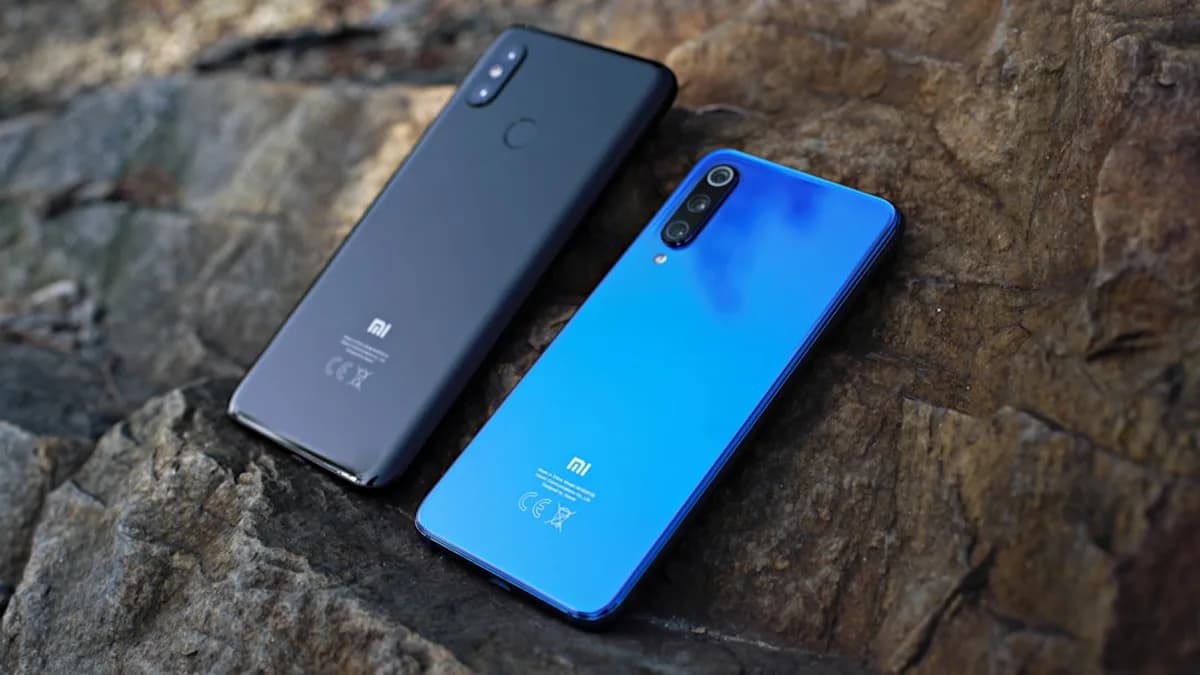
Xiaomi has stopped pretending that premium devices are the only ticket to global relevance. Instead, the company’s decision to launch the Redmi A7 4G internationally—after its initial rollout in India—marks a calculated pivot: budget phones are now front and center in Xiaomi’s global playbook. This isn’t just about selling more units; it’s about rewriting expectations for what affordable smartphones can offer. The A7 4G’s global release, confirmed by Notebookcheck, isn’t a throwaway move. By offering more color variants internationally than in India, Xiaomi is signaling that it understands local tastes and is willing to adapt in real time.
The implications run deeper than paint jobs. By doubling down on budget models, Xiaomi is acknowledging a reality: the appetite for affordable, feature-rich smartphones far exceeds the niche market for $1000 flagships. The company’s approach is less about chasing Apple and Samsung in the luxury segment and more about capturing the millions who want solid specs without the sticker shock. This launch is a litmus test for Xiaomi’s willingness to go toe-to-toe with competitors on value and personalization—two fronts where budget buyers are notoriously fickle but fiercely loyal when a brand gets it right.
Breaking Down the Redmi A7 4G’s Hardware: How 120 Hz Displays and Large Batteries Are Redefining Budget Phones
A 120 Hz display in a budget smartphone used to sound like a punchline. Now, it’s a reality. The Redmi A7 4G’s inclusion of this high-refresh-rate screen is a direct challenge to the notion that smooth visuals and fast UI are reserved for flagship devices. Most phones under $150 still ship with 60 Hz panels. Even Samsung’s Galaxy A series and Realme’s entry-level models typically cap out at 90 Hz, if at all. Xiaomi’s move ups the ante for competitors: either match the spec or risk looking outdated.
The A7 4G’s 5,200 mAh battery isn’t just a big number—it’s a promise of endurance that matters more to budget buyers than marginal gains in processor speed or camera megapixels. For context, the average battery capacity in sub-$200 phones is about 4,000 mAh. Real-world usage data from India shows Redmi’s previous A-series models routinely deliver two-day battery life for moderate users. The A7 4G’s battery could stretch that even further, especially with energy-efficient hardware and software optimizations.
These choices aren’t accidental. Xiaomi is betting that the next wave of budget buyers cares less about the latest Snapdragon chip and more about all-day reliability and smooth scrolling. The hardware gap between low-cost and mid-tier phones is narrowing fast. If the A7 4G’s specs become industry standard, expect rivals like Motorola (with its Moto E series) and Oppo to scramble for parity. The result: the budget segment could see a rapid escalation in feature wars, with high-refresh displays and oversized batteries becoming baseline expectations.
Global Market Data: Budget Smartphone Demand Trends and Xiaomi’s Positioning
The numbers tell a clear story: budget smartphones are driving volume in nearly every major market. IDC reports that in 2023, over 55% of shipments in emerging markets (India, Indonesia, Brazil) were devices priced below $200. In Africa and Southeast Asia, that share exceeds 60%. Even in mature markets like Europe, the cost-of-living crunch has revived demand for affordable handsets, with Canalys tracking a 12% year-on-year rise in sub-$250 phone sales in Q1 2024.
Xiaomi’s global market share in the budget segment is anything but static. In India, the brand commands 25% of the sub-$200 market, making it the top player. In Southeast Asia, Xiaomi’s share hovers around 18%, trailing only Samsung. In Latin America, the company has doubled its market presence in the budget segment since 2022, now accounting for nearly 15% of sales. What’s driving these numbers isn’t just price—it’s the perception that Xiaomi delivers specs that punch above their weight.
Demographically, budget smartphone buyers skew young but are increasingly cross-generational. Counterpoint Research shows that in India, 40% of buyers in the segment are under 30, but in Brazil, the largest growth cohort is aged 35-50. These consumers want durability, battery life, and decent screens—features the A7 4G is designed to deliver. Xiaomi’s willingness to ship more color variants globally speaks directly to the demand for personal expression, even at the low end of the market.
Diverse Stakeholder Views on Xiaomi’s Budget Smartphone Expansion
Industry analysts see Xiaomi’s global budget push as a tactical move to buffer against stagnating premium sales. Counterpoint’s Tarun Pathak argues that “budget phones are where the real volume lies, and Xiaomi’s willingness to innovate here will force competitors to reassess their priorities.” The consensus is that the A7 4G’s hardware leap—especially the 120 Hz display—could spark a mini arms race among rivals who’ve coasted on minimal upgrades.
Consumers in India, where the A7 4G is already sold, have responded positively. Early reviews highlight battery performance and screen fluidity as standout features, especially for users transitioning from older 60 Hz devices. Feedback also points to the demand for more color options—a gap Xiaomi now fills in its global launch. In forums and buyer surveys, the call for “phones that look as good as they work” is loudest among younger users, but the practical benefits are universally appreciated.
Competitors aren’t ignoring the shift. Realme and Samsung have quietly upped their specs in recent releases, with rumors of new budget models featuring 90 Hz panels and larger batteries. However, their color options and design variety still lag behind Xiaomi’s latest offering. If the A7 4G gains traction globally, expect a scramble for differentiation—not just in hardware, but in design and user experience. The pressure is on to prove that “budget” doesn’t mean “boring.”
Tracing Xiaomi’s Evolution: From Local Budget Player to Global Smartphone Contender
Xiaomi’s roots are in budget hardware, but the company’s early international strategy was cautious. In 2014, its first overseas foray—via the Redmi 1S in India—was a price-centric play, offering basic specs at unbeatable cost. The formula worked: Xiaomi became India’s top smartphone brand by 2018, thanks largely to budget A-series models. Yet global expansion lagged, hampered by patent disputes and limited localization.
By 2020, Xiaomi began to shift. The launch of Redmi Note models in Europe and Latin America signaled a willingness to tailor features for local markets. Unlike competitors who simply exported Chinese models, Xiaomi tweaked specs, colors, and even software to suit regional tastes. That flexibility paid off: in Spain, Xiaomi tripled its market share in three years, and in Indonesia, it became a top-three brand.
The Redmi A7 4G launch differs from previous budget rollouts. The emphasis on high-refresh displays and extra color variants is a direct response to lessons learned: buyers want more than just low price—they want choice and visible quality upgrades. Key milestones—such as crossing 200 million global Redmi device sales in 2022—have emboldened Xiaomi to pursue aggressive international launches, even in markets where brand loyalty is hard-won.
What Xiaomi’s Global Redmi A7 4G Launch Means for Consumers and the Smartphone Industry
Consumers win when affordable phones stop feeling like compromises. The A7 4G’s global debut means users everywhere get features—like a 120 Hz display and 5,200 mAh battery—that were once reserved for $500+ devices. For buyers in price-sensitive markets, this is a direct challenge to the idea that only premium phones deliver meaningful innovation.
The ripple effect extends to industry pricing and feature expectations. If Xiaomi can profitably offer these specs at a sub-$150 price point, competitors will be forced to rethink margins or risk losing share. Historically, spec inflation in budget segments has led to price compression industry-wide. When high-refresh displays become the norm, older models lose resale value and carrier bundles must offer more to stay attractive.
Design and color choice, often overlooked, suddenly matter. Xiaomi’s global color variants signal a shift toward personalization, even in the lowest price tiers. This could force rivals to invest more in manufacturing flexibility and supply chain management—a logistical challenge, but one that might become table stakes as buyers demand more than “black or silver.”
Predicting the Future: How Xiaomi’s Budget Smartphone Strategy Could Shape Market Dynamics
Xiaomi’s willingness to bring premium features downmarket isn’t a one-off. Expect the company to double down, adding even more high-end specs—think better cameras, faster charging, and improved build materials—to budget models over the next 12-18 months. The success of the A7 4G will be a bellwether: if international sales meet or exceed India’s, Xiaomi could accelerate launches in Africa, Eastern Europe, and Latin America, targeting regions where smartphone penetration is still rising fast.
Competitor responses are likely to be reactive, not proactive. Samsung and Realme may rush out incremental upgrades, but Xiaomi’s supply chain efficiency and design flexibility give it an edge. Longer-term, the entire budget segment may see a new baseline for innovation: AI-assisted photography, advanced security features (like side-mounted fingerprint sensors), and even basic 5G connectivity could become standard within two years.
Emerging technologies—like next-gen silicon built on smaller nodes or ultra-efficient OLED panels—will trickle down faster than before. For consumers, this means less waiting and more value. For the industry, it means compressed margins and faster product cycles. Xiaomi isn’t just launching a phone; it’s setting the pace for the budget segment worldwide. If rivals can’t keep up, expect market share to tilt decisively toward those willing to make budget phones feel premium—without the premium price.
Why It Matters
- Xiaomi’s global launch of the Redmi A7 4G shows budget phones are now a strategic priority.
- The inclusion of a 120 Hz display in a budget device raises the bar for affordable smartphone features.
- Xiaomi’s adaptation to local tastes and value-driven buyers may reshape competition in the budget segment.