Why Ugreen’s 25,000mAh Power Bank Redefines Portable Charging Standards
A 200W power bank isn’t just a spec sheet brag—it fundamentally changes how “portable” power banks can serve demanding devices. Ugreen’s new 25,000mAh model, now available in the US, doesn’t just top up phones or tablets; it fully recharges laptops, high-end cameras, and even some gaming handhelds at speeds that rival wall chargers. For context, most competing “laptop” power banks max out at 100W, meaning Ugreen’s unit can deliver twice the power and cut charging times in half for devices that support fast charging.
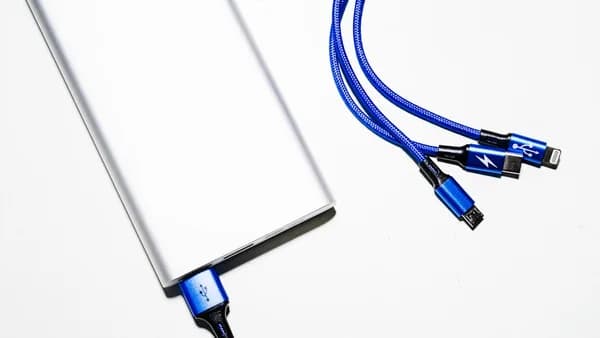
Integrated USB-C cables move this power bank out of the realm of accessories and into must-have territory for road warriors and digital nomads. No more hunting for lost cables in hotel rooms or airport lounges—built-in cables eliminate a notorious friction point for travelers. Unlike detachable cables, which are easy to misplace or forget, Ugreen’s approach guarantees you’ll always be ready to charge, no matter where you are.
The smart display isn’t just a gimmick. It provides real-time feedback on charging wattage, battery health, and port status—information users rarely get from standard power banks. This transparency lets users optimize charging, avoid overload, and understand when their devices are genuinely receiving peak performance. As Notebookcheck notes, Ugreen’s model leapfrogs rivals by combining high power output, integrated cables, and user-centric smart features—a rare trio in this segment.
Breaking Down the Numbers: Capacity, Output, and Multi-Device Charging Capabilities
25,000mAh translates to about 92Wh—enough to charge a typical 13-inch MacBook Air (~50Wh) nearly twice, or an iPhone 15 Pro (~3,200mAh) about eight times. This capacity puts Ugreen’s power bank in the upper tier for consumer products, just below the FAA’s 100Wh limit for carry-on lithium batteries. For travelers, this means maximum energy without risking confiscation at security checkpoints.
With four charging ports—three USB-C and one USB-A—the power bank supports simultaneous device charging. The 200W total output is split across these ports, allowing two devices to receive up to 100W each (ideal for laptop and tablet combos), while the remaining ports handle lower wattage for phones or accessories. Compare this to industry norms: most “multi-port” models claim high combined wattage, but rarely deliver more than 60W per port, bottlenecking laptops and slowing overall charge cycles.
Charging efficiency is where the real differentiation happens. At 200W, a MacBook Pro 16-inch (which accepts up to 140W) can charge at full speed, while a second device—say, a Steam Deck—can get a simultaneous 45W, still enough for fast charging. This eliminates the usual tradeoff between power and portability, making Ugreen’s product more competitive against traditional laptop charger bricks and even some wall outlets.
Comparing Ugreen’s Power Bank to Anker’s Leading Models: What Sets It Apart?
Anker’s flagship portable chargers, like the PowerCore 24K, cap out at 140W combined output and lack integrated cables. Ugreen’s 200W ceiling doesn’t just edge past Anker—it leaves a clear performance gap for users running multiple high-draw devices. For professionals working on-site, photographers, or gamers, the extra wattage translates directly to less downtime and more productivity.
Built-in cables are the decisive innovation. Anker’s approach relies on detachable cables, which add bulk and risk of loss. Ugreen’s cables are stowed in the chassis, reducing clutter and making the power bank genuinely “grab-and-go.” Durability, however, is a double-edged sword: built-in cables can fray or wear out, and replacement options are limited compared to universal USB-C cables. For users who prize modularity and repairability, Anker’s detachable design still holds appeal.
Pricing matters. Ugreen’s new model retails at $199, while Anker’s comparable units hover around $179-$199 but with lower wattage and fewer integrated features. Availability plays a role: Ugreen’s launch follows a successful European rollout, aiming to capture US buyers who demand higher output and all-in-one convenience. At this price point, the value proposition leans heavily on performance and ease, not simply brand loyalty.
Multiple Stakeholders Weigh In: Consumer, Manufacturer, and Retailer Perspectives
Consumer demand for high-capacity, fast-charging power banks has spiked in tandem with work-from-anywhere trends and the rise of power-hungry devices like laptops and portable gaming consoles. Users expect a single power bank to handle multiple devices without compromise—a demand Ugreen squarely targets.
For Ugreen, this model isn’t just another SKU; it’s a statement. The brand positions itself as an innovator, not a follower, by pushing wattage boundaries and integrating features that solve real-world pain points. The smart display and cable integration are calculated moves to differentiate in a crowded market.
Retailers face a challenge: selling a $200 power bank means convincing buyers it’s not just “another charger.” The product’s premium features must be communicated clearly, or it risks blending in with cheaper, less capable models. Merchandising strategies will likely focus on travel, productivity, and tech-savvy customer segments rather than mass-market impulse buyers.
Tracing the Evolution of High-Capacity Power Banks: From Basic Chargers to Smart Devices
Ten years ago, portable chargers barely managed 5,000mAh and single-digit wattages. Early models were simple, boxy, and often unreliable. As lithium battery densities improved, capacity pushed past 10,000mAh, then 20,000mAh, with the first “laptop-class” power banks appearing around 2017. These units brought USB-C PD and higher wattage, but still required users to manage their own cables and guess at charge status.
The last five years saw smart displays and integrated cables trickle into premium models. Real-time wattage displays, battery health indicators, and port status became standard on top-tier products, driven by consumer frustration with “dumb” chargers that failed to communicate or optimize. Ugreen’s new power bank sits at the vanguard—combining near-max FAA-legal capacity, ultra-high output, built-in cables, and smart feedback.
This convergence marks a shift: power banks are no longer accessories, but essential tech companions, tailored to the needs of multi-device users and professionals who can’t afford downtime.
What Ugreen’s Power Bank Means for Tech Users and the Portable Charging Industry
Laptop users and gadget owners often face a dilemma: carry multiple chargers and cables, or risk running out of power mid-day. Ugreen’s solution is explicitly designed for these users, offering true multi-device charging at speeds that match or beat dedicated wall chargers. The built-in cables and smart display remove friction and uncertainty, making the power bank not just a backup, but a daily driver.
Consumer expectations are rising. If one product offers 200W, integrated cables, and real-time data, buyers will soon demand these features across the board. The days of “dumb” power banks that simply trickle out power are numbered. Ugreen’s launch forces competitors to rethink their feature sets, pricing, and design strategies to keep pace.
For the industry, this product signals that high wattage, intelligent interfaces, and portability are the new baseline. Brands that ignore these trends risk irrelevance in a segment increasingly driven by utility, convenience, and performance.
Predicting the Future of Portable Power: Innovations Inspired by Ugreen’s 200W Power Bank
Expect wattage arms races to accelerate. Within two years, 200W output will be standard for premium portable chargers, with mid-tier models pushing past 100W. Integrated cables—once a “nice to have”—will become table stakes for travel-focused designs, forcing legacy brands to innovate or lose market share.
Battery chemistry will evolve. As manufacturers chase higher density and faster charging, expect shifts to solid-state or lithium-polymer blends, improving safety and reducing bulk. Smart displays will get smarter: real-time diagnostics, device-specific optimization, and even firmware updates could let power banks adapt to new gadgets on the fly.
Sustainability and design will matter more. Consumers increasingly demand recyclable materials and repairable designs, pushing brands to address the built-in cable dilemma. Look for modular options, biodegradable casings, and software-driven interfaces that extend product life.
For buyers, the implication is clear: portable charging is entering a new phase. Devices like Ugreen’s 200W power bank are harbingers—not just of incremental improvements, but of a reshaped industry where power, intelligence, and usability converge. Early adopters will get the benefit now; the rest of the market will follow, or risk getting left behind in the next charging cycle.
Why It Matters
- Ugreen's 200W output enables fast charging for laptops and demanding devices, rivaling wall chargers.
- Built-in USB-C cables eliminate the hassle of carrying and losing detachable cables, enhancing portability.
- Smart display provides real-time charging feedback, helping users optimize device performance and battery health.