MLXIO
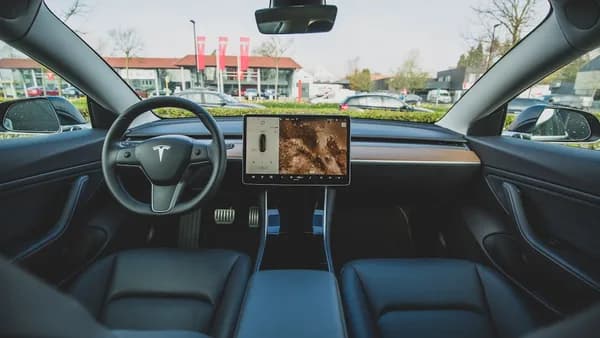
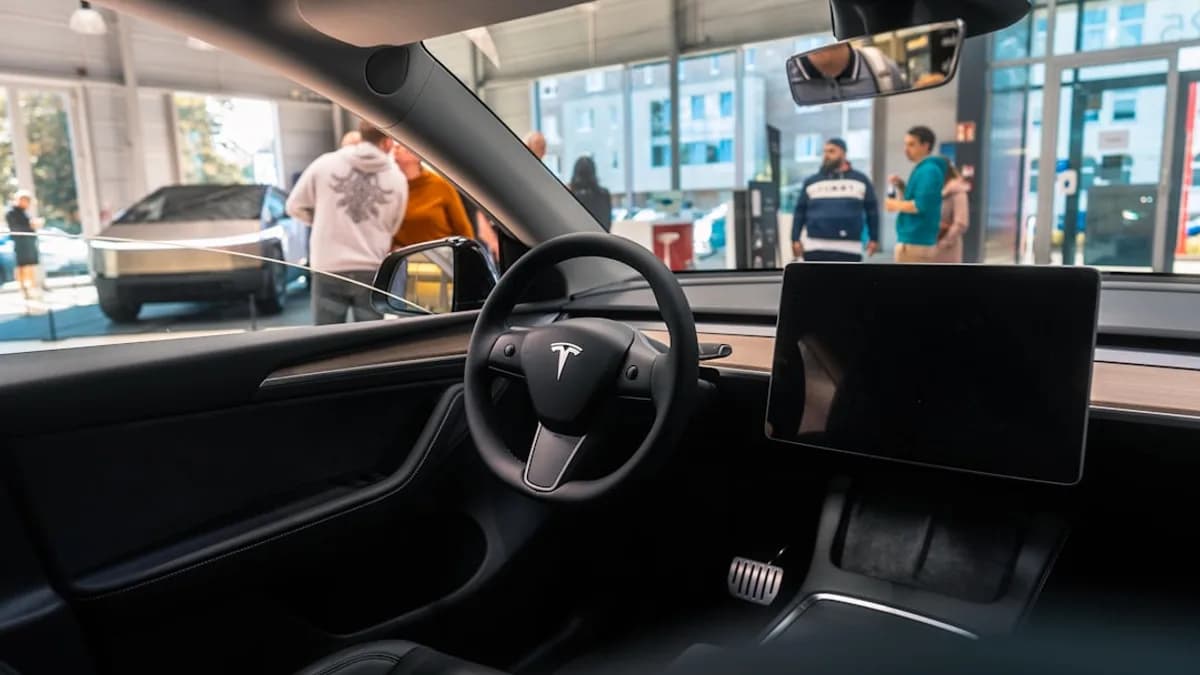
A view of the inside of a car from the driver's seat
TechnologyMay 16, 2026· 5 min read· By Arjun Mehta

Tesla’s Robotaxi Crashes Reveal Remote Human Errors Risk

Share

MLXIO Intelligence

Analysis Snapshot

57
Moderate
Confidence: LowTrend: 10Freshness: 97Source Trust: 85Factual Grounding: 92Signal Cluster: 20

Moderate MLXIO Impact based on trend velocity, freshness, source trust, and factual grounding.

Thesis

High Confidence

Tesla's disclosure that remote human operators, not just software, caused recent robotaxi crashes highlights critical vulnerabilities in the current autonomous vehicle oversight model.

Evidence

  • Tesla revealed that remote operators slowly drove robotaxis into a metal fence and a construction barricade.
  • The incidents were not caused by software malfunction but by human error during remote operation.
  • Remote operator involvement, intended as a failsafe, is now shown to be a new point of failure.
  • Tesla's disclosures do not detail the specific technical or human factors behind the crashes.

Uncertainty

  • No comparative incident data is available for other autonomous vehicle companies.
  • The exact causes (technical or human) behind the operator errors remain unspecified.
  • It is unclear how Tesla's remote operator protocols differ in effectiveness from competitors'.

What To Watch

  • Regulatory responses to remote operator-induced incidents in autonomous vehicles.
  • Changes in Tesla's operational protocols or remote supervision technology.
  • Disclosure or incident data from other autonomous vehicle companies for benchmarking.

Verified Claims

Tesla disclosed that remote human operators, not just software, were responsible for recent robotaxi crashes.
📎 Tesla admitted remote operators drove robotaxis into a metal fence and a construction barricade.High
The incidents involved slow-motion crashes, not high-speed or uncontrolled vehicle failures.
📎 The vehicles were being directed slowly by people, not careening out of control.High
Remote human operators can be a critical point of failure in autonomous vehicle systems.
📎 The article notes that remote operators, intended as safeguards, became the source of crashes.High
Tesla’s disclosures highlight that both human and algorithmic supervision in robotaxis are still immature.
📎 The article states the blend of autonomy and human oversight is a fragile arrangement and protocols may be immature.Medium
Comparative data on crash rates between Tesla and other autonomous vehicle companies was not provided.
📎 The Wired report does not provide comparative data on incidents from Waymo, Cruise, or other players.High

Frequently Asked

What caused the recent Tesla robotaxi crashes?

Tesla reported that remote human operators, not just the vehicle's software, were responsible for driving robotaxis into a metal fence and a construction barricade.

Do Tesla’s robotaxi crashes indicate a problem with autonomous driving software?

The incidents were caused by remote human operators, highlighting issues with human oversight rather than autonomous software alone.

Are remote operators a reliable safety measure for autonomous vehicles?

Tesla’s disclosures suggest that remote operators can be a point of failure, as they were involved in causing slow-motion crashes.

How does Tesla’s robotaxi crash history compare to other autonomous vehicle companies?

The article does not provide comparative data, so it is unclear how Tesla’s crash rate or reporting compares to other companies like Waymo or Cruise.

What does Tesla’s admission about remote operator errors mean for robotaxi safety?

It raises questions about the reliability of human supervision in autonomous vehicles and suggests that both human and technical protocols need improvement.

Updated on May 16, 2026

Why Tesla’s Robotaxi Crash Reports Challenge Autonomous Vehicle Safety Assumptions

Tesla’s admission that remote operators—not just code—drove its robotaxis into a metal fence and a construction barricade cuts against the narrative of inevitable, frictionless autonomy. This isn’t a story of software failing in the wild, but of humans, at the controls, slowly steering advanced vehicles into objects. The company’s disclosures, as described in Wired, force a rethink of where the real bottlenecks lie: not just in machine intelligence, but in the messy handoff between human and algorithm.

This matters because the industry has often sold the promise of remote intervention as a failsafe, a way to bridge the gap until true self-driving is ready. Tesla’s new details undermine that assumption. If remote operators—intended as the last line of defense—are causing slow-motion crashes, the reliability of the entire supervisory model comes into question.

Breaking Down the Crash Data: What Tesla’s Robotaxi Incidents Reveal About System Vulnerabilities

The specifics Tesla revealed are as mundane as they are damning: remote human operators drove robotaxis into a metal fence and a construction barricade. The vehicles weren’t careening out of control; they were being directed, slowly, by people expected to prevent precisely these sorts of incidents.

This exposes a critical weakness in the current deployment model. The remote operator, often seen as a safeguard, becomes a new point of failure. Unlike algorithms that can be tuned and tested at scale, humans are susceptible to distraction, latency, and misjudgments—especially in remote contexts where situational awareness is limited by sensors and video feeds.

Tesla’s disclosure doesn’t detail the technical or human factors behind these slow-motion crashes. What’s clear is that the blend of autonomy and human oversight is a fragile arrangement. The incidents don’t just point to software needing improvement; they show that operational protocols and remote control systems may be just as immature.

Diverse Stakeholder Perspectives on Tesla’s Robotaxi Crash Disclosures

Tesla’s willingness to admit remote operator involvement is a double-edged sword. On one hand, it signals a degree of transparency rarely seen in the industry. On the other, it hands critics ammunition: if human supervisors can make such basic errors, what does that imply for the underlying risk of autonomous fleets?

Regulators may see these events as proof that remote operation is not a panacea. Consumer safety advocates are likely to seize on the details, questioning how safe robotaxi deployments can really be if both the software and its human backup are fallible. For potential passengers, the idea that a remote worker could slowly drive their ride into a fence is unlikely to inspire trust.

MLXIO analysis: Tesla’s disclosure strategy here is calculated. By framing the incidents as slow, low-speed human errors, it may hope to distinguish them from high-speed, headline-grabbing AV failures. But the underlying message—supervision is not enough—remains.

How Tesla’s Robotaxi Crash History Compares to Other Autonomous Vehicle Programs

The Wired report does not provide comparative data on incidents from Waymo, Cruise, or other players. Without numbers, it’s impossible to quantify whether Tesla’s crash rate or reporting rigor is better or worse than its rivals. What stands out is Tesla’s focus on remote operator involvement; many competitors rely more heavily on in-vehicle safety drivers or different escalation protocols.

MLXIO inference: The fact that Tesla’s robotaxis are experiencing operator-induced crashes, rather than software-only failures, suggests a different risk profile than programs that keep more decision-making inside the vehicle. It also raises questions about whether remote intervention can ever match the performance of a trained driver physically present.

What Tesla’s Robotaxi Crash Details Mean for the Future of Autonomous Ride-Hailing Services

These incidents could slow regulatory approval for large-scale robotaxi rollouts. Both the public and authorities are likely to scrutinize not just the code but the entire operational stack—including training, oversight, and handoff protocols.

Tesla may need to revisit how it selects and trains remote operators, and whether its current systems provide enough information for safe decision-making. The company’s disclosures suggest that remote control is not a solved problem, and that the path to mass deployment will require more than just incremental software updates.

For the industry, the lesson is stark: remote human intervention introduces its own risks, and can’t simply be waved away as a “safety net.” Trust in autonomous ride-hailing will depend on building robust, transparent systems that account for both human and machine limitations.

Predicting the Next Phase: How Tesla and the Autonomous Vehicle Industry Could Address Robotaxi Safety Challenges

The next frontiers are clear. Tesla and its peers will need to invest in better remote operation interfaces, more rigorous selection and training for operators, and tighter protocols for when and how humans intervene. Technological advances—such as lower-latency communication and richer sensory feeds—could close some gaps, but won’t eliminate human error entirely.

Regulators may respond by demanding more granular incident disclosures and stricter supervision rules. Tesla’s willingness to reveal remote operator-caused crashes could force the broader industry toward greater transparency, or it could trigger new rounds of scrutiny and delay.

The biggest unknown: whether Tesla’s current approach can scale safely or whether a fundamental rethink of the remote intervention model is required. The next phase will be defined by how convincingly companies can prove—to regulators, the public, and themselves—that handoffs between human and machine are not just an afterthought, but a core safety function.

Impact Analysis

  • Tesla's crash disclosures highlight that human remote operators, not just software, can be a key source of error in autonomous vehicles.
  • The incidents challenge the industry's assumption that remote intervention is a foolproof safety net for self-driving technology.
  • This story raises broader doubts about the readiness and reliability of current autonomous vehicle oversight models.

AM

Written by

Arjun Mehta

AI & Machine Learning Analyst

Arjun covers artificial intelligence, machine learning frameworks, and emerging developer tools. With a background in data science and applied ML research, he focuses on how AI systems are transforming products, workflows, and industries.

AI/MLLLMsDeep LearningMLOpsNeural Networks

Related Articles

shallow focus photography of black Xbox controller
TechnologyMay 16, 2026

Steam Controller Ditches Steam Client, Sparks Gaming Freedom

Steam Controller breaks free from Steam Client, enabling full functionality on Windows and Linux games across all launchers via an SDL patch.

5 min read

gold and black star print round ornament
CryptoMay 16, 2026

Liberland Honors Vitalik Buterin, Shaking Up Blockchain Governance

Liberland awards Vitalik Buterin its highest honor, signaling a bold push for blockchain-driven governance at ETH Prague 2026.

4 min read

a blue cube with a white logo
TechnologyMay 16, 2026

Samsung Rolls Out One UI 8.5 Update to Galaxy S24, Fold6, Flip6 US

Samsung accelerates One UI 8.5 rollout to Galaxy S24 series and foldables in the US, cutting wait times and enhancing user experience.

4 min read

a person holding up a cell phone with a stock chart on it
StartupsMay 16, 2026

RJ Scaringe Raises $12B+ and Investors Still Chase More

RJ Scaringe raised over $12 billion across three startups, attracting relentless investor demand and shaping the future of mobility and tech.

3 min read

silver macbook on white table
TechnologyMay 16, 2026

Apple’s M6 Chips Spark MacBook Pro Revolution Beyond OLED

Apple’s new M6 Pro and M6 Max chips will redefine MacBook Pro performance and user interaction, overshadowing OLED upgrades.

5 min read

a close up of the keyboard of a laptop
TechnologyMay 16, 2026

Alienware 16X Aurora’s Balanced Mode Cuts Noise, Costs FPS

Alienware 16X Aurora’s Balanced mode lowers fan noise significantly but reduces GPU performance enough to matter for gamers chasing max FPS.

5 min read

a pair of green sports cars parked next to each other
BusinessMay 16, 2026

Porsche Axes 500 Jobs, Shuts E-Bike Unit in Profit Fight

Porsche slashes 500 jobs and closes its e-bike division to halt losses and refocus on core luxury car business amid profit drops.

5 min read

a person sitting at a keyboard with their hands on it
BusinessMay 16, 2026

Casio’s Keyboard Business Bleeds Money With No Quick Fix

Casio’s keyboard division suffers persistent losses and plans layoffs, with a break-even target three years away, marking a quiet collapse of a music tech icon.

5 min read

person sitting on gaming chair while playing video game
TechnologyMay 16, 2026

GameSir Sparks Hype with Royal2 Special Edition G7 Pro 8K Controller

GameSir teams with eSports champ Royal2 to launch a special edition G7 Pro 8K controller, blending performance with collector appeal.

4 min read

black computer tower on white table
TechnologyMay 16, 2026

Intel Core i9-14900KF Smashes CPU Record at 9.2GHz

Intel’s Core i9-14900KF breaks the CPU frequency world record at 9.2GHz with extreme liquid helium cooling and specialized hardware.

4 min read

Stay ahead of the curve

Get a weekly digest of the most important tech, AI, and finance news — curated by AI, reviewed by humans.

No spam. Unsubscribe anytime.