MLXIO
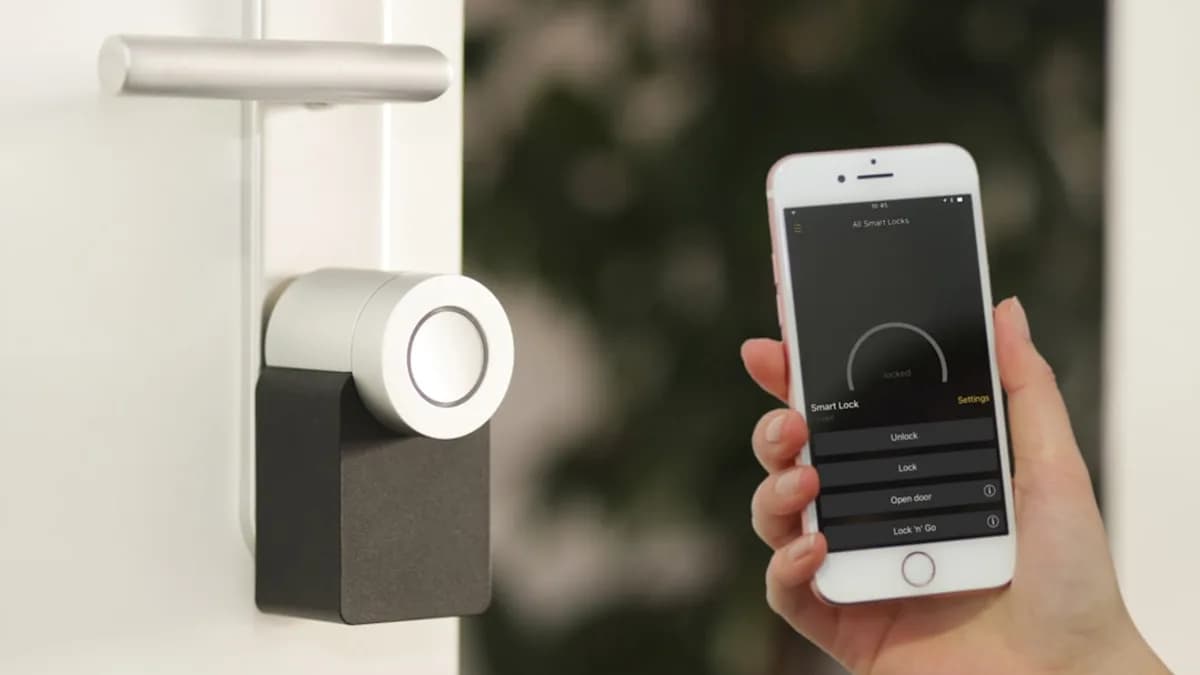
gold Apple iPhone smartphone held at the door
TechnologyMay 16, 2026· 5 min read· By Dev Kapoor

SwitchBot Sparks Smart Lock Revolution with 3D Facial Tech

Share

MLXIO Intelligence

Analysis Snapshot

69
High
Confidence: LowTrend: 10Freshness: 91Source Trust: 100Factual Grounding: 95Signal Cluster: 40

High MLXIO Impact based on trend velocity, freshness, source trust, and factual grounding.

Thesis

High Confidence

SwitchBot has launched the Lock Vision series, the world’s first smart deadbolt lock featuring 3D structured-light facial recognition technology.

Evidence

  • SwitchBot introduced the Lock Vision and Lock Vision Pro models globally.
  • The Lock Vision series is advertised as the first smart deadbolt lock with 3D structured-light facial recognition.
  • Both models are retrofit smart locks designed to upgrade existing doors.
  • Official sources do not disclose technical details or security performance metrics.

Uncertainty

  • No public data on security metrics such as false acceptance or rejection rates.
  • Technical specifications, including connectivity and emergency access methods, are undisclosed.
  • Privacy details regarding biometric data storage and protection are not provided.

What To Watch

  • Release of independent security testing and certification results.
  • Disclosure of technical specifications and feature differences between Lock Vision and Lock Vision Pro.
  • Clarification of privacy controls and biometric data handling practices.

Verified Claims

SwitchBot's Lock Vision series is the first smart deadbolt lock to feature 3D structured-light facial recognition technology.
📎 SwitchBot advertises their new Lock Vision models as the first to offer this level of biometric tech for deadbolts.High
The Lock Vision series includes two models: Lock Vision and Lock Vision Pro.
📎 The Lock Vision series consists of two models, namely the Lock Vision and the Lock Vision Pro.High
Both Lock Vision models are retrofit smart deadbolt locks designed to upgrade existing doors.
📎 Both are retrofit smart deadbolt locks, meaning they’re designed to upgrade existing doors without a full hardware swap.High
SwitchBot has not released technical specifications or security performance data for the Lock Vision series.
📎 There’s no public data yet on supported connectivity (like Wi-Fi or Bluetooth), user management options, or emergency access methods such as physical keys or backup power.High
SwitchBot has not disclosed how biometric face data is stored or what privacy controls are in place for the Lock Vision series.
📎 SwitchBot’s messaging leans hard on the security angle, but the company hasn’t disclosed details about where or how face data is stored, or what privacy controls are in place.High

Frequently Asked

What is unique about the SwitchBot Lock Vision series?

The SwitchBot Lock Vision series is the first smart deadbolt lock to use 3D structured-light facial recognition technology.

How many models are in the Lock Vision series?

There are two models in the series: the Lock Vision and the Lock Vision Pro.

Can the Lock Vision locks be installed on existing doors?

Yes, both models are retrofit smart deadbolt locks designed to upgrade existing doors without a full hardware replacement.

Has SwitchBot published security performance data for the Lock Vision series?

No, SwitchBot has not released empirical security data such as false acceptance or rejection rates for the Lock Vision series.

Does SwitchBot disclose how facial data is stored or protected on the Lock Vision locks?

No, SwitchBot has not provided details on biometric data storage or privacy controls for the Lock Vision series.

Updated on May 16, 2026

Why 3D Facial Recognition Could Reshape Smart Home Security

SwitchBot’s Lock Vision series is the first smart deadbolt to ship with 3D structured-light facial recognition—a direct shot at the core weaknesses of today’s mainstream smart locks. Most current devices rely on PINs, fingerprints, or basic 2D imaging. Those methods are vulnerable to common attacks: PINs can be observed or leaked, fingerprints spoofed, and 2D facial recognition tricked with photos or masks. The promise of 3D structured-light is depth—literally and figuratively. By mapping the geometry of a user’s face, it raises the bar for what it takes to fool a smart lock.

This launch signals a shift: smart home security is moving past mere convenience into the territory of high-assurance, hands-free authentication. According to Notebookcheck, SwitchBot advertises their new Lock Vision models as the first to offer this level of biometric tech for deadbolts. The implication is clear—if 3D facial recognition in phones made passcodes obsolete, SwitchBot is betting the front door is next.

Breaking Down the Lock Vision Series: Features and Technology

The Lock Vision family comes in two flavors: the standard Lock Vision and the Lock Vision Pro. Both are retrofit smart deadbolt locks, meaning they’re designed to upgrade existing doors without a full hardware swap. The headline feature is 3D structured-light facial recognition, but the official source leaves most technical details under wraps.

SwitchBot positions these locks as global products, with a focus on hands-free, secure entry. The company’s marketing touts the Lock Vision as a leap beyond PIN pads and app controls, but doesn’t break down the differences between the two models. The Notebookcheck report confirms both models are part of a new series, but doesn’t specify what—if anything—sets the Pro apart from the standard Lock Vision. There’s no public data yet on supported connectivity (like Wi-Fi or Bluetooth), user management options, or emergency access methods such as physical keys or backup power.

MLXIO analysis: The silence around specs is telling. Either SwitchBot is racing competitors to market, or the company is holding feature details for a staggered reveal.

Quantifying Security: What We Know, What We Don’t

Here’s the gap: the official launch materials and Notebookcheck coverage do not provide any empirical security data. There’s no mention of false acceptance rates, false rejection rates, or third-party certifications. For context, 3D structured-light facial recognition in other industries—such as smartphones—has shown lower spoof rates than 2D systems. But SwitchBot has not published numbers for the Lock Vision series.

This missing data matters. The biggest question for buyers and the security industry is whether SwitchBot’s implementation is as robust in the wild as it is in a marketing lab. Until independent testing is public, claims of “world’s first” mean little without proof that the device resists the most common attacks.

Stakeholder Perspectives: Security, Privacy, and Adoption

Consumers will ask two questions: Is it more secure, and is my biometric data safe? SwitchBot’s messaging leans hard on the security angle, but the company hasn’t disclosed details about where or how face data is stored, or what privacy controls are in place. For informed buyers, local data storage and strong encryption are table stakes.

From a cybersecurity standpoint, adding 3D facial recognition doesn’t eliminate risk—it shifts it. Any new biometric modality creates a new attack surface. Without technical transparency, it’s impossible to judge whether SwitchBot has learned from past failures in biometric device security.

MLXIO interpretation: The lack of published standards or certifications means the security community will withhold judgment until the Lock Vision series has been independently audited.

Tracing the Path: From Keys to 3D Biometrics

The march from mechanical keys to PIN pads and basic fingerprint sensors has been slow, with each leap dogged by usability or security tradeoffs. Early attempts at facial recognition for smart locks—often using 2D cameras—were easily fooled. The Lock Vision series is the first public attempt to transplant structured-light tech from the smartphone sector to the front door. If it works as advertised, it’s a real milestone.

Implications for Homeowners and the Security Industry

For homeowners, the pitch is clear: greater convenience—no more fumbling for keys or unlocking a phone—and a stronger defense against common attacks. For the security industry, SwitchBot’s move could force rivals to accelerate their own biometric R&D just to keep up.

But the hurdles are real. The cost of advanced sensors, consumer skepticism about biometric privacy, and the lack of published independent testing could slow adoption. If SwitchBot’s tech proves reliable and easy to use, insurance carriers and smart home platforms might eventually treat 3D biometric locks as a premium security layer. But those are big “ifs” without more data.

What’s Unclear and What to Watch Next

At this stage, too many details are missing. Key uncertainties:

  • Technical specs: No public information about sensor design, supported platforms, or backup mechanisms.
  • Security validation: No third-party testing or certifications disclosed.
  • Privacy: No details on biometric data handling or storage.

What to watch: Independent security research will be the real test. If SwitchBot’s claims hold under scrutiny, 3D facial recognition could set a new baseline for smart lock security. If not, the product could join a long list of well-marketed but easily defeated smart home gadgets.

The next six months will make or break SwitchBot’s “world’s first” claim—once the devices land in the hands of researchers and real users, we’ll find out if this is a leap forward or just another round of hype.

Why It Matters

  • SwitchBot's use of 3D facial recognition could dramatically increase smart lock security.
  • This move challenges the weaknesses of common PIN, fingerprint, and 2D face-based systems.
  • Wider adoption may accelerate a shift towards hands-free, high-assurance home entry solutions.
SwitchBot Lock Vision vs. Typical Smart Locks

FeatureSwitchBot Lock VisionTypical Smart Locks
Biometric Method3D structured-light facial recognitionPIN, fingerprint, or 2D facial recognition
VulnerabilityHarder to spoof (depth mapping)PINs can be leaked, fingerprints spoofed, 2D faces tricked
InstallationRetrofit (fits existing doors)Varies (sometimes full hardware swap)
Hands-Free EntryYesOften requires manual input/app
DK

Written by

Dev Kapoor

Consumer Tech & Gadgets Reviewer

Dev reviews smartphones, laptops, wearables, smart home devices, and consumer electronics. He focuses on real-world performance, value-for-money analysis, and helping readers find the best tech for their needs and budget.

SmartphonesLaptopsWearablesSmart HomeConsumer Electronics

Related Articles

gold Apple iPhone smartphone held at the door
TechnologyMay 15, 2026

Xiaomi’s Smart Door Lock G500 Sparks Home Security Revolution

Xiaomi’s G500 lock replaces keys with facial recognition, transforming home security with seamless biometric access.

6 min read

a washer and dryer in a room
TechnologyMay 15, 2026

Dreame Sparks European Market with Smart P5 Washing Machine

Dreame disrupts Europe's mature appliance market with its AI-powered P5 washing machine, blending smart tech and ergonomic design.

6 min read

Square light fixture on a brick wall
TechnologyMay 15, 2026

Govee Sparks Smart Home Shift with Brighter Outdoor Wall Light Pro

Govee’s Outdoor Wall Light Pro boosts brightness and adds Matter support, enhancing smart outdoor lighting with vivid colors and easier integration.

3 min read

turned-on charcoal Google Home Mini and smartphone
TechnologyMay 15, 2026

Google Sparks Buzz with New Home Display Smart Hub

Google’s app code hints at a new Home Display device, signaling a fresh smart home hub beyond the Nest Hub Max.

3 min read

green frog iphone case beside black samsung android smartphone
TechnologyMay 15, 2026

Google Sparks Android Dialer Revolution with VoIP Integration

Google’s Android dialer update merges VoIP calls into one app, simplifying voice communication and ending the hassle of multiple calling platforms.

8 min read

person holding black android smartphone
AI / MLMay 14, 2026

WhatsApp Sparks Privacy Revolution with Incognito Meta AI Chats

WhatsApp launches incognito chats with Meta AI, claiming unmatched privacy where not even Meta can access your conversations.

3 min read

man reading papers in front of computer
AI / MLMay 16, 2026

arXiv Bans AI-Generated Hallucinations, Slaps One-Year Submission Ban

arXiv bans authors for a year if they submit papers with unchecked AI hallucinations, demanding full author accountability for AI content.

4 min read

a desk with a sign on it that says defend
BusinessMay 16, 2026

Musk and Altman Clash Over AI Leadership Credibility

Musk and Altman battle over credibility in a high-stakes trial that could decide who leads AI’s trillion-dollar future.

6 min read

black and white kanji text signage
TechnologyMay 16, 2026

Asus Sparks Memory Market Shift with ROG Certified RAM Program

Asus leverages its ROG brand to disrupt the RAM market by licensing third-party memory as ROG Certified RAM, reshaping gaming hardware trust.

5 min read

black and red nintendo switch
TechnologyMay 16, 2026

GuliKit’s TMR Joysticks Crush Switch 2 Joy-Con Drift

GuliKit’s TMR joysticks use magnetic sensors to eliminate Switch 2 Joy-Con 2 stick drift, offering gamers a cheaper, reliable fix to a costly problem.

5 min read

Stay ahead of the curve

Get a weekly digest of the most important tech, AI, and finance news — curated by AI, reviewed by humans.

No spam. Unsubscribe anytime.