Updated: This article has been revised to reflect Nintendo’s announced Switch 2 pricing, launch timing, software lineup, and early market context. The $499 figure now refers to the U.S. Mario Kart World bundle, while the standalone console launched at $449.99.
Why Nintendo’s Switch 2 Pricing Signals a Strategic Shift in Console Marketing
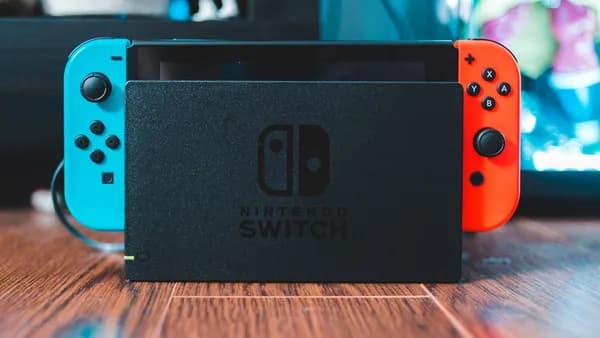
Nintendo’s Switch 2 pricing landed higher than many longtime fans expected, but the final picture is more nuanced than a simple $499 console launch. In the U.S., Nintendo priced the standalone Switch 2 at $449.99, while a $499.99 bundle including Mario Kart World became the headline option for players looking for a ready-made system-seller.
That still marks a significant jump from the original Nintendo Switch, which launched at $299.99 in 2017. The increase reflects a very different hardware environment: a larger and more capable display, more internal storage, upgraded controllers, stronger performance, and broader support for modern third-party games. It also reflects a console market where $400-plus pricing is no longer unusual.
The strategic shift is clear. Nintendo is no longer selling Switch 2 primarily as the cheaper, quirky alternative to PlayStation and Xbox. Instead, it is positioning the system as a premium hybrid console with enough exclusive software and technical improvement to justify a higher buy-in. At this price, Nintendo can’t rely on novelty alone. It needs must-have games.
Crunching the Numbers: How Switch 2’s $449.99 Console and $499.99 Bundle Compare
The most important correction is that Switch 2 did not launch as a standalone $499.99 console. The base system came in at $449.99, with the $499.99 Mario Kart World bundle serving as the higher-profile package. For many families and Nintendo fans, however, the bundle effectively became the practical price of entry because Mario Kart is one of the company’s biggest evergreen franchises.
Compared with Nintendo’s past hardware, the increase is substantial:
- Nintendo Switch launched at $299.99.
- Switch OLED launched at $349.99.
- Switch 2 launched at $449.99.
- Switch 2 with Mario Kart World launched at $499.99.
That puts Nintendo closer to the pricing territory of PlayStation 5 and Xbox Series X than it has traditionally occupied. The difference is that Nintendo is still selling a hybrid device: a home console and handheld in one. That gives the company a distinct value argument, but it also raises expectations.
The higher price also changes how consumers evaluate games. A $299 console could sell on curiosity and family appeal. A $449.99 or $499.99 purchase requires stronger justification, especially when games, accessories, storage cards, and subscriptions can push the real cost much higher.
The Critical Role of First-Party Games in Justifying Console Upgrades Post-Price Increase
Former Nintendo marketers were right about one thing: at this price, software has to carry the message. Nintendo answered that challenge by putting Mario Kart World at the center of the Switch 2 launch. As the first new mainline Mario Kart entry in years, it gave Nintendo a clear system-seller and an easy bundle pitch.
The broader lineup also matters. Nintendo leaned on a mix of new exclusives, upgraded versions of major Switch hits, and stronger third-party support to communicate that Switch 2 is not just a slightly faster Switch. Enhanced editions of flagship titles such as The Legend of Zelda: Breath of the Wild and Tears of the Kingdom helped show off the hardware improvements, while major third-party releases signaled that publishers see more room to bring modern games to Nintendo’s platform.
Still, the burden on Nintendo’s first-party teams remains heavy. Mario Kart can drive early adoption, but long-term momentum depends on a steady release calendar. Players buying a premium Nintendo system will expect more than compatibility and visual upgrades. They will expect new Mario, Zelda, Pokémon, Metroid, Animal Crossing, and other franchise entries that feel built for the new hardware.
Stakeholder Perspectives: How Consumers and Marketers React to Switch 2’s Pricing and Game Lineup
Consumer reaction to Switch 2 pricing has been mixed but predictable. Enthusiasts focused on performance improvements, backward compatibility, new Joy-Con features, and launch games. More price-sensitive buyers focused on the total cost of ownership.
That total cost matters. A family buying the $499.99 bundle may still need extra controllers, a carrying case, a microSD Express card, and additional games. With some first-party software now priced higher than previous Nintendo releases, the full ecosystem can quickly move beyond the headline console price.
From a marketing standpoint, Nintendo’s challenge is to keep the value proposition simple: Switch 2 is the best place to play Nintendo games, now with stronger hardware and broader third-party support. That message is powerful, but it must be reinforced with consistent software announcements. At this price, vague promises will not be enough.
Retailers, meanwhile, benefit from the bundle strategy. A $499.99 Mario Kart package creates a cleaner upsell and gives shoppers an immediate reason to choose the higher-priced option. For Nintendo, bundling one of its most reliable franchises helps soften the sticker shock while protecting the premium perception of the hardware.
Nintendo’s Historical Pricing and Launch Strategies: Lessons from Past Console Generations
Nintendo has usually avoided competing directly on raw specs or premium pricing. The Wii succeeded by being affordable and accessible. The original Switch succeeded by offering a new play pattern at a reasonable price. Even the Switch OLED was framed as a refinement rather than a generational leap.
Switch 2 is different. It keeps the hybrid concept but asks consumers to pay much more for a more powerful version of a familiar idea. That makes software and messaging even more important than usual.
Historically, Nintendo’s best launches have paired clear hardware identity with unforgettable games. The Switch had The Legend of Zelda: Breath of the Wild. The Wii had Wii Sports. The Nintendo DS had touch-based experiences that felt impossible elsewhere. Switch 2 needs the same kind of software identity—not just better performance, but games that explain why this hardware had to exist.
Mario Kart World helps fill that role at launch, but Nintendo’s next wave of exclusives will determine whether Switch 2 becomes a long-running platform or a front-loaded upgrade cycle.
What the Switch 2 Price and Game Strategy Mean for Gamers and the Console Industry
Switch 2’s pricing confirms that the console market has changed. Hardware costs, inflation, development budgets, and consumer expectations have all moved upward. Nintendo is not immune to that pressure.
For gamers, the result is a more expensive Nintendo ecosystem but also a more capable one. The promise is better visuals, smoother performance, larger game worlds, improved online features, and more third-party support than the original Switch could reliably deliver. The risk is that higher prices make casual players wait longer, especially if they already own a Switch and have a large backlog.
For the wider industry, Switch 2 is a major test of how much brand loyalty and exclusive software can offset sticker shock. If Nintendo can maintain strong sales at $449.99 and $499.99, it will reinforce the idea that premium pricing is sustainable when paired with must-have content. If demand slows after launch, Nintendo may have to lean harder on bundles, limited-time promotions, or major franchise announcements.
Predicting Nintendo’s Next Moves: Future Pricing, Game Releases, and Market Challenges for Switch 2
Nintendo’s next moves are likely to focus on three areas: software cadence, bundle strategy, and long-term value.
First, the company needs a reliable stream of exclusives. Mario Kart World gives Switch 2 an early anchor, but Nintendo will need more headline releases to keep momentum through the system’s first full years. A major 3D Mario, a new Animal Crossing, a next-generation Pokémon entry, or a major Zelda follow-up could all serve as powerful sales drivers.
Second, bundles will remain important. The $499.99 Mario Kart World package shows how Nintendo can make a higher price feel more acceptable by attaching a game with broad appeal. Future holiday bundles could play a major role in reaching families who are interested but hesitant.
Third, Nintendo has to manage perception around game prices, accessories, and storage. The console price is only one part of the purchase decision. If consumers feel the overall ecosystem is too expensive, even strong first-party games may not fully erase that concern.
What to watch: Nintendo’s next major first-party announcements will matter as much as the hardware itself. The stronger and more consistent the exclusive lineup, the easier it becomes for Nintendo to defend the Switch 2’s premium price.
The Bottom Line
- Switch 2 launched at $449.99 in the U.S., with a $499.99 Mario Kart World bundle serving as the key premium package.
- Nintendo’s higher pricing reflects stronger hardware, market-wide cost pressures, and a shift toward a more premium hybrid-console strategy.
- Must-have first-party games remain essential. Mario Kart World gave Switch 2 an early system-seller, but Nintendo needs a steady pipeline of exclusives to sustain demand.