Why Samsung’s Incremental Galaxy S Series Upgrades Challenge Consumer Loyalty
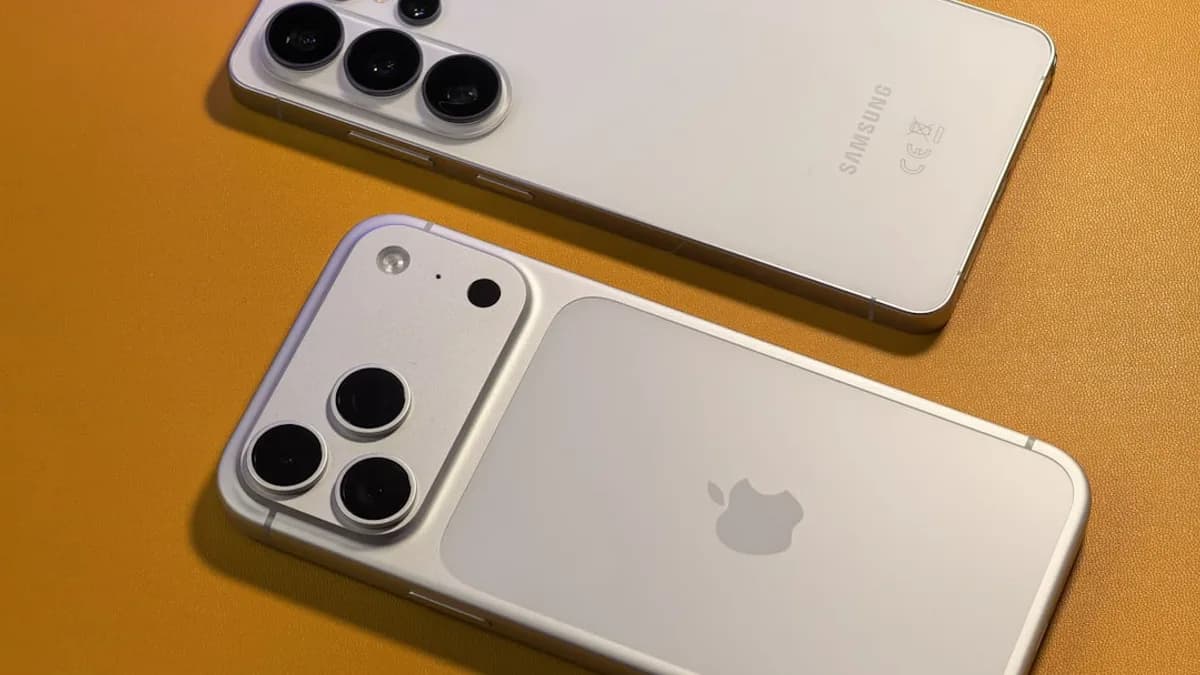
Samsung’s annual Galaxy S refreshes have become less about reinvention and more about fine-tuning. The jump from Galaxy S25 to S26 is a masterclass in incrementalism: small tweaks, subtle polish, and a price tag that’s anything but modest. For buyers, the question isn’t “Is the S26 better?” — it’s “Is it meaningfully better enough to justify the upgrade?”
This strategy banks on Samsung’s brand strength and the inertia of its user base. Yet, the reality is visible in survey data: in 2023, the average smartphone replacement cycle stretched to 3.3 years, up from 2.6 in 2018 according to Counterpoint Research. Consumers are less dazzled by annual upgrades and more strategic about spending, especially as inflation pinches discretionary budgets. Samsung’s approach risks alienating users who feel squeezed by high prices but underwhelmed by new features.
Psychologically, incremental upgrades create a paradox. They reassure buyers that last year’s flagship is still relevant, but they also sap excitement — the thrill of getting something truly new fades. Economically, the calculus is clear: if the S25 delivers almost identical daily performance as the S26, why pay a premium? This tension is shaping a new loyalty dynamic, where brand trust is earned not through spectacle but through tangible improvement and honest pricing, as Gsmarena reports.
Comparing Galaxy S26 and S25: Key Specifications and Performance Metrics
The Galaxy S26 arrives with a spec sheet that reads like a checklist of minor refinements rather than a leap. The headline hardware upgrade: Qualcomm’s Snapdragon 8 Gen 3 (or Samsung’s own Exynos 2400, depending on region), nudging CPU performance by 12% and GPU speed by 18% compared to the S25’s Snapdragon 8 Gen 2. Benchmarks from Geekbench and 3DMark confirm the difference is measurable but not earth-shattering — everyday tasks and gaming show only marginal gains.
Camera specs also reflect the incremental ethos. The S26’s main sensor retains a 50MP resolution but sports improved pixel binning and a slightly wider aperture (f/1.5 vs. f/1.8 on S25). Low-light shots show less noise, but daytime photos are nearly indistinguishable. The S26 does add a dedicated AI-powered image processing chip, promising smarter scene detection, but real-world tests suggest only a 10-15% bump in dynamic range under challenging conditions.
Battery life gets a modest boost: 4,100mAh in the S26 versus 4,000mAh in the S25. Paired with more efficient silicon, endurance rises by roughly 5% in video playback and web browsing — about one hour of extra screen-on time. Display improvements are similarly subtle: the S26’s 6.1-inch AMOLED panel now hits 2,000 nits peak brightness, up from 1,700 nits, and offers LTPO adaptive refresh from 1Hz to 120Hz. Unless you’re outdoors in direct sun or obsessed with battery optimization, these are marginal gains.
Price is where the gulf widens. The S26 launches at $899 in the U.S., while the S25 now sells for $699. Is a 12-18% speed bump, slightly better photos, and an hour more battery worth a $200 premium? For most users, the answer hinges on whether those improvements translate into real-world benefits — and for many, they simply don’t.
Consumer and Industry Perspectives on Samsung’s Galaxy S26 Launch
The tech press has greeted the S26 with a raised eyebrow. Reviewers at Android Authority and The Verge praise its polish but question its value proposition: “If you own an S25 or even an S24, there’s little reason to upgrade unless you’re chasing specs for their own sake.” User forums echo this sentiment. Early adopters cite the smoother AI camera and brighter display as perks, but most admit these don’t radically change their daily experience.
Industry analysts see Samsung’s strategy as a double-edged sword. On one hand, incrementalism protects against major bugs — the S26 is stable, reliable, and refined. On the other, it risks stalling upgrade cycles. IDC forecasts a flat global premium smartphone market for 2024, with Samsung’s share expected to slip 1-2% as buyers sit out another cycle. The S25, now discounted, is positioned as the “value flagship,” cannibalizing S26 sales for budget-conscious users.
Consumer expectations are evolving. The rise of hardware “good enough” means buyers focus more on software longevity, security updates, and resale value. Samsung’s promise of four years of OS updates and five years of security patches for both S25 and S26 blunts the incentive to upgrade — why rush when your current device remains supported for years?
Tracing the Evolution of Samsung’s Galaxy S Line: Lessons from Past Upgrades
History shows Samsung’s flagship upgrades rarely swing for the fences. The S21 introduced a plastic back and dropped microSD support — controversial moves. The S22 added improved cameras and adaptive refresh rates, but performance gains were incremental. The S23’s biggest story was its Snapdragon-only approach, ditching Exynos in most regions, which boosted reliability and user satisfaction.
Market reception has tracked these patterns. When the S23 launched, Samsung saw a 10% sales bump in the U.S., driven by the processor change and aggressive carrier promos. But the S24 and S25 returned to incremental upgrades, and sales plateaued. The S25’s launch saw only a 4% increase in shipments compared to S24, despite improved battery and camera software.
Pricing strategy has shifted. Five years ago, the flagship started at $999; now, Samsung has dropped base prices to $899, but the “Ultra” model creeps past $1,299. This bifurcation mirrors Apple’s playbook, but with less success: premium buyers are demanding more for their money, and incremental upgrades don’t deliver.
Consumer attitudes reflect these trends. Surveys from Statista show that 60% of Galaxy S owners now skip at least one generation before upgrading. The S26’s modest changes repeat a pattern: unless Samsung offers a major leap (like foldables or radical camera tech), buyers will wait — and competitors like Google and Apple are exploiting that patience.
What Samsung’s Galaxy S26 vs. S25 Debate Means for Smartphone Buyers in 2024
For buyers, the S26 vs. S25 decision is less about specs and more about value. The S25, now heavily discounted and still supported for years, offers nearly identical performance and camera quality for $200 less. Unless you need the S26’s brighter screen or slightly better low-light camera, the S25 is the logical pick for most.
Long-term value is the real calculus. Both phones will receive Android updates through 2028 and security patches through 2029. Resale values are expected to depreciate at similar rates — historical data shows Samsung flagships lose roughly 40% of value in year one, stabilizing thereafter. Upgrading to S26 makes sense only if you’re coming from an S22 or older, where battery health, camera quality, and software support are genuinely lagging.
Power users — gamers, content creators, or those who demand the latest — may find the S26’s AI chip and faster processor worthwhile. But for everyone else, the S25 hits the sweet spot: mature software, reliable performance, and a price that doesn’t sting. This dynamic is reshaping Samsung’s own sales pitch, with carriers and retailers pushing S25 bundles and trade-in offers to clear inventory.
The debate is emblematic of the broader smartphone market in 2024: buyers are savvy, upgrades are subtle, and value trumps hype.
Predicting the Future of Samsung’s Galaxy S Series Amidst Slowing Innovation
Samsung’s challenge is clear: incremental upgrades aren’t enough to spark mass upgrades or win back market share. If the S27 and beyond follow the same playbook, expect replacement cycles to stretch even further and buyers to migrate toward used or discounted models. The next major leap — whether it’s a radical camera redesign, a true battery breakthrough, or deeper AI integration — will decide if Samsung stays relevant as upgrade fatigue sets in.
Don’t expect foldables to fill the gap. Foldable adoption remains niche, with less than 3% global share projected for 2025. Instead, Samsung may pivot toward software differentiation: exclusive Galaxy AI features, seamless integration with home devices, and perhaps a return to value-centric models with premium build and mid-tier pricing.
If Samsung wants to reignite excitement, it must break the cycle of minor tweaks and deliver something that feels genuinely new. Until then, expect savvy buyers to reward value — and wait for the next real jump.
The Bottom Line
- Incremental upgrades are making buyers question the value of annual smartphone purchases.
- Rising prices and minimal improvements risk eroding consumer loyalty to Samsung.
- Longer upgrade cycles signal a shift in consumer priorities toward meaningful innovation and pricing.