Why Fine Motor Skills in Robots Could Revolutionize Everyday Tasks
A robot cracking an egg with one hand isn’t just a party trick—it’s a clear signal that machines are closing in on tasks people once thought impossible for silicon and steel. Most industrial robots excel at repetitive, brute-force jobs: welding, stacking, picking. But ask one to peel a grape or tie a shoelace, and it’s stumped. Fine motor control—the ability to manipulate delicate objects with precision—has been the missing link. Without it, robots can’t handle the messy, fragile, or unpredictable parts of human life.
The stakes are high. Surgical robots need to suture tissue without tearing it. Factory bots must assemble smartphones as deftly as human hands. Home assistants are useless if they can’t pour milk without spilling or fold a towel without mangling it. The gap between “robotic” and “human” dexterity has stalled progress in healthcare, logistics, food service, and personal care.
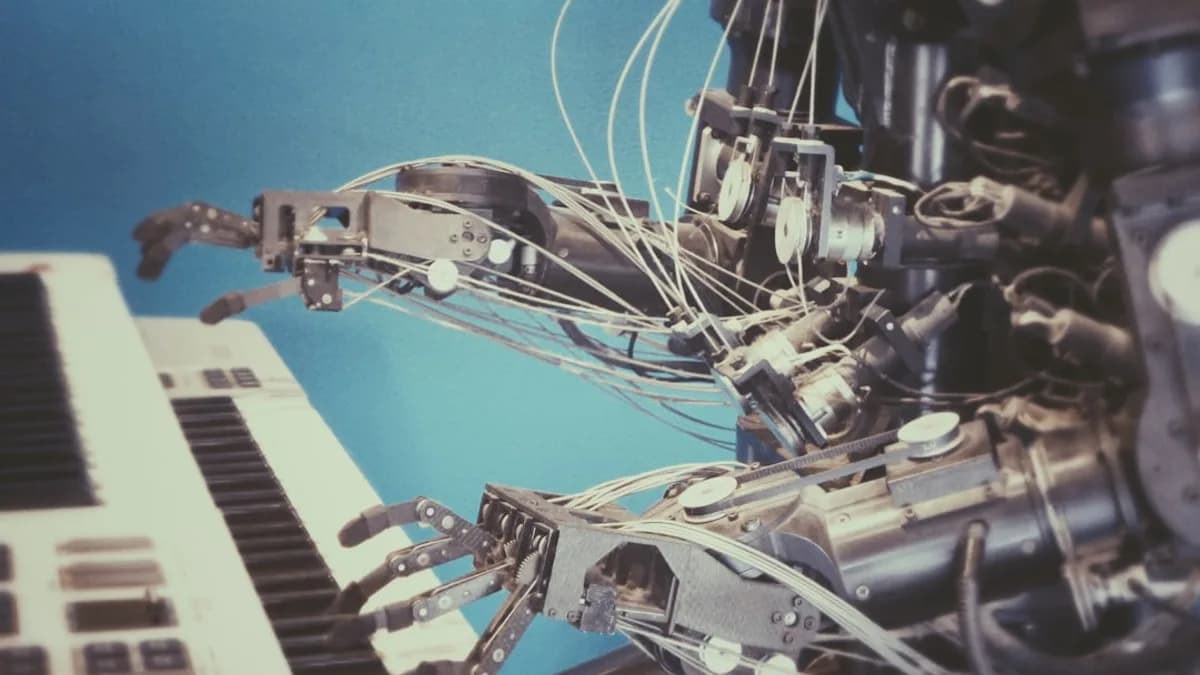
Genesis AI’s latest demonstration, featuring robotic hands cracking eggs one-handed, slicing tomatoes, and playing the piano, marks a turning point. Success rates for these tricky actions hover between 60-70%, but even that’s a leap beyond what most humanoid robots can manage, according to Notebookcheck. It’s not just about the showmanship—each new milestone in fine motor control brings robots closer to handling the nuanced tasks that define human life. For industries where precision means everything, this is the first real proof that robots might soon be trustworthy partners.
How Genesis AI’s Robot Achieves One-Handed Egg Cracking and Other Delicate Actions
Cracking an egg one-handed is a textbook stress test for dexterity: too little force and nothing happens, too much and you get shell shards everywhere. Genesis AI’s robotic hands tackle this by combining advanced hardware with smart control algorithms. The hand itself mimics the structure of human fingers, each joint articulated and independently motorized. High-resolution tactile sensors embedded in the fingertips detect pressure down to a few grams, allowing the robot to adjust grip in real time.
But hardware alone isn’t enough. The real breakthrough lies in the control software. Genesis AI’s robots use a mix of computer vision, force feedback, and probabilistic modeling to estimate the state of the object they’re handling. When cracking an egg, the robot analyzes the shell’s resistance, modulates its finger pressure, and coordinates wrist movement—all within milliseconds. Slicing tomatoes introduces another challenge: soft, slippery surfaces. The robot must maintain just the right blade angle and speed to avoid crushing or sliding off the fruit.
Performing these tasks one-handed is significant. Most earlier robotics demos relied on two hands or specialized fixtures, sidestepping the complexity of single-handed manipulation. One-handed operation demands more sophisticated coordination and adaptability, opening the door to tasks where only one hand is available or the other is occupied—think medical robots in surgery, or home assistants prepping breakfast.
The egg-cracking demo isn’t just a gimmick. It’s a proof-of-concept showing that robots can learn to handle unpredictable, fragile objects with a success rate competitive with novice humans. This isn’t just incremental progress; it’s a sign that robots are finally learning the tricky art of everyday touch.
What Makes Playing the Piano a Milestone for Robotic Fine Motor Control
Piano playing is a brutal test for any robot aspiring to mimic human dexterity. Each note demands precise timing, controlled force, and smooth movement—sometimes all at once. Human pianists coordinate ten fingers, wrist rotations, and dynamic changes, often at speeds exceeding 15 notes per second. Replicating this requires not just physical accuracy but also nuanced control over velocity and pressure.
Genesis AI’s robot approaches piano playing with a combination of articulated fingers and real-time feedback. Each finger is tuned to press keys with variable force, enabling the robot to produce both staccato and legato sounds. The control system maps musical scores to finger trajectories, adjusting for the subtle differences between keys and accounting for the bounce and resistance of each piano mechanism.
The significance goes beyond music. If a robot can play a piano convincingly, it can handle other tasks where rhythm, timing, and touch are critical—like threading a needle, assembling miniature devices, or operating precision instruments. This leap from simple pick-and-place jobs to dynamic, coordinated movements marks a shift in what robots can do. Piano playing isn’t just a flashy demo; it’s a benchmark for measuring the sophistication of robotic fine motor skills.
What the 60-70% Success Rate Reveals About Current Limitations and Future Improvements
Genesis AI’s robots don’t ace every task. A 60-70% success rate means that out of ten attempts to crack an egg or slice a tomato, three or four will fail—shells shattered, tomatoes squashed, or piano keys missed. The main culprit: variability. Eggs vary in shell thickness, tomatoes in firmness, and pianos in key resistance. Unlike factory environments where objects are uniform and predictable, real-world scenarios throw curveballs.
Sensor noise, imperfect calibration, and dynamic lighting conditions also trip up the robots. Even the best tactile sensors struggle with slippery or wet surfaces. Control algorithms must process unpredictable data and make split-second decisions—sometimes with incomplete information. Failures often cascade: a misjudged grip leads to a dropped egg, which can’t be recovered mid-task.
Researchers are tackling these limitations with new approaches. Adaptive learning algorithms, which refine grip and movement based on feedback, are being tested. Multi-modal sensing—combining vision, touch, and sound—offers a richer data set for decision-making. Genesis AI and competitors are also exploring “transfer learning,” where a robot trained on one task adapts quickly to similar but not identical scenarios.
Incremental improvements matter. Each percentage point gained in reliability translates to more tasks a robot can handle unsupervised. In healthcare, even a 5% boost could mean thousands more successful robotic surgeries each year. For home assistants, it could spell the difference between a novelty and a necessity.
How Genesis AI’s Robotic Hands Could Transform Industries and Daily Life
Picture a busy restaurant kitchen where robots prep ingredients with the same care as a human chef: slicing tomatoes for salads, peeling eggs for breakfast, plating delicate desserts. Genesis AI’s fine motor control could eliminate repetitive strain injuries, speed up service, and reduce waste—all while maintaining food safety standards. In one projected scenario, a single robot equipped with advanced dexterity could prepare 200 meals per hour, doubling the output of a human line cook.
Caregiving is another prime target. Elderly or disabled individuals often need help with personal grooming, feeding, or dressing—tasks that demand gentle, precise touch. Robots with fine motor skills could assist with brushing teeth, combing hair, or managing medication, offering independence while reducing caregiver burnout. In Japan, where the population over 65 already exceeds 29%, demand for robotic assistants is surging.
Entertainment and creative sectors are also in play. Imagine robots collaborating with musicians, artists, or surgeons—sharing control, learning from human partners, and executing tasks that require both strength and sensitivity. Improved fine motor skills expand the palette of possible collaborations, enabling robots to participate in activities previously reserved for humans.
Looking ahead, Genesis AI’s progress signals a timeline where robots move from controlled demos to real-world deployment within a decade. Early adopters in food service, healthcare, and manufacturing are likely to see pilot programs as soon as reliability crosses the 80% threshold. For investors, engineers, and business leaders, the message is clear: track advances in robotic dexterity, not just brute strength. The biggest leaps in automation will come from robots that can handle the unpredictable, fragile, and nuanced parts of daily life—not just the heavy lifting.
Robots that can crack an egg one-handed or play a piano aren’t just impressive—they’re a preview of the next wave of automation, where machines finally match humans in the art of touch.
Why It Matters
- Robots with fine motor skills can handle delicate tasks once reserved for humans.
- Industries like healthcare and manufacturing could see improved efficiency and safety.
- This breakthrough brings us closer to robots being reliable assistants in daily life.