Why Pocket-Sized Power Banks with Dual USB-C Cables Signal a Shift in On-the-Go Charging
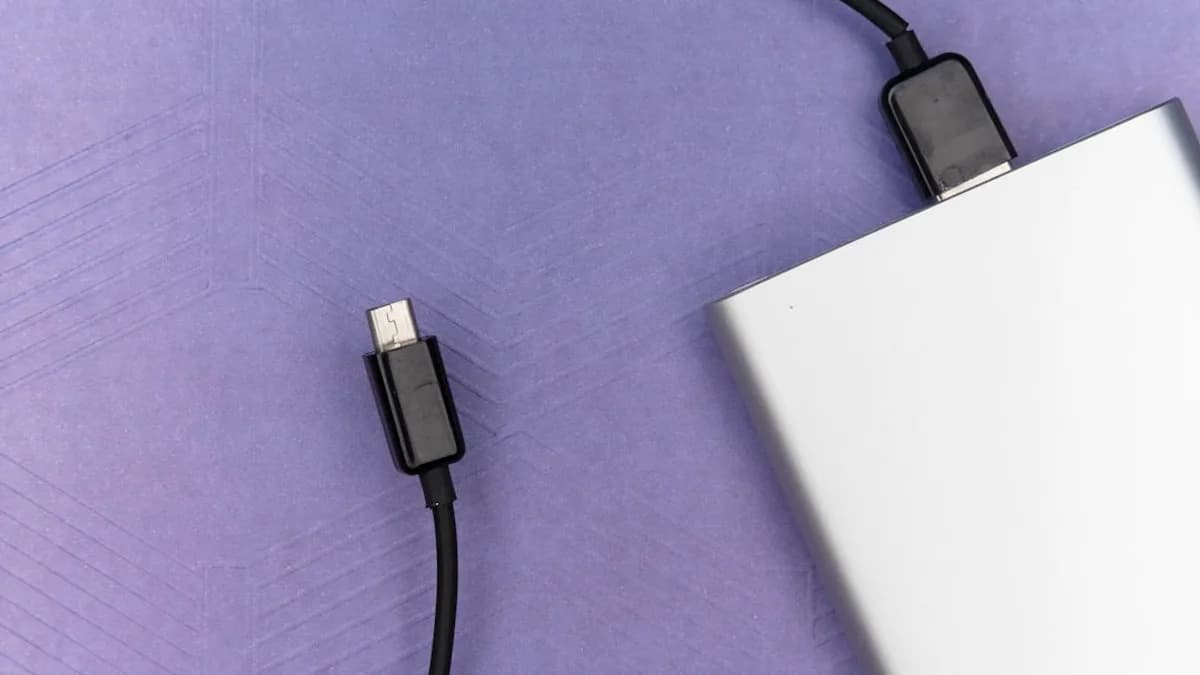
Twelve South’s new PowerClip doesn’t just add another portable charger to the mix—it targets a pain point that plagues every mobile user: emergency power that’s actually ready when you need it. The big difference? Two integrated USB-C cables. Most compact power banks still expect you to remember your own cable. That’s a recipe for frustration when your phone dies halfway through a business trip or while navigating a new city. By baking in dual USB-C connectors, the PowerClip aims to eliminate the scramble for cords, focusing squarely on users juggling multiple modern devices. Notebookcheck reports that the PowerClip is explicitly positioned as an "emergency backup" for on-the-go use—a clear sign that compactness and true all-in-one readiness are now table stakes for mobile accessories.
Breaking Down the PowerClip: Features and Technical Specifications That Set It Apart
Details from the source are limited, but a few points stand out. The PowerClip is described as pocket-sized, so it likely prioritizes portability over massive capacity. Two integrated USB-C cables are its defining feature—doubling down on compatibility with the latest smartphones, tablets, wireless earbuds, and even some laptops. Integrated cables mean users don’t need to carry—or remember—separate accessories, which is a clear functional advantage in emergency scenarios.
What’s missing is hard data on battery capacity, power output (wattage/amps), and physical dimensions. Without these specs, we can’t compare the PowerClip directly to leading alternatives. But the dual USB-C setup is a rarity in small-format power banks, many of which still split between USB-A and USB-C, or offer just one built-in cable. In MLXIO’s view, this reflects a recognition that USB-C has become the de facto universal charging standard for a growing share of consumer electronics. If the PowerClip matches or beats prevailing compact power banks on charging speed and battery size, it could punch above its weight in both convenience and utility.
Data-Driven Insights: Market Trends and Consumer Preferences in Portable Power Solutions
The source does not provide recent statistics or market growth data, nor does it detail consumer preferences beyond the general pitch of emergency readiness and compactness. What we can extract: the PowerClip’s design choices (dual USB-C, integrated cables, focus on pocket-size) are a direct answer to the realities of modern device ecosystems, where users often travel with multiple USB-C devices and expect accessories to “just work” out of the box.
MLXIO analysis: cable integration and USB-C ubiquity are not just features—they’re minimum expectations for the next wave of power banks. The PowerClip’s existence signals that manufacturers are reading the room: portability and universal compatibility are now as important as raw battery capacity.
Diverse Stakeholder Perspectives: What Users, Manufacturers, and Retailers Think About Integrated Power Banks
Direct user feedback or sales data isn’t supplied in the Notebookcheck report, but the decision to launch a dual-cable, pocket-sized device suggests that manufacturers like Twelve South see clear demand for hassle-free, always-ready charging. For users, the promise is simple: no more forgotten cables, no more device mismatch, and less clutter in pockets or bags. For retailers, the pitch is strong—one device that fits nearly every modern user’s mobile workflow.
MLXIO inference: the PowerClip’s focus on emergency backup rather than all-day charging suggests that manufacturers are targeting a specific use case. This isn’t the brick you haul around for a weekend camping trip; it’s the insurance policy for urban professionals, commuters, and travelers who need a reliable backup, not a full-day workhorse.
Tracing the Evolution of Portable Power: From Bulky Chargers to Sleek Emergency Backup Devices
The PowerClip sits at the tail end of a long evolution. Early power banks were heavy, single-port bricks with proprietary cables and limited compatibility. Today, slimline designs with integrated cables and universal ports dominate. The headline shift: USB-C’s rise has pushed manufacturers toward simpler, more versatile products. The PowerClip’s dual USB-C approach is a direct consequence of this trend—one connector for every device, one product for nearly every user.
This evolution hasn’t just been about shrinking size or boosting capacity. It’s about removing friction: less to forget, less to untangle, fewer “dead ends” when you need juice in a pinch.
What the PowerClip Means for Mobile Professionals and Everyday Users Relying on Emergency Power
For anyone who works remotely, travels, or simply relies on their phone for navigation and payments, the PowerClip’s integrated cables cut risk. No more being stranded by a dead device and a forgotten cord. Commuters and travelers get peace of mind, knowing their backup is always truly ready—no extra pieces required.
But there are tradeoffs. Integrated cables can wear out, and if they fail, the whole device loses value. Capacity is also a question mark: if the PowerClip is extremely compact, it may not deliver multiple full charges to larger devices. MLXIO analysis: users must decide if the convenience and reduced failure points offset any limitations in charging power or replaceability.
Future Outlook: How Integrated Dual-Cable Power Banks Could Shape Portable Charging Technology
The PowerClip’s launch signals a shift in what consumers and manufacturers see as “must-have” in portable power: true integration, universal compatibility, and minimal bulk. MLXIO expects to see more power banks with multiple built-in cables (or even modular connectors) as USB-C continues its march across device categories. Wireless integration and solar charging are possible next steps, but the core trend is convergence: one accessory that covers every device, every time.
What’s unclear is how durable the integrated cables will prove over months of repeated use, or whether battery technology will allow even slimmer profiles without sacrificing reliability. Watch for user reviews and teardown reports—real-world performance and long-term reliability will determine whether the PowerClip’s approach becomes the new norm or just another niche experiment.
Key signals to watch: adoption rates among mobile professionals, durability feedback, and whether larger brands follow suit with their own integrated dual-cable (or cableless) designs. If the PowerClip delivers on its promise, expect the days of tangled cords and emergency power panic to start fading for good.
Why It Matters
- Integrated dual USB-C cables remove the frustration of forgetting charging wires during emergencies.
- The product highlights a growing trend towards all-in-one, ready-to-use portable charging solutions.
- As more devices transition to USB-C, accessory makers are adapting to meet modern connectivity needs.