Intel Panther Lake Chips Are Redefining Portable Gaming Performance
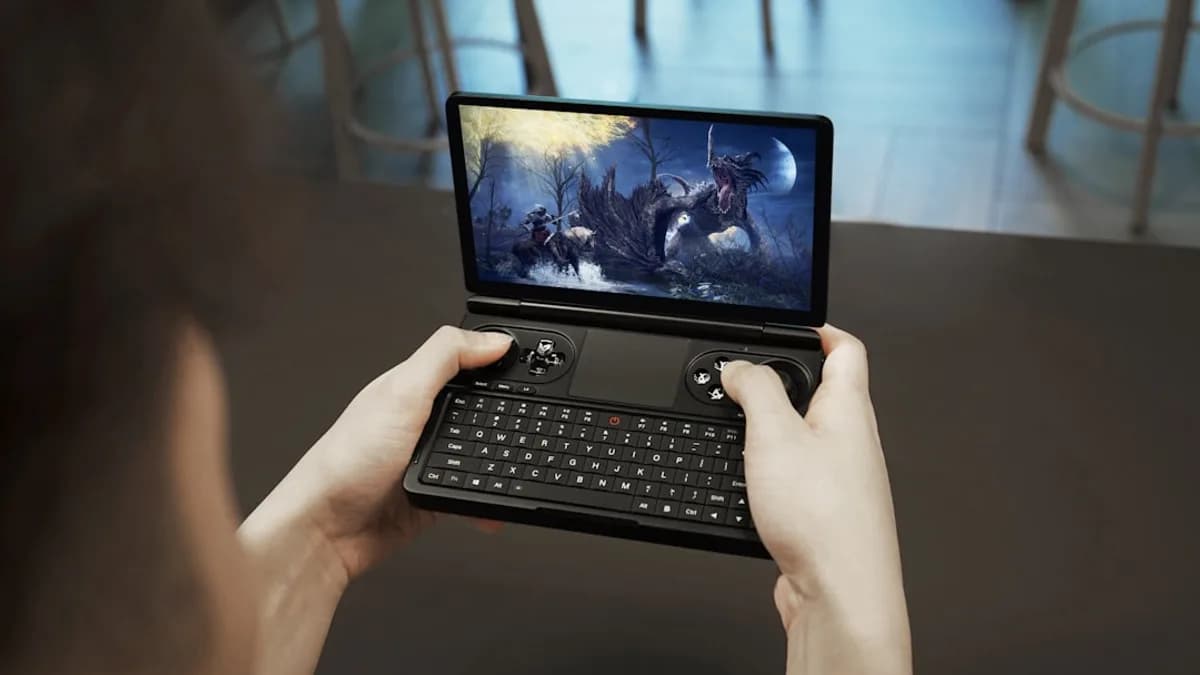
No discrete GPU, no problem: Intel’s Panther Lake architecture has shattered the longstanding rule that AAA gaming demands a dedicated graphics card. The OneXPlayer Super V tablet, powered by the Core Ultra X7 358H, is the latest proof, handling high-resolution gaming at 1800p with surprising ease. This isn’t a marginal improvement. For years, integrated graphics barely limped through eSports titles, let alone the visual gauntlet of modern AAA games. Now, thanks to Panther Lake, integrated GPUs are not only relevant—they’re reshaping what portable gaming hardware can do.
What changed? Intel’s leap to advanced tile-based GPU design and faster memory bandwidth in Panther Lake has unlocked performance levels previously reserved for entry-level discrete cards. The architecture combines high-density execution units, improved AI-accelerated rendering, and smart power management. In practical terms, this means laptops and tablets can run games at 1440p or higher, without the thermal and battery baggage of a dedicated GPU. The Core Ultra X7 358H chip in the OneXPlayer Super V delivers both CPU and GPU muscle, setting new standards for integrated graphics according to Notebookcheck.
This shift is more than incremental: it’s a direct challenge to the hardware paradigm that has dominated portable gaming for decades. The very notion that high-resolution, smooth AAA gaming is possible without a discrete GPU upends the market dynamic. Device makers, gamers, and developers must rethink what “gaming-grade” hardware actually means.
Benchmarking the OneXPlayer Super V: Real-World 1800p AAA Gaming Performance
Benchmarks aren’t just numbers—they’re the reality check against marketing hype. ETA Prime’s testing of the OneXPlayer Super V makes one thing clear: Panther Lake’s integrated graphics can hold their own in demanding AAA titles at 1800p. Cyberpunk 2077, notorious for punishing hardware, ran at 45-55 FPS with FSR enabled and medium settings. Starfield, another resource hog, managed a stable 40 FPS at 1440p. Elden Ring, less demanding but still no pushover, stayed above 60 FPS at 1800p with tweaks.
Frame stability is the real story here. Unlike previous integrated GPUs that could spike but rarely sustain playable FPS, Panther Lake’s graphics maintain consistent performance over hours-long sessions. No sudden drops, no thermal throttling, even as the CPU and GPU share the same die. That’s a direct result of Intel’s dynamic power allocation and improved cooling architecture in the X7 358H.
Compare this to just two years ago: AMD’s Ryzen 7 6800U with Radeon 680M integrated graphics topped out at 1080p for AAA games, averaging 30-40 FPS in titles like Horizon Zero Dawn. Entry-level discrete GPUs like Nvidia’s MX450 and RTX 2050 struggled to match those numbers, especially in thin-and-light devices. Now, Panther Lake’s integrated GPU outpaces those chips, and does so at 1440p or higher. The gap isn’t academic—it’s a practical shift for anyone considering a portable gaming device.
The Numbers Behind Integrated Graphics: Intel Panther Lake vs Discrete GPUs
Performance per watt is the metric that separates winners from also-rans in mobile gaming. Panther Lake’s integrated GPU draws just 25-35W under sustained gaming loads, while entry-level discrete GPUs in comparable devices regularly hit 40-60W. That translates to longer battery life: the OneXPlayer Super V can push 2.5-3 hours of continuous AAA gaming, compared to the 1.5-2 hours typical for devices with discrete GPUs.
Thermal output is equally critical. Panther Lake’s improved efficiency means the Super V rarely exceeds 70°C under load, avoiding the thermal throttling that plagues thin gaming laptops. By contrast, discrete GPU setups often spike to 80-85°C, forcing fans to ramp up and battery drain to accelerate.
The practical upshot? Gamers get more play time, quieter devices, and less heat—without sacrificing resolution or frame rates. Power efficiency isn’t just a technical brag; it’s the difference between carrying a bulky charger and confidently gaming untethered for hours. For portable gaming, Panther Lake’s numbers aren’t just competitive—they’re disruptive.
Diverse Stakeholder Perspectives: Gamers, Developers, and Hardware Manufacturers Weigh In
Gamers are skeptical by default—and rightly so. The promise of “AAA gaming without a discrete GPU” has burned buyers before. But early adopters report genuine surprise at the Super V’s performance, noting smooth gameplay and minimal fan noise even at high resolutions. Portable gaming enthusiasts, especially those chasing Steam Deck alternatives, see Panther Lake as a viable path to lighter, more affordable devices.
Developers face a new optimization puzzle. Historically, AAA titles assumed discrete GPU resources, often sidelining integrated graphics users. Now, with Panther Lake closing the gap, studios are rethinking minimum specs and testing more aggressive upscaling techniques like FSR and XeSS. This could democratize high-end gaming, expanding the audience for flagship titles.
Hardware manufacturers are moving fast. Companies like OneXPlayer and GPD are already prototyping tablets and laptops built around Panther Lake, betting that the days of mandatory discrete GPUs are numbered. Meanwhile, Nvidia and AMD are recalibrating their entry-level GPU strategies, either by doubling down on efficiency or by pivoting to niche workloads where integrated chips can’t yet compete.
Evidence favors Intel here: the hardware has delivered real-world results, and device makers are putting Panther Lake at the heart of their next-gen gaming products. The market’s response isn’t just cautious optimism—it’s a scramble to harness integrated graphics for broader appeal.
Tracing the Evolution: From Early Integrated Graphics to Today’s Panther Lake Breakthrough
A decade ago, integrated graphics were an afterthought. Intel HD Graphics 4000, released in 2012, could barely run Minecraft at 720p, let alone demanding games. Progress was slow, with incremental gains from Iris Pro, Vega, and Xe Graphics—but AAA gaming remained out of reach.
The turning point came in 2020 with AMD’s Ryzen APUs and Intel’s Iris Xe, which finally made 1080p gaming plausible on select titles. Yet even these chips struggled with thermal limits and battery drain. Panther Lake marks a step-change, not just an evolutionary tweak. Its tile-based architecture, AI-enhanced rendering, and high-bandwidth memory have enabled performance leaps that would have seemed fanciful even five years ago.
Key milestones—such as AMD’s 680M, Apple’s M2 GPU, and Intel’s Arc—set the stage. But Panther Lake’s ability to deliver sustained, high-resolution gaming without discrete graphics is a breakthrough that redefines the category. Devices like the OneXPlayer Super V are not anomalies; they’re harbingers of a new normal.
What Intel Panther Lake’s Gaming Capabilities Mean for the Future of Portable Gaming Devices
Portable gaming is no longer chained to bulky laptops or noisy mini-PCs. Panther Lake’s efficiency and power unlock a new class of devices: thin tablets, ultra-light laptops, even dockable handhelds, all capable of AAA gaming at 1440p or above. The absence of a discrete GPU slashes weight and cost, and simplifies thermal management—critical for sustained gaming sessions in compact form factors.
Design priorities are shifting. Battery life, thermals, and silent operation are now viable goals without sacrificing performance. Manufacturers can offer sub-2-pound gaming tablets, and gamers no longer need to choose between portability and playability. The ripple effect: lower costs for mid-range devices, wider consumer access, and a push for more efficient game development.
Game studios will need to optimize for a broader spectrum of hardware, using AI upscaling and smarter resource management. The expectation that “gaming-grade” means carrying a brick-sized laptop is evaporating. For consumers, Panther Lake’s arrival means more choice, more mobility, and fewer compromises.
Looking Ahead: Predictions for Integrated Graphics and Portable Gaming Innovation
Panther Lake is just the start. Intel, AMD, and Apple will chase further gains in integrated GPU performance, leveraging advanced process nodes, AI-assisted rendering, and smarter memory architectures. Expect the next 3-5 years to deliver chips that match or surpass today’s mid-range discrete GPUs—without the extra power draw or heat.
The integrated gaming ecosystem will expand: accessories like portable monitors, external controllers, and wireless docks will cater to gamers who want flexibility without bulk. Entry-level discrete GPUs may fade from mainstream devices, surviving only in niche markets or for workloads that integrated chips can’t yet handle.
Emerging trends—cloud gaming, hybrid AI rendering, and universal upscaling—could complement Panther Lake’s dominance, but also challenge it. If cloud platforms deliver seamless AAA experiences on any device, local graphics may matter less. Yet for offline play, modding, and enthusiast communities, integrated GPUs will set the pace.
The most likely scenario: by 2027, integrated graphics will power the majority of portable gaming devices, with discrete GPUs reserved for desktop rigs and specialized tasks. The market will reward efficiency, versatility, and sustained performance—not just raw power. Gamers will enjoy high-resolution, smooth portable play, and manufacturers will race to deliver more with less.
Intel’s Panther Lake has moved the goalposts—and the rest of the industry must now play catch-up.
Why It Matters
- Intel’s Panther Lake chips now enable smooth AAA gaming at high resolutions without needing a discrete GPU.
- Portable devices like the OneXPlayer Super V can offer gaming-grade performance with improved battery life and thermal efficiency.
- This breakthrough challenges traditional hardware standards, impacting device makers, gamers, and developers alike.