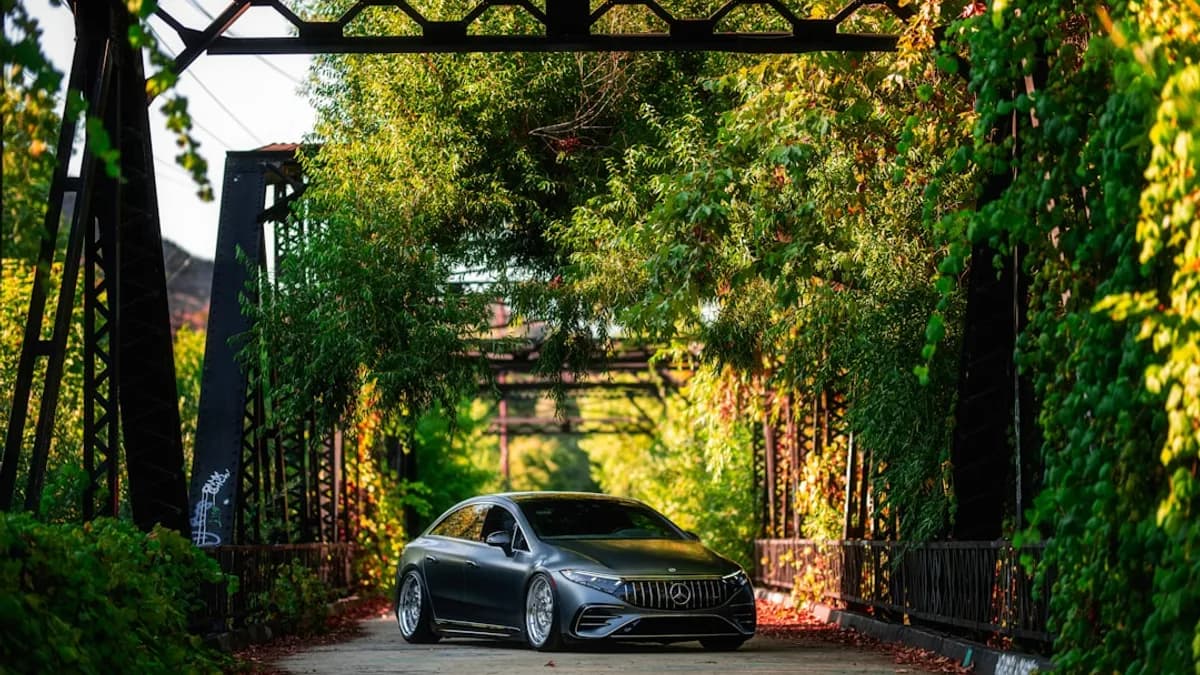
Introduction to Mercedes-Benz’s First All-Electric C-Class
In a move that signals both a technological leap and a strategic pivot, Mercedes-Benz has unveiled its first-ever all-electric C-Class sedan—the C 400 4MATIC. For decades, the C-Class has served as an entry point into the luxury sedan world, setting benchmarks for refinement, performance, and innovation in the compact executive segment. The arrival of a fully electric variant marks a watershed moment for the iconic nameplate, which has until now only been offered with gas, mild-hybrid, and plug-in hybrid powertrains. This electric debut isn’t just an incremental update; it represents a recalibration of what the C-Class stands for in a rapidly electrifying automotive market. While Mercedes has already carved out a presence in the EV space under its EQ sub-brand, the direct electrification of the C-Class signals a deeper commitment to mainstreaming electric mobility within its core lineup—a move that could reshape both customer expectations and the competitive landscape [Source: Source].
Technical Innovations Behind the All-Electric C 400 4MATIC
At the heart of the new C 400 4MATIC is an 800-volt electrical architecture, a technology more commonly associated with flagship EVs like the Porsche Taycan and Audi e-tron GT. This advanced platform delivers several tangible benefits. First, it allows for significantly faster charging times, enabling the sedan to regain hundreds of kilometers of range in a matter of minutes at compatible ultra-fast charging stations. This directly addresses one of the key anxieties for prospective EV buyers: charging downtime.
Equally critical is the car’s estimated range—up to 762 kilometers (473 miles) on the WLTP cycle [Source: Source]. This figure puts the C 400 4MATIC at the very top of its class, rivaling or even surpassing some larger and more expensive electric sedans. Such efficiency is made possible not only by the high-voltage system but also by an array of aerodynamic and drivetrain optimizations.
Mercedes isn’t just touting numbers, though. The automaker boldly claims this is “the sportiest C-Class ever,” a statement underpinned by features like a low center of gravity, instant torque delivery from dual electric motors, and sophisticated chassis tuning. These characteristics promise a driving experience that is both thrilling and composed—a blend that could appeal to traditional driving enthusiasts as well as new EV adopters. The car also borrows comfort elements from the flagship S-Class, aiming to merge athleticism with the signature “magic carpet” ride Mercedes is known for.
From a technical perspective, the C 400 4MATIC’s platform is more than a one-off showpiece; it’s a preview of scalable innovation that could underpin future generations of Mercedes-Benz EVs, enhancing both performance and efficiency across the lineup.
Comparing the Electric C-Class with Traditional and Hybrid Variants
Until now, the C-Class roster has spanned a spectrum from efficient four-cylinders to plug-in hybrids, targeting diverse customer needs. The new C 400 4MATIC, however, represents a fundamental departure—not just in propulsion, but in driving character and user experience.
Gasoline and hybrid C-Class models have long been lauded for their balance of power, refinement, and agility, but electric propulsion introduces a new paradigm. The instant torque delivery of the EV powertrain offers brisk acceleration with none of the lag associated with combustion engines. Regenerative braking and a near-silent cabin redefine the day-to-day driving feel, while the absence of engine vibrations enhances perceived quality and luxury.
Mercedes-Benz claims the C 400 4MATIC blends the most dynamic aspects of previous C-Classes with the “smoothness of an S-Class,” positioning it as a bridge between sportiness and serenity [Source: Source]. If realized, this could recalibrate customer expectations for what a compact luxury sedan can deliver—not just in terms of performance, but also comfort and sophistication.
The introduction of a long-range, high-performance EV variant could also trigger a shift in customer preference within the C-Class lineup. Buyers who might have previously gravitated toward AMG or plug-in hybrid models for their performance credentials may now see the electric C 400 4MATIC as the most compelling choice, especially as awareness of total ownership costs and urban emissions regulations grows. For Mercedes, this is a calculated bet on the future direction of the luxury sedan market.
Market Implications and Competitive Positioning of the Electric C-Class
Mercedes-Benz’s decision to electrify its core C-Class line is more than a technological milestone—it’s a high-stakes play in the fiercely contested luxury EV market. The C 400 4MATIC enters an arena populated by the BMW i4, Tesla Model 3, Audi Q4 e-tron, and the Polestar 2, each vying for dominance among affluent urban professionals and tech-forward buyers.
The C 400 4MATIC’s 800-volt architecture and impressive WLTP range grant it a clear technical edge over many direct competitors. For instance, while the Tesla Model 3 Long Range offers up to 576 kilometers WLTP, the new C-Class EV’s 762 kilometers set a new benchmark in this segment [Source: Source]. Similarly, the BMW i4—another key rival—delivers up to 590 kilometers WLTP, again falling short of the Mercedes’ claim.
However, Mercedes is not merely seeking to outdo rivals on paper. The brand is leveraging its reputation for interior craftsmanship, advanced driver assistance, and ride comfort to appeal to buyers who expect a holistic luxury experience. By positioning the electric C-Class as “sporty” yet “smooth like an S-Class,” Mercedes is attempting to blur the lines between performance and traditional luxury—a strategy that could broaden the car’s appeal beyond the typical EV early adopters.
The broader implication for Mercedes-Benz is significant. The C-Class is a global best-seller, often considered the brand’s backbone in many markets. Electrifying this model signals a mainstreaming of EV technology within the Mercedes portfolio and could accelerate the company’s transition to an all-electric future. It also positions Mercedes to capture market share from both legacy rivals and disruptive newcomers, especially in regions where emissions regulations are tightening and consumer incentives for EVs are robust.
Strategically, the launch serves as a litmus test for the brand’s wider electrification ambitions. If the electric C-Class can maintain or expand its market share while upholding the nameplate’s reputation, it will reinforce Mercedes’ leadership in the luxury EV space and set the stage for further electrification across its lineup.
Challenges and Opportunities for Mercedes-Benz’s Electric C-Class
While the C 400 4MATIC’s technical prowess is clear, Mercedes faces an array of challenges in bringing this EV to market. On the production side, the 800-volt system—while offering fast charging and high efficiency—requires specialized supply chains, new manufacturing processes, and robust quality control. Past industry experience has shown that scaling advanced EV architectures is no small feat, with potential bottlenecks in battery sourcing and power electronics supply.
Customer adoption is another hurdle. Traditional C-Class buyers may need convincing to make the leap to a fully electric model, particularly in markets where charging infrastructure lags behind. Mercedes will need to invest not only in product education but in ecosystem partnerships that make EV ownership as seamless as traditional models.
Yet, the opportunities are equally substantial. The 800-volt architecture paves the way for a new generation of Mercedes EVs with faster charging and improved thermal management, potentially lowering costs and raising performance across future models. As consumers increasingly demand not just range, but also uncompromising luxury and dynamic handling from electric sedans, the C 400 4MATIC is well-positioned to meet—or even redefine—these expectations.
If Mercedes can deliver on the promise of “S-Class smoothness” with “C-Class sportiness” in an electric package, it will have a compelling tool to accelerate its EV transition. This could prove especially powerful in urban markets in Europe and China, where premium buyers are already pivoting away from internal combustion engines.
Conclusion: The Future of the C-Class in an Electrified Automotive Landscape
The debut of the all-electric Mercedes-Benz C-Class is more than a product launch—it’s a turning point in the evolution of both the model and the brand. By marrying cutting-edge EV technology with the C-Class’s storied reputation for sportiness and luxury, Mercedes is signaling a new era not just for itself, but for the luxury sedan market as a whole. The C 400 4MATIC stands as a testament to the company’s ability to innovate while honoring its heritage.
As the automotive world pivots toward electrification, the C-Class’s transformation may ultimately serve as a blueprint for other industry icons. For Mercedes-Benz, the challenge now is to deliver on its ambitious promises, winning over both traditional loyalists and new EV buyers. If it succeeds, the C-Class could once again set the standard—this time, for a future where sportiness, luxury, and sustainability are no longer mutually exclusive, but seamlessly integrated.